
Posts tagged wages
Roughly 1,700 workers at the Cargill meatpacking plant in Fort Morgan remain locked out as labor dispute drags on
June 20, 2026 // Even with the hardship, workers remain strongly supportive of the union and the negotiation process. “Because the contract was a horrible contract for us,” Tanner said. “They just don't want to pay us what we want, I guess.” Several workers said they were growing impatient with the impasse and were starting to look for other jobs. But many are reluctant to give up on what they describe as their best local option for employment. “Cargill has always been one of the best-paying jobs around here for people that don't have a college degree,” Mendez said. “They have good opportunities, good insurance."
House-Passed Faster Labor Contracts Act Is a Disgrace to Free Enterprise
June 18, 2026 // Setting a dangerous precedent, House Democrats and a few unprincipled Republicans today voted to pass the Faster Labor Contracts Act,” said ABC President and CEO Michael Bellaman. “The FLCA imposes arbitrary and unrealistic deadlines on employers to finalize negotiations with newly elected unions or face ‘binding interest arbitration of first contracts.’ In practice, this means, for the first time in American history, a federal government bureaucrat will appoint an individual to dictate exactly what is included in a contract between two private negotiating parties.
The Beverage Market provides update about ongoing talks with striking workers, Teamsters Local 175 union
June 16, 2026 // Beer distribution company The Beverage Market said it wants to continue negotiations “in good faith” with striking workers involved in the current dispute between the company and the Teamsters Local 175 union. The current contract between the company and the union expired in early May. 49 workers at The Beverage Market began their strike May 12, and have been on the picket line ever since. Union members have said the company is asking for “unfair concessionary proposals” related to wages, insurance, and retirement.

Op-ed: A GOP Gift to the Cultural Left
June 15, 2026 // We wonder if Republicans know what they’ve voted for—and not merely on wages or pensions. Unions, allied with Democrats, have long supported a progressive agenda that includes collective bargaining for abortion coverage and transgender healthcare. The model language the AFL-CIO recommends to local chapters says “all health plans offered to bargaining unit members shall cover comprehensive . . . reproductive healthcare services, including contraceptives, abortion services . . . and gender affirming care.” In 2012 the Service Employees International Union unanimously approved a resolution “calling on local unions to bargain for trans-inclusive healthcare.” The NewsGuild of New York/Communications Workers of America said in 2022 it “unequivocally supports access to abortion as a healthcare right.”
Exclusive: Group warns labor bill allows govt takeover of union contract negotiations
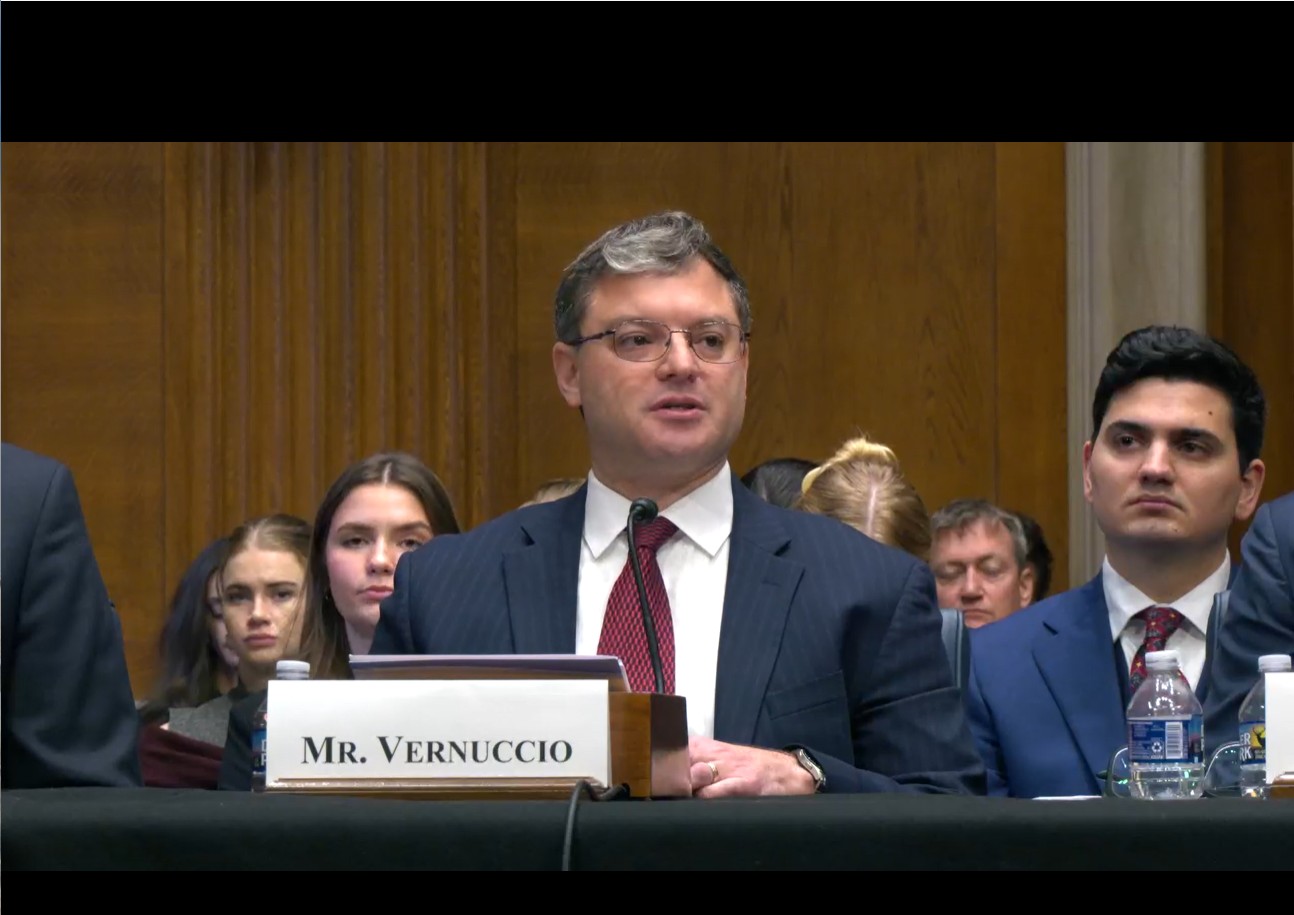
June 14, 2026 // Institute for the American Worker President Vinnie Vernuccio called the House-passed bill an example of “gross government overreach.” “There are better ways out there, things that increase collaboration, increase penalties even, to get people to negotiate,” Vernuccio told The Center Square. “Those are far preferable than government forced arbitration.”
The House Just Passed a ‘Pro-Worker’ Bill That Takes Power Away From Workers
June 11, 2026 // "Supporters of this bill assure businesses and workers that it is about worker empowerment and efficiency," Walberg said. "I may be misremembering the definition of empowerment, but I can guarantee it does not mean taking away a worker's right to vote on his or her own contract and giving that power to a Washington bureaucrat with no stake in the outcome."
Opinion: Marshall-backed bill threatens employer-employee relations
June 9, 2026 // Small business owners are not anti-worker. My employees are my neighbors. I want them fairly compensated and genuinely heard. A contract handed down by government arbitrators who have never stepped inside the doors of a given workplace — and who face zero consequences if their ruling forces it out of business — is not a voice for workers. Sen. Marshall has spent his career fighting for Kansas values against Washington overreach. I hope he will take a closer look at this bill and reconsider his support.

Economically Devastating Rent-Seeking in America’s Labor Markets
June 9, 2026 // Nowhere is rent-seeking more pervasive—or more costly—than in America’s labor markets. From compulsory unionism to occupational licensing, prevailing-wage laws, gig-worker reclassification rules, and strategic minimum-wage campaigns, concentrated interest groups (often unions and incumbent professionals) routinely use state power to extract “rents” from workers, employers, taxpayers, and consumers. These are not abstract economic theories. Rent-seeking is an everyday mechanism that distorts wages, limits opportunities, and transfers trillions of dollars every year, creating harmful economic inefficiencies penalizing employees, employers, taxpayers, and consumers. Compulsory Unionism: The Textbook Case of Labor-Market Rent-Seeking Compulsory unionism
The Faster Labor Contracts Act violates the principles of voluntary agreement
June 8, 2026 // Most troublingly, the bill would do real harm to the very workers its supporters claim to help. Workers are often told that unionizing will give them a greater voice in the workplace. They are promised a seat at the table and a meaningful role in shaping the terms and conditions of their employment. But under the Faster Labor Contracts Act, workers would lose one of the most important forms of workplace democracy — the right to vote on the contract that governs their jobs. That loss of voice has far-reaching implications: In an industry that supports 55 million working Americans, it affects not only retail workers but also the employers that depend on a stable and collaborative workforce. If bargaining reaches the FLCA’s deadline, workers would be shut out of the process entirely. They would have no right to ratify the agreement, no right to reject it, no right to demand changes, and no meaningful ability to influence the final outcome.

Weingarten Blames Screens, Not Herself, For Falling Test Scores
June 3, 2026 // The same union that lobbied to keep students off school grounds is now positioning itself as a champion of children’s well-being, pointing an accusing finger at Silicon Valley while the learning-loss data keeps compounding. The financial record makes that positioning even harder to stomach. A recent analysis of National Education Association and AFT federal disclosures by the Network Contagion Research Institute and the Gevura Fund – of which Tina Snider is president – found America’s two largest teachers unions spend roughly $4 on political activities for every dollar spent on direct member representation. The NEA alone reported more than $51.7 million in political spending in its most recent filing, plus another $123 million in contributions and grants, compared to less than $46 million on the collective bargaining its members thought they were paying for.