Posts tagged Unionization
Ex-owners of closed Baby’s on Fire open up about decision to shut down
August 14, 2026 // United Food and Commercial Workers Local 27 President Jason Chorpenning previously said in a statement that the owners’ move to shutter Baby’s On Fire was “union-busting 101.” The owners also confirmed they were staying in Portugal to help “business lower its payroll and health insurance costs” following David being diagnosed with skin cancer. They also dismissed the idea of being “absentee owners” after the workers’ union said in a June letter they’ve been “stewards” for the cafe, as the owners have lived abroad.
SSM Health appealing certification of union vote at St. Mary’s Hospital in Madison
August 6, 2026 // National Labor Relations Board staff certified the union election late last month after nurses voted 511-63 to unionize with the Service Employees International Union of Wisconsin. SSM Health filed objections to the election with the NLRB, but the labor board overruled the objections in their “entirety” because SSM provided “insufficient” proof.

Unions Are Coming for Your Uber Driver
August 4, 2026 // The sectoral-bargaining approach made headway in 2022, when California signed the Fast Food Accountability and Standards Act, or FAST, into law. The act was replaced by a compromise agreement before going into full effect. But under the original provisions, it would have established a 10-member Fast Food Council appointed by the governor and state Legislature to set labor rules for the Golden State’s fast-food industry. The FAST Act marked a pivot toward sectoral-bargaining strategies in America, importing the tactic from Europe and Australia. For decades before the FAST Act, the United Auto Workers used tactics like “pattern bargaining” in negotiations with the Big Three automakers.
At least three board members no longer listed among River Hills’ Board of Directors after Health Center in Centerville and Richland Dental Clinic pass July 31 closure date
August 4, 2026 // The River Hills Community Health Center in Centerville and the Richland Dental Clinic were scheduled to close for good on July 31. River Hills announced the closure of both locations in May, citing operational and financial strain. In late June, Teamsters Local 90 organized a rally against the closure with River Hills employees and community members. The Teamsters had been in talks with River Hills after employees at the Centerville clinic voted to unionize and allege that River Hills closed the clinics in order to avoid union negotiations.
Over 100 women’s college basketball players team up in unionization effort
August 3, 2026 // NCAA leaders have long opposed the idea of players becoming employees of their schools, though the idea isn't universally opposed by college leaders. Tennessee athletic director Danny White has been among those who have said collective bargaining is the only real solution to the problems that confront schools that are now paying millions to their players. Attempts to create unions for college athletes at Dartmouth and Southern California stalled in 2024 due to the changing landscape in college sports and the then-incoming Trump administration's new National Labor Relations Board, which wasn't expected to approve the moves.
Commentary: Unionized workers are bargaining with the bots
July 27, 2026 // "AI is something we can negotiate," Schleuss says. "Without a contract and without a union, you have no say." Former FTC Commissioner Alvaro Bedoya notes that union-negotiated rules could easily map onto federal policy — if Congress ever finds the political will. Case in point: The NewsGuild currently has between 85 and 90 contracts with explicit AI provisions, Schleuss says.
Three Denver music venues are unionizing
July 21, 2026 // Scott Happel, co-owner and partner of the Federal (3830 Federal Blvd.), the Oriental (4335 W. 44th Ave.) and HQ Denver (60 S. Broadway), along with Carnivale De Sensuale and Berkeley Bodega, is considerably less confident. A statement provided to Westword notes in part that “the vote did pass at all three venues. Beyond that, I don’t really know anything, as the union has yet to reach out to start collective bargaining.” However, he adds that “overall, the venues cannot agree to anything that would be financially harmful.”
Op-ed– MY TURN: Washington’s one-size labor law doesn’t fit Alaska
July 9, 2026 // Forced arbitration doesn’t resolve disputes. It delays them and adds uncertainty to project timelines that are already difficult to manage. For the major energy and infrastructure projects Alaska is now positioned to advance, that uncertainty isn’t just an inconvenience. It could be catastrophic. America needs bold steps toward a more robust energy future, and shortsighted federal mandates stand in the way of that.
Commentary: The House Sides With Unions Over Workers
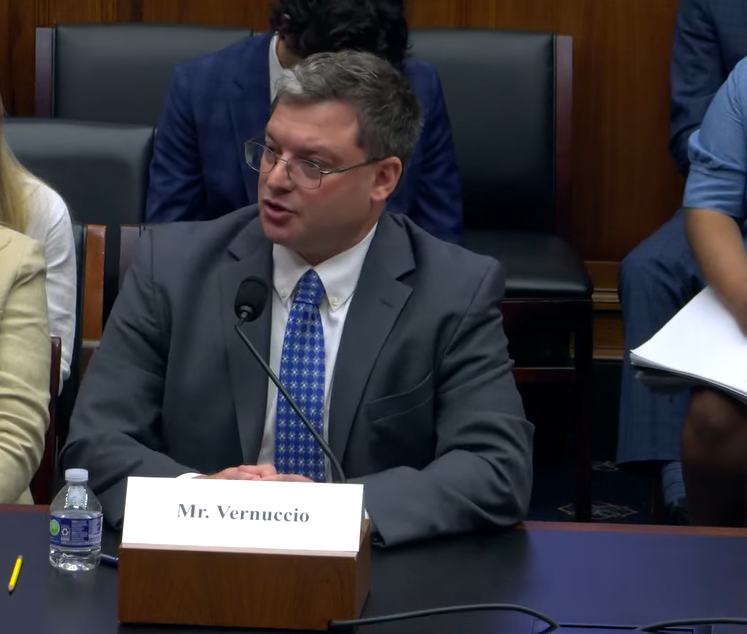
June 26, 2026 // Last year, I participated in a Senate hearing in which a union shop steward was asked about government-appointed arbitrators unilaterally imposing contracts. He said that would be “removing the democracy from the workplace.” He said such democracy “is the whole point of the union” because it gives workers a say. The shop steward’s own union was in the process of voting down several contract proposals, further emphasizing the importance of letting workers vote.

Op-ed: New federal rule exposes rift between unions and their members
June 23, 2026 // If the rule takes effect as scheduled, union members can look forward to more detailed information about their unions’ sources of revenue and the management of union investments and assets. They will be able to differentiate between union expenditures for political purposes and lobbying. Similarly, they will be able to see how their union allocates resources to representing them in contract negotiation and administration versus unionizing new workplaces or industries.