Posts tagged health insurance
Portable Benefits Win in Six More States
June 24, 2026 // A company willing to contribute toward benefits risks having the independent contractor reclassified as a traditional W2 employee, which brings new tax obligations, wage rules, and liability. Faced with that risk, most companies contribute nothing. Independent contractors are left to pay for benefits on their own, and many go without, with no safety net if they get sick, lose work, or grow old without savings. Portable benefits laws cut that knot. They establish that a voluntary contribution to a worker’s benefit account does not make the worker an employee. The account under this framework belongs to the worker, rather than the company, and follows them from one contract to the next. Contributions can fund health coverage, retirement savings, paid leave, disability protection, and emergency income, the protections a traditional job provides.
Why “Pro-Worker” Policies Don’t Work
June 2, 2026 // As I explained at the Post, the policy implications of Engbom’s research and related analyses are clear: by making workers more costly to employers or less willing and able to switch jobs, government policies ostensibly intended to “protect workers” are actively harming them and the economy overall. Policymakers legitimately concerned with American workers’ earnings and well-being should therefore focus on fixing these policies and enacting new ones that enhance workers’ autonomy and mobility. Too often these days, “pro-worker” policies are anything but.
CALIFORNIA: IHSS providers tricked into staying, overpaying
June 1, 2026 // Another provider who called for help navigating the union’s intentionally complicated opt-out process reported she was paying $45 a month in dues in addition to $53 a month for the dental insurance for just herself. That’s a whopping $98 dollars to hold onto dental insurance that could be purchased from an independent third party at a fraction of the cost. SEIU Local 2015 and United Domestic Workers (UDW), AFSMCE Local 3930 are the two unions representing more than a half million providers. Collectively, they rake in over $100 million in dues every year — money spent on inflated salaries for its leaders and political activity while providing lackluster representation. Yet the “discounted” dental packages can cost up to a third of a provider’s gross pay if they are only allotted a few hours a month.
Commentary: Mamdani Misreads What Gig Workers Want
May 21, 2026 // Arranged scheduling cuts directly against what gig workers value most: flexibility. More than 60 percent cite it as the main reason they chose this work, and few are interested in traditional, prescheduled jobs. They’re also more concerned about the lack of benefits than about wage rates. These realities underscore the wrongheadedness of Mamdani’s anti-gig campaign. A better approach would preserve flexible hours while expanding access to benefits. One promising model is a portable benefits system, in which workers and companies contribute to SEP IRA–style accounts that can be used to purchase health insurance, paid leave, or retirement plans. Numerous states—red and blue alike, from Tennessee to Maryland to Pennsylvania—have enacted portable-benefits systems for gig workers in recent years.
Detroit’s Michigan Science Center Workers win union victory under UAW
May 13, 2026 // Museum cultural workers achieved a victory on May 8 as Guest Relations and Education workers at Detroit’s own Michigan Science Center voted overwhelmingly to unionize under the UAW. The victory follows a two-year campaign for the right to collective bargaining and includes demands for better access to sick leave, health insurance, livable wages, and improved, safer working conditions on the museum floor.
Watchdog report exposes teachers union ‘political machine’ funneling more than $1 billion to liberal causes
April 27, 2026 // According to research from Defending Education, national teachers unions alone have directed roughly $669 million toward left-wing political groups, advocacy organizations and campaigns since 2015. When state and local affiliates are included, that figure balloons to more than $1 billion in total political spending. The reports track spending from the two largest unions, the National Education Association (NEA) and the American Federation of Teachers (AFT), as well as their state-level affiliates, using federal filings and campaign finance records.
A giant barrier to being self-employed is falling, state by state
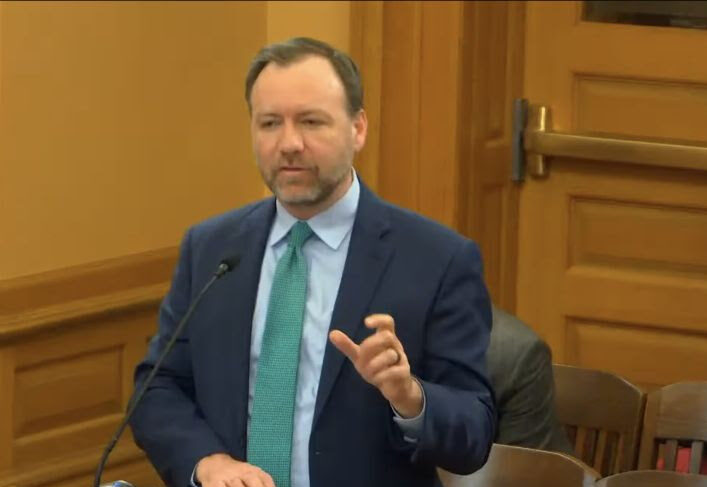
April 13, 2026 // As more states pass permanent reforms, millions of independent contractors could gain access to benefits they’ve never enjoyed. But states aren’t the only ones that can act. Congress could also amend federal law so that companies may offer benefits without facing liability. Sen. Bill Cassidy (R-Louisiana) and Rep. Kevin Kiley (I-California) have introduced bills to that effect in their respective chambers. They deserve the support of the full Congress and the White House in giving millions more workers long-term financial security along with the flexibility that self-employment provides. The portable benefits revolution can’t sweep the nation fast enough.

Wisconsin Reined in Public Sector Unions. Now Those Reforms Are in Jeopardy.
April 12, 2026 // According to a recent analysis by the Center for Economic Policy and Research (CEPR), Wisconsin has seen the sharpest decline in union membership rates of any state in the country over the past 40 years. While the number of union members has declined nationwide in recent decades as America has transitioned to a more service-based economy, Wisconsin's decrease has been particularly notable, especially since it historically had been one of America's most unionized states. Act 10 played a large role in the drop. Wisconsin's public sector union membership rates saw "by far" the largest decline—at close to 29 percent—of any state, according to CEPR's report. "Wisconsin's steepest losses," the report notes, "coincided with the 2011 passage of Wisconsin Act 10."
Maryland lawmakers pass bill granting some college professors union rights
April 12, 2026 // The unions would be under the American Federation of Teachers, which represents K-12 educators, higher education faculty and staff, state employees, nurses and health care professionals. The Maryland chapter represents over 18,000 workers. Kenya Campbell, president of AFT Maryland, said she expects Moore to sign the bill this year but said the work isn’t over. “We’re going to continue to fight until all faculty across the state of Maryland have the right to collectively bargain,” she said. The bill has advanced despite opposition from the University System of Maryland, the parent organization overseeing most of the public universities in the state.
The fight continues: a look at union efforts in Washington state
April 10, 2026 // A Washington state cleaning company that receives hundreds of thousands in taxpayer dollars, is in negotiations with its unionized workers over the employees’ contract.