
Posts tagged First Amendment
Commentary: Labor Law’s Illiberal Trajectory
November 11, 2026 // State policymakers are following the same playbook. For example, in Massachusetts, California, and Illinois, they have created new “sectoral bargaining” systems for rideshare drivers. These systems group all drivers into a single election unit and slash the thresholds for union organizing. If as few as 2.5 percent of them say they want a union, the union gets contact information for the remaining 97.5 percent. And if the union then gets signatures from as few as 15 percent, it becomes their exclusive representative. The drivers never vote: they just wake up one day and find themselves in a union. Some states are going even further, experimenting with “industry standards” boards. These boards essentially replace workplace-level bargaining with industry-wide regulation.

New York, Oregon laws could make the Supreme Court defend its Janus ruling
November 6, 2026 // Oregon and New York recently enacted remarkably similar laws. On their face, they claim their intention is to prevent organizations from fraudulently impersonating labor unions, which sounds reasonable enough. Fraud is already illegal, and nobody has a constitutional right to deceive workers. But these laws actually have a much more specific target: The Freedom Foundation, my own national watchdog organization, whose mission is to inform government employees of their right to decline union membership and dues — and when necessary, to help them exercise it, since unions often make it as difficult as they can.
Ninth Circuit Revives Liberty Justice Center and California Justice Center’s First Amendment Challenge to California’s Employer Speech Law
November 2, 2026 // Federal appeals court reverses dismissal of California Policy Center’s lawsuit, ruling that the organization has standing to challenge restrictions on political speech in the workplace

Liberty Justice Center Secures Victory for Puerto Rico Worker Over Unauthorized Union Dues
November 2, 2026 // The Liberty Justice Center (LJC) has secured a victory for public employees’ First Amendment rights in Rigau v. Quintana, securing reimbursement of improperly deducted union dues and binding commitments to prevent future unauthorized deductions from the wages of Puerto Rico Industrial Commission (PRIC) employee Luis Rigau. The agreements resolve his claims against his employer, Commission President María T. Quintana, in her official capacity, and the union, Federación Central de Trabajadores, UFCW Local 481. Rigau’s lawsuit challenged the unauthorized reinstatement of his union membership and the resumption of union dues deductions from his wages, despite his repeated written objections. The Liberty Justice Center represented Rigau alongside the National Right to Work Legal Defense Foundation.
Liberty Justice Center Sues Brooklyn Library Union Over Compulsory Dues
September 28, 2026 // The Liberty Justice Center filed a federal lawsuit on behalf of Brooklyn Public Library employee Jeffrey A. Schwartz, challenging the requirement that he pay union dues as a condition of his employment. In Schwartz v. Brooklyn Library Guild, Local 1482, AFL-CIO et al., the Liberty Justice Center represents Schwartz, a Government Documents Librarian at the Brooklyn Public Library (BPL). The lawsuit challenges the continued deduction of union dues from his wages by BPL and Local 1482. It alleges that the arrangement is unconstitutional because the City of New York is so deeply entwined with BPL’s governance—especially with respect to employee pay and benefits—that BPL’s actions are fairly attributable to the government. As a result, the lawsuit argues, BPL employees are entitled to the same First Amendment protections as other public employees.
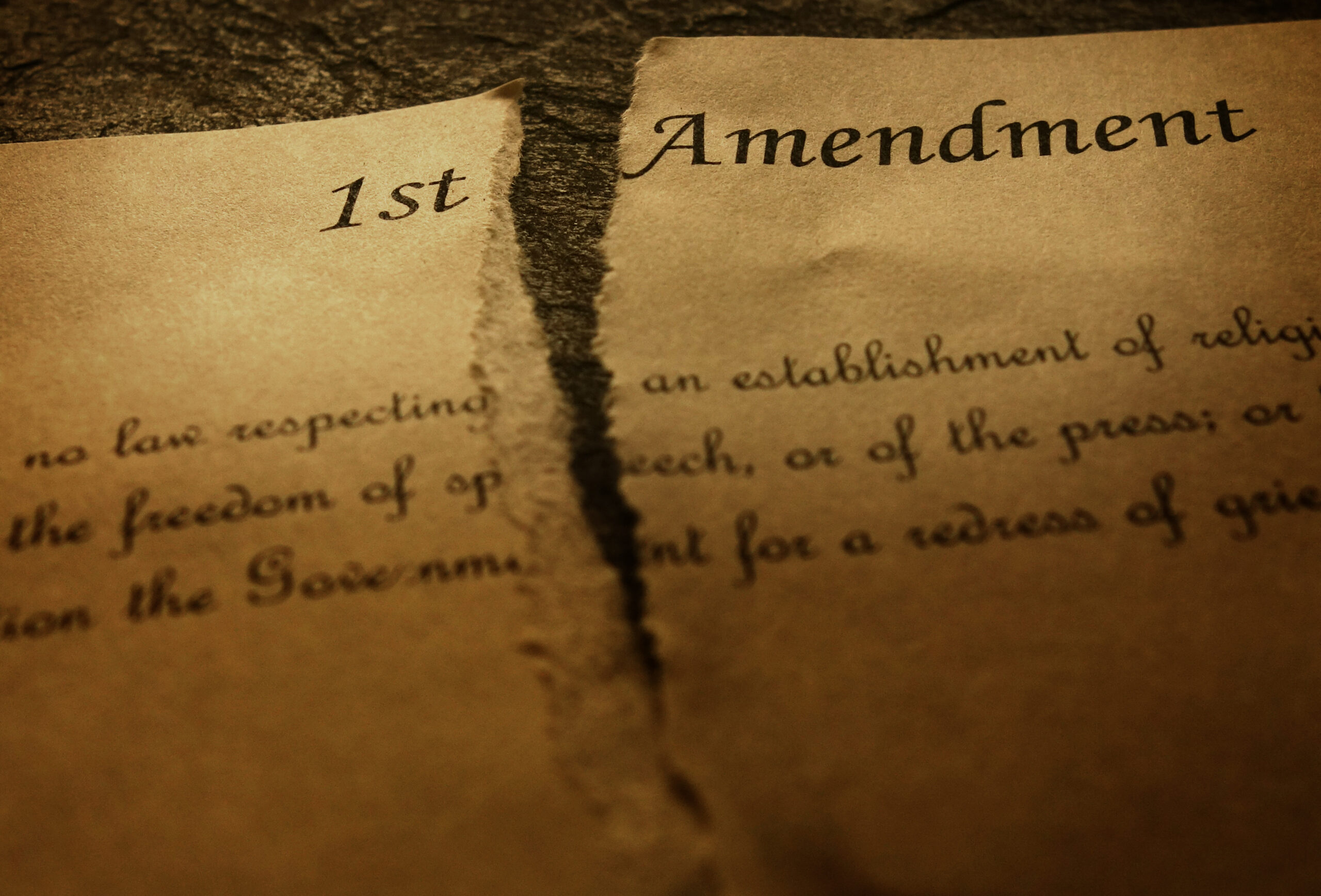
New York’s union bosses just invented a new way to silence their critics
September 17, 2026 // But read past the press release and you find the real target: the state attorney general now has subpoena power and can seek $1,000 per violation against any person or group, in state or out, whose mailers about a worker's right to leave a union get labeled "impersonation." Unions get their own private right to sue on top of that. I've spent three decades in regulated finance, and I know what an uncapped $1,000-per-item liability schedule does to an organization's willingness to speak. It doesn't punish fraud. It punishes volume.
Victory for Louisiana workers and First Amendment rights
September 1, 2026 // In 2018, the Supreme Court settled a fundamental question of constitutional law in Janus v. AFSCME. The Court held, with clarity and conviction, that public employees cannot be compelled to pay union dues as a condition of their employment. This ruling was a massive victory for the First Amendment, affirming that no public servant should be forced to subsidize a private organization’s political agenda against their own will.
IAFF Local 3631 Settles Case for Denying Retirement Benefits to Nonmember Firefighter
August 27, 2026 // Peter Crary, a Fire Apparatus Engineer who has served his community for over 20 years with the Orange County Fire Authority (OCFA), has prevailed in his dispute with International Association of Fire Fighters (IAFF) Local 3631 union bosses, and OCFA officials. IAFF Local 3631 bosses moved to settle after the California Public Employment Relations Board (PERB) issued a complaint against the union for violating Crary’s rights. Crary’s settlement was secured with free legal aid from National Right to Work Foundation staff attorneys.

Dr. Oz points to powerful California unions as ‘biggest beneficiaries’ in Medicaid fraud scheme
August 10, 2026 // The CMS Administrator claims that there is no incentive to crackdown on fraud because unions are able to increase their bottom-line if more people are able to bill Medicaid. “These incentives create a vicious cycle: Lax program integrity standards mean more demand for caregivers, more caregivers mean more union dues, and more union dues mean more donations for the elected officials who are supposed to be guarding the cash register,” he added. While joining a union is supposed to be completely optional, Oz accused some of California’s most influential labor organizations of forcing healthcare workers to join instead of offering a choice.

Op-ed: Dues & Don’ts: Unions are political — and union money is again driving opposition to initiatives
August 4, 2026 // Public unions do more than bargain over wages and working conditions. They endorse candidates and ballot measures, produce voter guides, use direct mail and other member communications to urge workers and their families who and what to support. They get into all sorts of campaign fights using treasuries built with members’ wages. The current election season displays this clearly. The Washington Education Association (WEA) opposes all three statewide measures slated for the November ballot: Initiative IL26-001, concerning parental rights in public schools, Initiative IL26-638, concerning participation in athletics at K-12 schools, and IP26-645, the initiative to repeal an income tax passed by Democratic state legislators earlier this year. (Unlike candidate contributions, which come from voluntary WEA-Political Action Committee donations, member dues may be used for ballot-initiative campaigns without separately obtaining each member’s approval for that particular campaign.)