Posts tagged FLSA
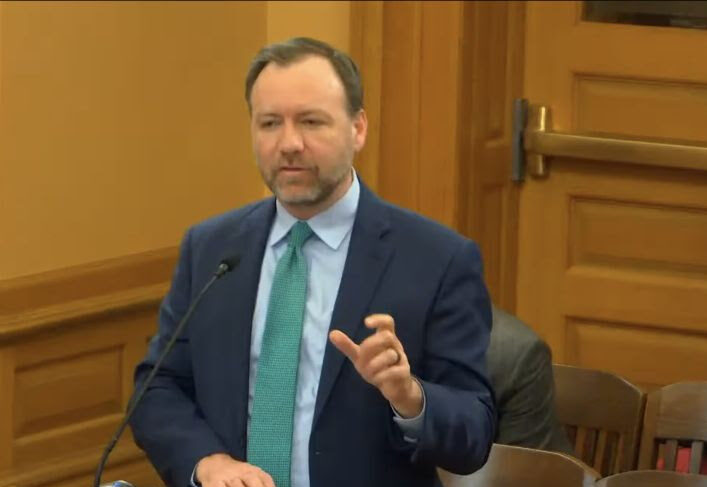
Jonathon Wolfson: Testimony before the House Committee on Education and Workforce
June 10, 2026 // In short, locum tenens is not a temporary patch on a permanent problem; it is a permanent and growing part of the healthcare access solution. In many areas, the choice is not between a permanent healthcare provider and a locum tenens healthcare provider. The choice is between a locum tenens healthcare provider and no provider at all. Any policy that undermines locum tenens would directly harm the patients who depend on it.
DOL gets flexible on overtime
May 20, 2026 // In 2023, The Biden administration raised the income threshold from $35,500 to $44,000, and planned to increase it again to $59,000 annually by 2025. This was intended to expand the number of people receiving overtime. The administration’s union allies and labor-sympathetic lawmakers have long argued that companies abuse the exception by designating regular employees as managerial to get out of having to pay them overtime. Raising the threshold was meant to prevent this. This one-size-fits-all approach did not necessarily benefit all workers. The Biden rule would have limited employers’ ability to offer work weeks longer than 40 hours in exchange for other considerations, such as the ability to work from home or additional time off during other weeks.
DOL gets flexible on overtime
May 18, 2026 // The Fair Labor Standards Act (FLSA) requires that workers be paid time-and-a-half once a work week exceeds 40 hours. However, employers may exempt workers classified as managerial who meet a salary threshold. In 2023, The Biden administration raised the income threshold from $35,500 to $44,000, and planned to increase it again to $59,000 annually by 2025. This was intended to expand the number of people receiving overtime. The administration’s union allies and labor-sympathetic lawmakers have long argued that companies abuse the exception by designating regular employees as managerial to get out of having to pay them overtime. Raising the threshold was meant to prevent this. This one-size-fits-all approach did not necessarily benefit all workers.

Commentary: Freelancers are not victims. Federal regulations should stop victimizing us
April 7, 2026 // The Trump 2026 IC rule follows the framework of the Trump 2021 IC rule, but applies modifications to the Fair Labor Standards Act (FLSA), Family and Medical Leave Act (FMLA), and the Migrant and Seasonal Agricultural Workers Protection Act (MSPA). The modifications narrow previously broad language on what constitutes an “employee,” while delineating that independent contractors are not employees. The 2026 IC rule further nullifies the six-factor “economic reality” test housed in the 2024 Biden IC rule.
Op-ed: LABOR SEC CHAVEZ-DEREMER: Our plan to rescind the Biden independent contractor rule
March 15, 2026 // In that spirit, the Department of Labor’s Wage and Hour Division released a proposed rule that provides clarity to help workers and employers alike determine when a worker is properly classified as an independent contractor and when that worker is an employee owed rigorous protections under the Fair Labor Standards Act (FLSA). In proposing this rule, we celebrate the decisions of Americans who choose to test their entrepreneurial spirit — the same spirit on which our country was founded 250 years ago.
Uniting Behind the American Franchise Act: A Bipartisan Effort to Clarify the Joint Employer Standard
October 10, 2025 // Seven Republican and seven Democratic Congressional members introduced the bipartisan act and limited its application to future proceedings only, preventing retroactive implications. If approved, the American Franchise Act only applies to joint employer matters regarding franchising; it is not a universal modification to all employer relationships.

NY sisters who own DQ franchise hit with $6M lawsuit for paying workers every 2 weeks — they helped change the loophole but it was too late for them
October 10, 2025 // New York's Frequency of Pay law (2) requires “manual workers” to receive their pay on a weekly basis. It’s a law that the sisters said they’d never heard of, which is why they paid their employees biweekly — a process that they said was never flagged by anyone, including during an audit conducted by the state’s Department of Labor. Robey told CBS that the lawsuit was “ridiculous,” adding, “we knew we paid every employee every dime that they were owed." But her sister noted that the former employee, who’d been laid off, “would say all the time, 'I'm gonna get you, I'm gonna get you,' and she did.”
DOL once again set to tackle joint employer, independent contractor regulations
August 20, 2025 // Meanwhile, DOL in May told the 5th U.S. Circuit Court of Appeals that it would no longer defend the last administration’s rule allowing retirement plan fiduciaries to consider environmental, social and governance, or ESG, factors when making investment decisions from a lawsuit filed by several Republican-led states. In another shift, DOL in June said it would begin issuing opinion letters through five of its subagencies. The agency’s new regime published the first such letter in May on the subject of the independent contractor classification status for virtual marketplace company workers. The letter reinstated a stance DOL previously articulated in a 2019 letter that had been rescinded during the Biden administration.
New Game Plan: White House and Congress Move to Clarify Student Athlete Unionization Rights
July 31, 2025 // The SCORE bill’s ban is broad. Its key provision says, in part: “no individual may be considered an employee of an institution, a conference, or an interstate intercollegiate athletic association based on the participation of such individual on a varsity sports team or in an intercollegiate athletic competition as a student athlete.” In addition, the bill blocks states from enforcing any law that “governs or regulates the compensation, payment, benefits, employment status, or eligibility of a student athlete (including a prospective student athlete) with respect to participation in intercollegiate athletics.” It specifically blocks any state law that “relates to the right of a student athlete to receive compensation or other payments or benefits directly or indirectly from any institution, associated entity or individual, conference, or interstate intercollegiate athletic association.”

Comer introduces bill to help small business owners
July 19, 2025 // Kentucky First District Congressman James Comer, R-Tompkinsville, has introduced the Save Local Business Act, which clarifies the joint employer standard to provide certainty for small business owners and workers across the country. Comer notes that in recent years, small businesses have suffered under unelected bureaucrats at the National Labor Relations Board (NLRB) who have dramatically expanded the definition of “joint employer” and implemented burdensome regulations for small businesses. “Congress must promote policies that empower small businesses and free them from stifling regulations pushed by an unchecked and unelected federal bureaucracy,”