Posts tagged Independent Contractor
NJBIA: Latest Independent Contractor Carve-Out Bill Highlights Fatal Flaws of New ABC Test
September 15, 2026 // The rule, strongly opposed by NJBIA, New Jersey's business community, New Jersey freelancers and legislators from both sides of the aisle, has been paused until Oct. 1 to give NJDOL and lawmakers time to work out any needed statutory changes. But as there are only 16 days left until the rule takes effect and no statutory changes have been made, NJBIA has launched a grassroots campaign to urge Gov. Mikie Sherrill to delay the implementation of the rule until July 1, 2027. Further, Senate President Nicholas Scutari (D-22) has also formally requested the Sherrill administration to pause the rule.
‘Severe Adverse Impact’
September 8, 2026 // Scutari’s action is good news for independent contractors like me. He is showing leadership on this policy issue in response to all the independent contractors and the broader business community who continue to stand in fierce opposition to the rulemaking, which attempts to impose the Labor Department’s own interpretation of regulatory language that defines who can legitimately earn income as an independent contractor throughout the state.
Billionaire tax backers burn big money on retreats, out-of-state political efforts and breathing ‘coach’
July 22, 2026 // The Post’s review of federal records found that officials for Service Employees International Union-United Healthcare Workers West burned millions on an out-of-state political effort as well as dues on travel, conferences and beachfront retreats — all while paying nearly $235,000 to a “clarity coach” who appeared in a series of low-budget mindfulness videos on Instagram.
Kim Kavin: ‘Severely Broken’
July 9, 2026 // New Jersey lawmakers should begin by passing ACR73 and SCR62. These concurrent resolutions, already introduced in the state Senate and Assembly, would declare the new independent-contractor rule inconsistent with legislative intent and would invalidate it. That’s the quick fix to stop the very real threat that is causing even some of the highest-earning professions to seek carveout protections before the rule takes effect October 1.
Op-ed: To High Praise and Hallelujahs, Trump Nominates Keith Sonderling for Secretary of Labor
June 30, 2026 // As Acting Secretary, Sonderling has strongly advocated for Trump's pro-business and pro-worker agenda, touting the manufacturing jobs that have been returned to the U.S., and has worked tirelessly to beef up and expand apprenticeships through the U.S. Department of Labor for small businesses and private-sector concerns. Under Biden's DOL, apprenticeships were issued through the major labor unions like the AFL-CIO and SEIU, effectively cutting out any private sector opportunities. Sonderling has also long been a champion for defined benefit pension plan sponsors to be able to use group annuities to protect pension benefits through pension risk transfers, and to allow employers to incorporate retirement plan options like cryptocurrency assets and private credit funds. But most pivotal, Sonderling is working hand-in-hand with the Fraud Task Force to eradicate the rampant unemployment insurance fraud.
Portable Benefits Win in Six More States
June 24, 2026 // A company willing to contribute toward benefits risks having the independent contractor reclassified as a traditional W2 employee, which brings new tax obligations, wage rules, and liability. Faced with that risk, most companies contribute nothing. Independent contractors are left to pay for benefits on their own, and many go without, with no safety net if they get sick, lose work, or grow old without savings. Portable benefits laws cut that knot. They establish that a voluntary contribution to a worker’s benefit account does not make the worker an employee. The account under this framework belongs to the worker, rather than the company, and follows them from one contract to the next. Contributions can fund health coverage, retirement savings, paid leave, disability protection, and emergency income, the protections a traditional job provides.
Minnesota Business Owner Warns Against California-Style Attacks on Freelancers
June 15, 2026 // VanDerBill said she knew she had to try to make sure Minnesota’s task force wasn’t completely biased against independent contracting, so she applied to sit on it. To her surprise, she ended up securing a seat. She said she was shocked she was the only voice on the task force representing business owners or independent contractors who opposed increased regulations on their work. VanDerBill said that while she doesn’t want to throw labor unions under the bus, she believes they are partly to blame for the attacks on freelancing. Union membership has been falling over the last few decades, and unions requiring workers to be classified as full-time employees rather than freelancers could be one way to reverse that trend.
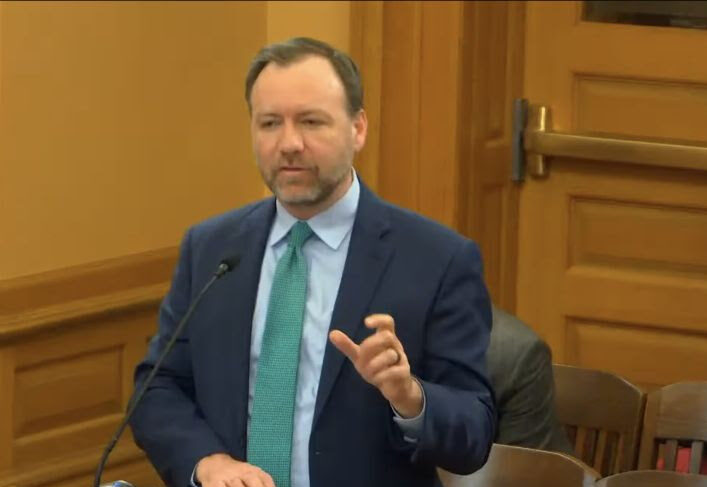
Jonathon Wolfson: Testimony before the House Committee on Education and Workforce
June 10, 2026 // In short, locum tenens is not a temporary patch on a permanent problem; it is a permanent and growing part of the healthcare access solution. In many areas, the choice is not between a permanent healthcare provider and a locum tenens healthcare provider. The choice is between a locum tenens healthcare provider and no provider at all. Any policy that undermines locum tenens would directly harm the patients who depend on it.
New Jersey Codifies ABC Test for Independent Contractor Classification
June 1, 2026 // For employers, the practical lesson is familiar: states continue to move toward more aggressive worker-classification enforcement, and California remains the clearest example of that trend. California has led the nation in challenging independent contractor classifications through the ABC framework and related litigation and enforcement activity. New Jersey’s recent legislation reflects that same direction, and New York has also continued moving toward a more worker-protective approach. Other states have likewise adopted ABC-style tests in at least some contexts, making it increasingly risky for businesses to rely on a uniform, multistate independent contractor model without jurisdiction-specific review.
NEW JERSEY: NJBIA Urges Sherrill Administration to Not Adopt Independent Contractor Rule
April 29, 2026 // Further, in data highlighted in Extremism and Entrepreneurism, a 98-page report from Freelance Busting founder Kim Kavin, there is already empirical research by the Mercatus Center at George Mason University showing that New Jersey’s ABC test applications have already resulted in the following from 1995-2024: a 3.81% decrease in W-2 employment a 10.08% decrease in self-employment a 3.95% decrease in overall employment a 7.40% decrease in women’s W-2 employment Kavin’s report also found evidence suggesting the underlying claim by labor groups to restrict independent contracting in New Jersey was based “largely on mischaracterized data and research.”