
Posts tagged flexibility
Labor Day: Americans Flee Forced-Unionism States and Move to Right-to-Work States
September 6, 2026 // Among the top ten growth states in the U-Haul index, nine have a Right-to-Work law that protects workers from being forced to pay dues to union bosses as a condition of employment. -Among the bottom ten states in the U-Haul index, NONE has a Right-to-Work law. All are forced unionism states. -Of the 25 top ranked cities in the U-Haul Growth Index, 24 are located in Right-to-Work states.

Op-ed: Congress is fast-tracking a bill to bring Europe’s failing labor union model to US shores
June 23, 2026 // While FLCA does not establish sectoral bargaining, it moves labor relations to a necessary first step: the creation of a centralized apparatus to determine the terms of private labor contracts. And, to be sure, Big Labor and its allies have their eyes on sectoral bargaining as a means of boosting union rosters. But either way, FLCA signals a significant departure from the traditionally decentralized American model with voluntary bargaining — and toward a more centralized, Euro-bureau approach to labor relations.
Minnesota Business Owner Warns Against California-Style Attacks on Freelancers
June 15, 2026 // VanDerBill said she knew she had to try to make sure Minnesota’s task force wasn’t completely biased against independent contracting, so she applied to sit on it. To her surprise, she ended up securing a seat. She said she was shocked she was the only voice on the task force representing business owners or independent contractors who opposed increased regulations on their work. VanDerBill said that while she doesn’t want to throw labor unions under the bus, she believes they are partly to blame for the attacks on freelancing. Union membership has been falling over the last few decades, and unions requiring workers to be classified as full-time employees rather than freelancers could be one way to reverse that trend.
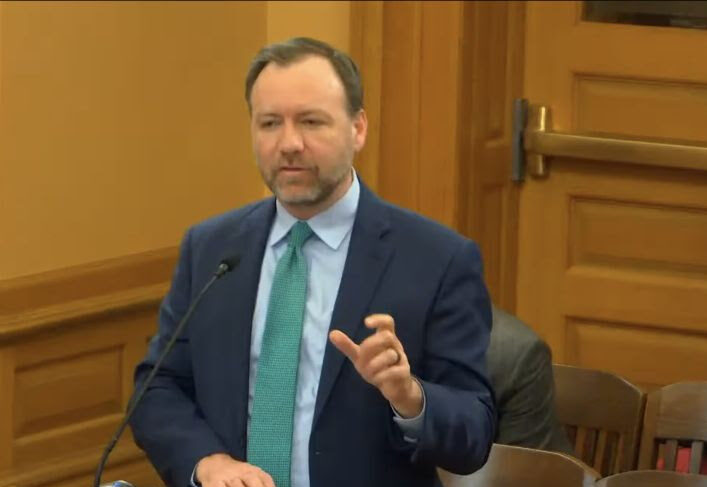
Jonathon Wolfson: Testimony before the House Committee on Education and Workforce
June 10, 2026 // In short, locum tenens is not a temporary patch on a permanent problem; it is a permanent and growing part of the healthcare access solution. In many areas, the choice is not between a permanent healthcare provider and a locum tenens healthcare provider. The choice is between a locum tenens healthcare provider and no provider at all. Any policy that undermines locum tenens would directly harm the patients who depend on it.
Commentary: Mamdani Misreads What Gig Workers Want
May 21, 2026 // Arranged scheduling cuts directly against what gig workers value most: flexibility. More than 60 percent cite it as the main reason they chose this work, and few are interested in traditional, prescheduled jobs. They’re also more concerned about the lack of benefits than about wage rates. These realities underscore the wrongheadedness of Mamdani’s anti-gig campaign. A better approach would preserve flexible hours while expanding access to benefits. One promising model is a portable benefits system, in which workers and companies contribute to SEP IRA–style accounts that can be used to purchase health insurance, paid leave, or retirement plans. Numerous states—red and blue alike, from Tennessee to Maryland to Pennsylvania—have enacted portable-benefits systems for gig workers in recent years.

Op-ed: It’s Time to Unwind Biden’s Chaos for Freelancers, Small Business
April 29, 2026 // Preserving flexible work is extremely important to women, who make up about half of the nation’s freelance workforce. Nine out of 10 women who left traditional jobs to freelance did so for flexibility. As caregivers, independent contracting allows moms to raise children or care for aging parents. Sara B. stated in her supportive comment for the proposed rule, “I value my flexibility and independence with Instacart because I'm a mom who can only work sometimes because I don't have many people to help me watch my child so I can work. Being able to work whenever I want helps me so much.” For seasoned workers transitioning into retirement and older Americans supplementing Social Security benefits, flexible work keeps them engaged.
A giant barrier to being self-employed is falling, state by state
April 13, 2026 // As more states pass permanent reforms, millions of independent contractors could gain access to benefits they’ve never enjoyed. But states aren’t the only ones that can act. Congress could also amend federal law so that companies may offer benefits without facing liability. Sen. Bill Cassidy (R-Louisiana) and Rep. Kevin Kiley (I-California) have introduced bills to that effect in their respective chambers. They deserve the support of the full Congress and the White House in giving millions more workers long-term financial security along with the flexibility that self-employment provides. The portable benefits revolution can’t sweep the nation fast enough.
Commentary: Maryland Portable Benefits Success Shows a Model For States to Follow
April 10, 2026 // Maryland has become the third state in the nation to complete a portable benefits pilot – highlighting how independent workers can maintain the freedom they value while accessing the benefits they want. Following successful pilots in Pennsylvania and Georgia, DoorDash launched and funded a four-month portable benefits pilot in Maryland, bringing more than 4,000 Dashers into the program. DoorDash and Dashers contributed more than $800,000 to their portable benefits accounts, setting aside money to be used for healthcare, paid time off, retirement, and more, an independent analysis from BW Research showed. Crucially, an overwhelming majority (96%) of participants support legislation requiring companies to contribute to flexible benefit accounts while preserving independent contractor status.

States Lead the Way on Portable Benefits and Flexible Work
March 24, 2026 // The momentum behind portable benefits reflects the strength of a growing network of organizations and leaders committed to modernizing workforce policy. Americans for Prosperity has worked in conjunction with a diverse range of state and national organizations including the Mercatus Center, Libertas Institute, Institute for the American Worker, Independent Women, R Street Institute, and more from state to state. With research, data, examples of those who would benefit, and a dose of optimism, the educational outreach to highlight how beneficial these reforms are to American families has created a surge of interest among state lawmakers who increasingly understand this golden opportunity to help their residents thrive in today’s economy including shifts due to the rise of AI and other technology.
The Rise of Portable Benefits
March 19, 2026 // States like Alabama, Tennessee, Utah, West Virginia, and Wyoming have already enacted voluntary portable benefits frameworks. Others—including Pennsylvania, Maryland, and Georgia—have launched pilot programs. And a growing number of states—from Connecticut to Kansas to Hawaii—are actively considering legislation.