Posts tagged GAO
OPM finalizes performance review overhaul for federal employees
July 7, 2026 // Along with limiting how many employees can be deemed high performers, OPM’s final rule also eliminates “level 2” of the government’s five-level scale for employee performance ratings; removes the ability for employees to contest their performance ratings through grievance and arbitration proceedings; and requires OPM to review agencies’ performance rating systems every other year. Supervisors’ performance reviews will now be tied, in part, to “driving a culture of accountability,” and they will have to complete additional training on the new rating system. Also under the final rule, agency officials will no longer be required to review any “unsatisfactory” performance ratings.
Largest federal workers union warns ICE agents are not trained to replace TSA and putting them in airports ‘does not fill a gap. It creates one’
March 24, 2026 // TSA officers’ call-out rates reached their highest level of the shutdown on Sunday, with 11.76% of workers, or more than 3,450 employees, not showing up to work, DHS data showed. That included about 40% of TSA officers from George Bush Intercontinental Airport in Houston, Louis Armstrong New Orleans International Airport, and Hartsfield-Jackson Atlanta International Airport, according to DHS data.
Social Security ordered to restore telework; EPA and NASA roll back collective bargaining
March 15, 2026 // A provision in AFGE’s collective bargaining agreement with SSA gives agency management “sole discretion to temporarily change, reduce, or suspend approved telework day(s) for any employee(s), office, component, or agency-wide due to operational needs.” The contract also gives agency management sole discretion to change, reduce, or suspend approved telework for any employee due to their performance.
21st Century Worker Act Aims to End Worker Classification Confusion
March 6, 2026 // Sen. Mike Lee (R-UT) introduced the 21st Century Worker Act, a much needed practical step to clear up persistent confusion surrounding worker classification under federal law. The bill would replace the current patchwork of conflicting standards under the Fair Labor Standards Act, National Labor Relations Act, and Internal Revenue Code with a single, clear bright line test for determining independent contractor status across federal labor and tax statutes. It also directs the Government Accountability Office (GAO) to assess the impact of these new standards and allows workers and businesses freedom to mutually elect worker status in cases where conventional classifications do not apply clearly.
OPM to tighten reins on federal employees’ performance reviews
February 26, 2026 // In proposed regulations issued Tuesday, the Office of Personnel Management outlined plans for removing a current ban on a “forced distribution” of federal employee performance evaluations. Once finalized, the regulations would lead to limits on how many employees can be ranked as high performers in their annual reviews.
GAO: Effectively ending telework increased attrition at Social Security
January 27, 2026 // A combination of former Commissioner Martin O’Malley’s mandate that headquarters and regional office staff telework at most once or twice a week, respectively, and the agency’s ability to recall employees from telework to address workload needs led to a reduction in the percentage of agency work hours spent working remotely from 50% to 55% in the first half of 2024 to 39% to 42% in the second half of the calendar year. Once Trump’s telework crackdown took effect at SSA in March 2025, that figure fell to just 13% by last April. But officials told the watchdog agency that telework was a key recruitment and retention tool, and employees said in the 2024 Federal Employee Viewpoint Survey that its relative paucity there compared to other federal agencies and private sector employers motivated a desire to leave.
Commentary: To Harvard and Back with Julie Su
August 18, 2025 // This year, Julie Su, Joe Biden’s pick for secretary of labor, became a resident fellow with Harvard’s Kennedy School, Institute of Politics. The Century Foundation also brought Su on board as a full-time senior fellow. These prestigious institutions seem to have overlooked key events in Su’s long career. Harvard, where Su, a Stanford grad, earned her law degree, hails the Biden nominee as “a nationally recognized workers’ rights and civil rights expert.” As California’s labor commissioner, Su was “widely credited with a renaissance in enforcement and creative approaches to combating wage theft and protecting immigrant workers.” In reality, her experience was a bit more extensive.
Trump Just Saved Thousands of Disabled Americans’ Jobs
August 5, 2025 // Disability-rights advocates have long insisted that, as a matter of public policy, disabled people’s lives should resemble those of nondisabled people to the greatest extent possible. They have argued, for example, that “segregated” environments, which primarily or exclusively serve disabled people, violate the principle of normalization and ought to be abolished. And for decades, they have called for the repeal of Section 14(c), a provision of the Federal Labor Standards Act (FLSA) of 1938 that allows certified employers to pay disabled workers a subminimum wage commensurate with their productivity. Congress created the 14(c) program to enable people with severe disabilities to remain in the job market after the passage of the federal minimum wage. The Biden administration published a proposed rule in 2024 that would have phased out the program, claiming that it was “no longer necessary to prevent curtailment of employment opportunities.” But last month, the Trump administration announced it was withdrawing the proposal. In doing so, it preserved the jobs of thousands of severely disabled Americans who would have lost one of the staples of a “normal” life.
Kim Kavin: The Tangled Web
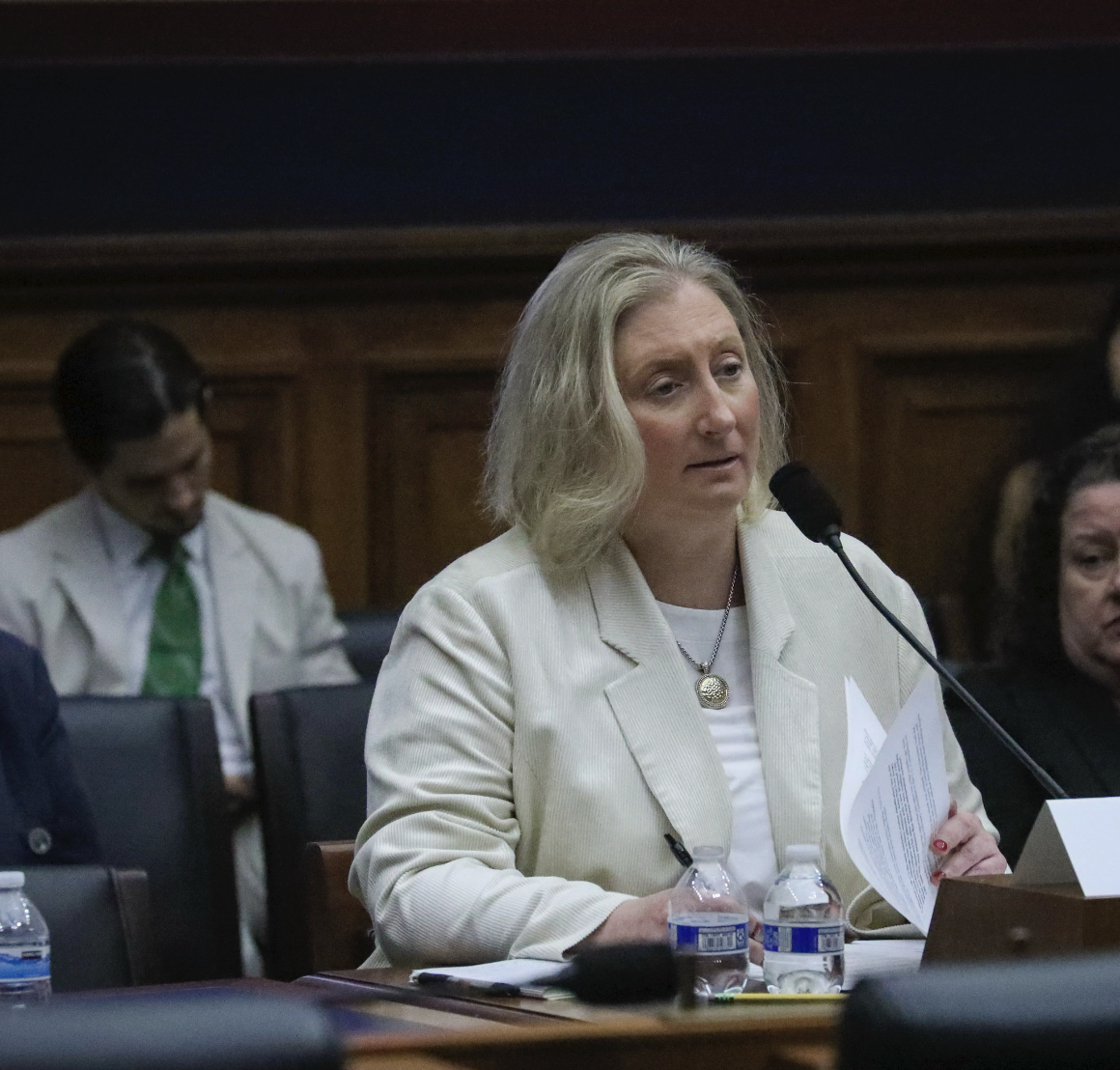
May 23, 2025 // I know how most writers’ minds work. I have a well-honed instinct for spotting a thread I should pull on because the facts might be tangled up in some kind of web. This hyperlink in Newsweek was a different kind of typo. The words “2020 analysis” actually did lead to a report about independent contractors—one that was written not in 2020, but instead in 2009. A wrong hyperlink of that nature is a red flag to any decent editor that there’s probably an association in the writer’s mind between the words in the hyperlink and where that link goes. Any experienced editor will pull on that thread to figure out if there’s an actual problem with the facts.
House Panel Approves Bills Favorable to Management, Restrictive of Unions
March 27, 2025 // The House Oversight and Government Reform Committee has passed a bill (HR-2249) to allow an incoming President to disavow any existing collective bargaining agreements with unions representing federal employees. This bill would also make unenforceable a contract provision that the President consider or an agency considers in conflict with a newly issued executive order or presidential memorandum, or agency guidance to carry one out.