Posts tagged Senate

Commentary Mailee Smith: Federal labor bill could force social agendas into private school contracts
October 8, 2026 // A union that organizes employees with the intent of ultimately closing their schools also is capable of organizing a private school with the intent of introducing drastic contract provisions, especially when those provisions already have been demanded in its other contracts. The FLCA would give teachers unions an additional tool in their arsenal against anything that isn’t a traditional public school.

Editorial Board: Congress wants faster union contracts — except for its own staff
October 8, 2026 // Nicole Waring, the shop steward in Khanna’s office, explained why it took so long. “There’s a lot of back and forth. It takes time to review each passback of the contract [and] redline everything,” she told Politico. “The biggest thing was we wanted to make sure that this contract would be governable, and rather than just make things convenient and take shortcuts, make sure that it was going to be something that we knew would stand the test of time.” Other staff explained that going slowly was important because union contracts are binding and directly affect workers’ lives. They noted the unique workplace circumstances of a congressional office. Here’s the thing: Every workplace is unique. Every union contract directly affects workers’ lives. And that’s why the government should never force a contract on people without their consent.
Editorial: Against the Hollywood bailout
October 1, 2026 // The greatest job decline after Covid was in 2023, before Hollywood’s chief competitor, the U.K., expanded its film subsidies. That was the year of the industry’s “double strike,” when actors and writers simultaneously walked off studio lots for months. Hundreds of projects were delayed or outright canceled as filming rolled to a halt, costing the entertainment industry billions of dollars. When studios finally signed contracts to end the strikes, they had to accept unions’ core demands, ballooning their compensation in perpetuity. Is it any wonder they have looked to film elsewhere? The proposed federal tax credit would bail out the union workers who bargained for more than they were worth. It would subsidize almost all labor costs — for employees and contractors, both pre-production and post-production — of film crews, animators, special-effects artists, writers, actors, and even producers and directors. There are no limits on eligible compensation, so taxpayers would pick up a good chunk of the salaries of Christopher Nolan and Tom Cruise.

Vinnie Vernuccio: Labor reform finally has congressional momentum
September 30, 2026 // Those reforms will take time to pass, whereas ending racist or sexually harassing language in unionization campaigns should be easy to get across the finish line soon. Clearly, Congress is capable of rallying behind pro-worker labor reforms. The House’s bipartisan passage of the Ending Predator Access to Union Power Act proves it, and hopefully it will clear the Senate soon.
Reed Larson built a movement for the long fight
September 24, 2026 // As union membership continues a decadeslong decline, nearing historic lows, union officials are spending billions on politics every election cycle. Traditionally, Democrats have been the main recipients of union political funding. However, major unions, notably the Teamsters, have begun to turn toward populist Republicans to advance their legislative agenda. Teamsters head Sean O’Brien has taken up with Republicans such as Sen. Josh Hawley (MO), who, along with union-label Democrats, introduced the Teamsters-endorsed FLCA into the Senate.
Opinion This Labor Day, Respect the Right to Join (or Not) a Union
September 8, 2026 // In that scenario, regulators should consider holding a new vote on whether current workers want a union. While it would be legal for the earlier group’s vote to bind the new hires, it may not be fair because the new workers may have a different opinion. This needs to be resolved before the union is established. Federal law has long been stacked against workers who seek to decertify unions that don’t represent their interests because that decertification has to be done through the union itself. Unsurprisingly, many unions will oppose their own members in these situations. If the workers are truly united in favor of a union, they will get one eventually. And if they aren’t united in favor of one, that wish should be respected, too. It should be the workers’ choice, after all.

Nurses and teachers unions bankroll leftist candidates and causes
July 21, 2026 // Additionally, the AFT donated $150,000 to Gov. Tina Kotek’s (D-OR) reelection campaign on the eve of the May primary. Kotek then decided in June to opt Oregon out of the Trump administration’s school choice program, which would subsidize scholarships for K-12 students to cover the cost of private school tuition and homeschooling expenses. AFT has been lobbying Democratic governors to reject the education tax credits offered by the program, calling it a “private school voucher scheme.” Meanwhile, the Oregon Education Association declined to endorse Kotek, despite doing so in the past, out of frustration with the state’s school funding levels.
Republicans And Union Allies Could Force Abortion On Christian Employers, Critics Warn
June 28, 2026 // The Senate version of the bill is sponsored by outspoken social conservative Senator Josh Hawley (R-MO) who says that the bill will help workers assert their rights against woke corporations. But according to the Christian Employers Alliance, the bill could have significant ramifications for religious workers and employees.
Commentary: The House Sides With Unions Over Workers
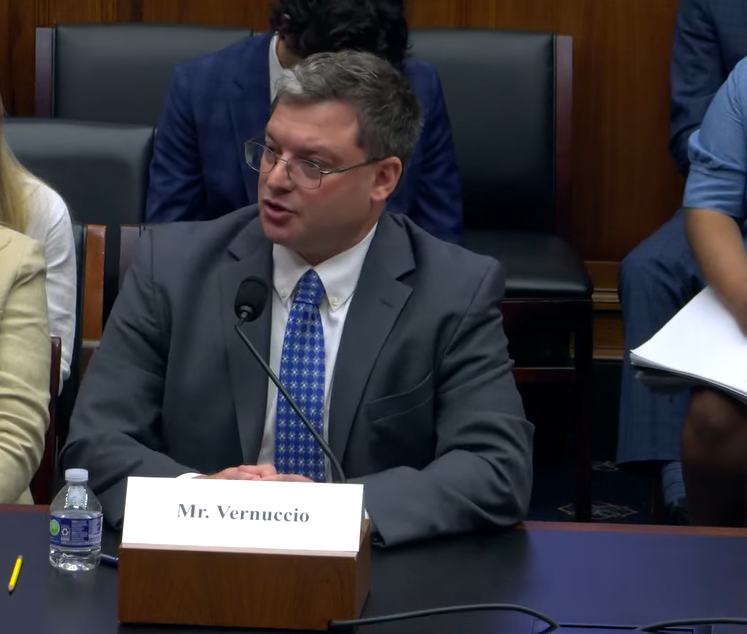
June 26, 2026 // Last year, I participated in a Senate hearing in which a union shop steward was asked about government-appointed arbitrators unilaterally imposing contracts. He said that would be “removing the democracy from the workplace.” He said such democracy “is the whole point of the union” because it gives workers a say. The shop steward’s own union was in the process of voting down several contract proposals, further emphasizing the importance of letting workers vote.

LTE: Unions Place Culture Wars Front and Center
June 22, 2026 // Instead of focusing solely on issues like wages and benefits, union representatives demanded that the company allow different pronoun pins. They also demanded that the company cover abortion and gender-affirming care in its health plans, which the company already did. I expected the union to focus on more important issues. In 2025 the union demanded the store become an Immigration and Customs Enforcement sanctuary. If the Faster Labor Contracts Act, which the U.S. House recently passed, was the law of land, government arbitrators could look at other union contracts or union demands like those I saw and force them on workers at other companies.