Posts tagged official time
Coalition Letter: Protecting Taxpayers’ Wallets Act
April 16, 2025 // Prior to the recent termination of collective bargaining rights for Transportation Security Administration (TSA) officers, the Department of Homeland Security revealed that nearly 200 TSA officers were working full-time on union matters despite being paid salaries by the government. In FY2019, the most recent year for which the data is available, over 550 employees at the Internal Revenue Service (IRS) were paid taxpayer dollars to perform union work. In another case, a union president has been allowed to occupy an executive suite that spans half of a hospital wing at the Salem VA Medical Center at taxpayer expense. Members of Congress recently introduced legislation to rectify this problem and prevent further squandering of tax dollars. The “Protecting Taxpayers’ Wallets Act of 2025,” introduced as H.R. 1210 by Congressman Scott Perry (R-Pa.) and S. 511 by Senator Joni Ernst (R-Iowa), would give agencies the power to charge labor unions for their use of official time and their use of any agency resources such as office space and equipment.
Sen. Mike Lee spearheads efforts to block government workers from union activities while on the clock
April 9, 2025 // “Federal government unions are heavily involved in party politics,” National Right to Work Committee President Mark Mix said in a statement. “They stage massive political protests, and contribute large amounts of money and manpower to influence elections. Employees of these unions should not have their salaries paid by American taxpayers.” Lee cited a 2016 report by the Office of Personnel Management that showed federal employees spent 3.6 million hours on union-related businesses, costing taxpayers more than $177 million. That number dropped to 2.6 million hours, costing $134.9 million, during the first Trump administration, according to Lee.
GOP Unveils Bill To End Taxpayer-Funded Union Organizing
April 8, 2025 // Lee and Cline’s No Union Time on the Taxpayer’s Dime Act would end the practice of “official time”— paid time given to federal employees to perform union duties during work hours and using government office space. This practice costs taxpayers more than $100 million annually, according to data from the White House Office of Personnel Management (OPM).

Workers at Defense Health Agency spent $3.3 million and 87,000 hours working on their own union benefits
April 7, 2025 // Federal unions are restricted from negotiating benefits and pay by the Federal Service Labor Management Relations Statute. Instead, benefits and pay are determined by law set by Congress and federal regulations. But federal unions can negotiate over more minor aspects of working conditions. “This includes things like the height of cubicle panels, securing designated smoking areas on otherwise smoke-free campuses, and the right to wear Spandex at work,” Rachel Greszler, a senior research fellow on workforce and public finance at the Heritage Foundation, previously told The Post.
Backgrounder: Executive Order: Exclusions from Federal Labor-Management Relations Programs
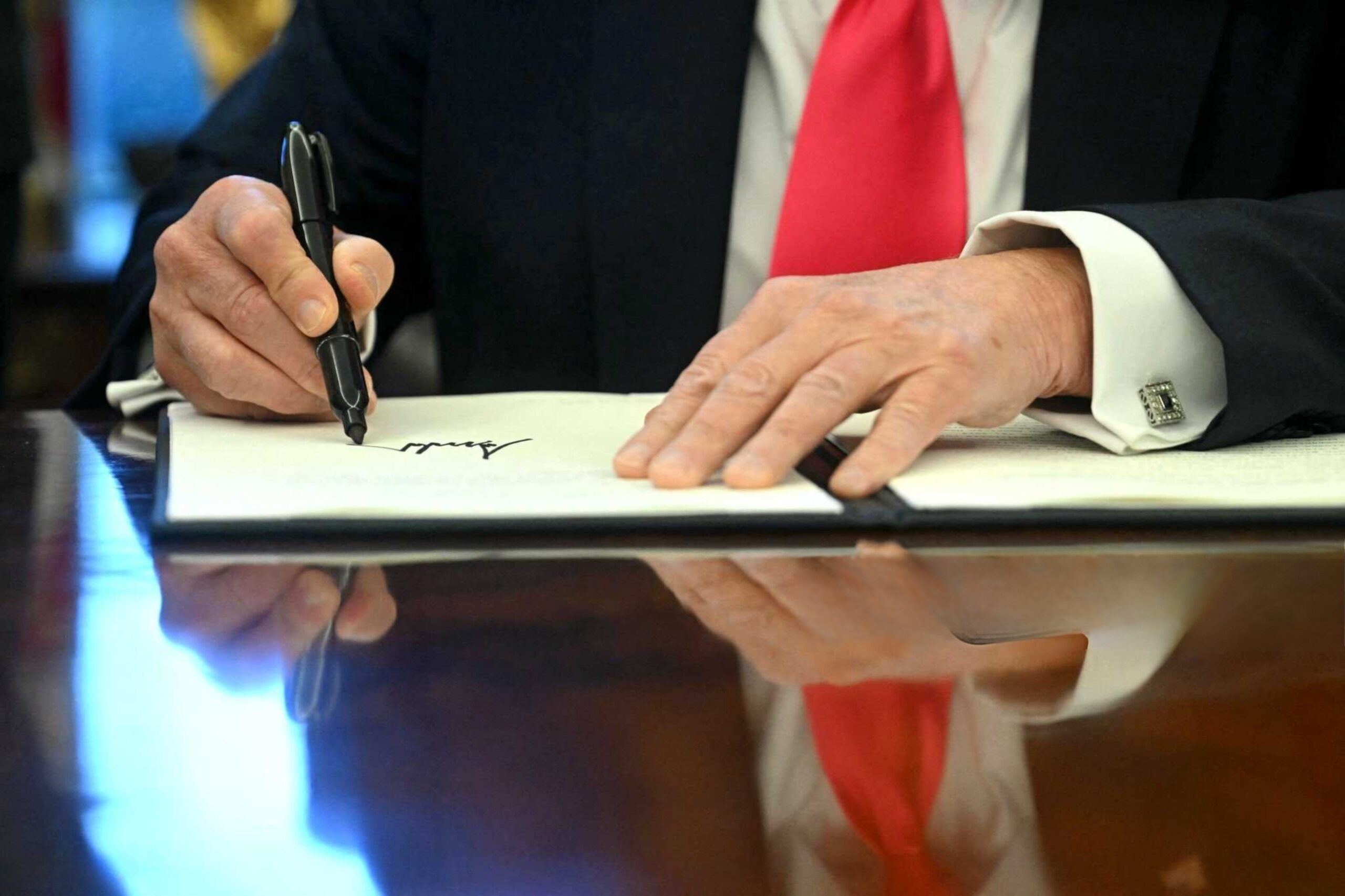
March 31, 2025 // The practice of “official time” is when unionized federal employees perform union-related activities, rather than their actual public service duties, while being paid by taxpayers. The Federal Unions EO requires that agencies, upon termination of an applicable collective bargaining agreement, reassign any workers who performed “official time” to positions where they perform solely agency business. It also contains language regarding existing grievance proceedings and allows for the head of each agency to submit a report to the President within 30 days highlighting any agency subdivisions that were not covered but should have been covered under the Federal Unions EO.

Trump gives taxpayers union collective bargaining transparency
March 24, 2025 // Taxpayers are spending money negotiating with unions over a supposed right to wear spandex in federal offices. Unions are also negotiating with the federal government over the height of cubicle desk panels—how far they reach the floor. And negotiations even focus on things like carving out smoking zones on federal properties that are supposed to be smoke-free. While government unions can’t legally bargain over wages and benefits set by federal law, they’re left negotiating over these types of picayune demands, making the bargaining process incredibly costly. Taxpayers are getting hit over and over. The public pays for the salaries of the federal negotiators and, in many cases, even for the union officials on the other side of the bargaining table. Taxpayers also pay for travel and other expenses. Negotiating often requires hiring costly outside experts, factfinders, mediators, and arbitrators. Even the pens and paper negotiators use are on the taxpayer’s dime. The bargaining process can take months, if not years, and taxpayers spend more money daily.

Commentary: Taxpayer-Funded Union Work Deserves Transparency, Limits
March 21, 2025 // The Office of Personnel Management estimated federal employees spent at least 2.6 million hours on official time in fiscal year 2019, at a cost to taxpayers of $135 million. This was after President Trump sharply curbed taxpayer-funded union time via a 2018 executive order. Because unions have a right to unspecified quantities of official time under federal statute, the most the president can do without congressional action is implement parameters around its use or, in the case of the Biden administration, crank it to 11. In his drive to become “the most pro-union president in history,” Biden rescinded Trump’s executive order limiting official time and directed federal agencies to grant unions more taxpayer-funded union time.

Commentary Rachel Greszler: What Trump Memo on Taxpayer-Funded Union Time Means for Federal Employee Unions
March 18, 2025 // In addition to tracking the number of employees and their time, agencies also have to report on other taxpayer-provided subsidies to unions. That would include, for example, “a single Veterans Affairs facility allocate[ing] half of a hospital wing—over 5,000 square feet—largely for the use of the union president and officials” as exposed in a report from the Institute for the American Worker. The irony of federal employees’ excessive use of official time is that they can’t even bargain for the biggest things most unions bargain over—pay and benefits. And working predominantly in offices (or, prior to Trump’s executive order requiring federal employees to return to the office, in their homes) hardly poses a need for lengthy worker safety negotiations. That leaves official time to be predominantly spent defending poor performers and bad actors that agencies have disciplined or dismissed, and negotiating over tedious things like the height of cubicle panels; designated smoking areas on otherwise smoke-free campuses; and the right to wear spandex at work.

Trump Targets Spending on Labor Union Talks in Latest DOGE Move
March 18, 2025 // President Donald Trump’s administration is mandating federal agencies report how much they spent negotiating labor union contracts for the past year, a sign that collective bargaining agreements could be the next target in a government cost-cutting push. An Office of Personnel Management memo sent Monday directs federal agency heads to report the amount spent on the collective bargaining agreement process, including how much they paid their employees involved in the negotiations, fees for engaging in mediation or arbitration and the fair-market-value of the office space used for the talks.

Op-ed: Priorities for Labor Secretary Lori Chavez-DeRemer
March 11, 2025 // These reforms align with President Trump’s bold vision, exemplified by the reinstatement of Schedule F, to enhance accountability and performance in the federal workforce. They are not just about efficiency-they are about empowering federal employees to thrive while delivering exceptional service to Americans. Secretary Chavez-DeRemer has a chance to lead with principle, prioritizing worker autonomy over union influence. The time to act is now. On behalf of Americans for Fair Treatment, I stand ready to support her in unleashing the full potential of our federal workforce.