Posts tagged workers’ compensation
Watchdog critic of TARP bailouts plays role in Shawn Fain graft controversy
July 15, 2026 // The DOJ is probing claims that Fain pressured a union official to provide financial benefits to his fiancee and a workers’ compensation claim for her sister, according to Bloomberg. Fain then allegedly punished UAW Vice President Rich Boyer for not approving the benefits by taking away Boyer’s position as lead negotiator with automaker Stellantis. Last month, Barofsky, the court-appointed monitor for the union, released a report about the accusations against Fain. “The Monitor’s investigation substantiated the claim that President Fain acted improperly to obtain financial benefits for his fiancée, and that Vice President Boyer’s failure to approve the bonus may have contributed to Fain’s retaliatory action against him,” Barofsky wrote.
You paid $181 million for union bosses to negotiate against you in 2024, but the Trump administration is doing something about it
February 19, 2026 // Even the “usual” topics of labor-relations negotiations are not part of federal bargaining. As Molly Conway, who served as Chief of Staff to the Department of Labor in the first Trump administration, wrote in a primer for the Institute for the American Worker: Management rights and any matters “specifically provided for by Federal statute” are not bargainable. This includes pay, health insurance, retirement, and certain workplace insurance (e.g., workers’ compensation, unemployment insurance), among others. [citations omitted]
NFIB WASHINGTON STATE: No Small Business Relief in Millionaire Tax Bill
January 26, 2026 // NFIB also opposed HB 2471 and SB 6117, which would allow unionizing small businesses under the state’s Public Employment Relations Commission (PERC) through card check (also called cross check). We also signed in opposed to HB 2409 and SB 6045, which would allow unionizing farm workers through that same process and agency.
Republican senators unveil “portable benefits” bill for gig workers
July 7, 2025 // Sen. Bill Cassidy (R-L.A.) unveiled a bill on Monday that would make it easier for companies to offer benefits to gig workers without making them full-fledged employees. Why it matters: As more Americans turn to gig work and self-employment, there's a growing push to get them access to things like paid sick leave, health insurance and retirement benefits. Zoom in: Called the Unlocking Benefits for Independent Workers Act, the bill is part of legislative package from Cassidy, along with Sen. Tim Scott (R-S.C.) and Sen. Rand Paul (R-Ky.). Both also plan on unveiling related bills Monday.
Wisconsin gig workers could become independent contractors under bill headed to governor’s desk
June 19, 2025 // Drivers for transit apps like Uber or DoorDash would be given more flexibility, but they'd also be exempt from worker's compensation or minimum wage requirements
Bill enabling unionization of ride-hail drivers takes big step
June 17, 2025 // Under the bill, the state would require Uber, Lyft and other such companies on a quarterly basis to give to the Public Employment Relations Board a list of all California ride-hail drivers who have provided at least 20 rides in the preceding six months. The board would use that data to determine the median number of rides given by that pool of drivers. Under AB 1340 as it’s currently written, any driver who gave at least the median number of rides would be considered an active driver. An organization seeking to form a drivers union could then start the process by getting at least 10% of active drivers to authorize it to act as their representative.

A ‘War’ on the Civil Service or Controlling a Powerful Union Political Machine?
May 17, 2025 // Fed unions remain unable to strike — enforced by President Reagan’s firing striking air-traffic controllers — so unions became powerful in more subtle ways. A study by the Institute for the American Worker documents how Federal government unionization works today. “Generally, federal employees are not permitted to strike, and their unions are limited in what conditions of employment they may bargain over.” Management rights and other matters “specifically provided” for by federal statute are still not bargainable. “This includes pay, health insurance, retirement, and certain workplace insurance (e.g., workers’ compensation, unemployment insurance), among other benefits.” The study continues,
Backgrounder: Executive Order: Exclusions from Federal Labor-Management Relations Programs
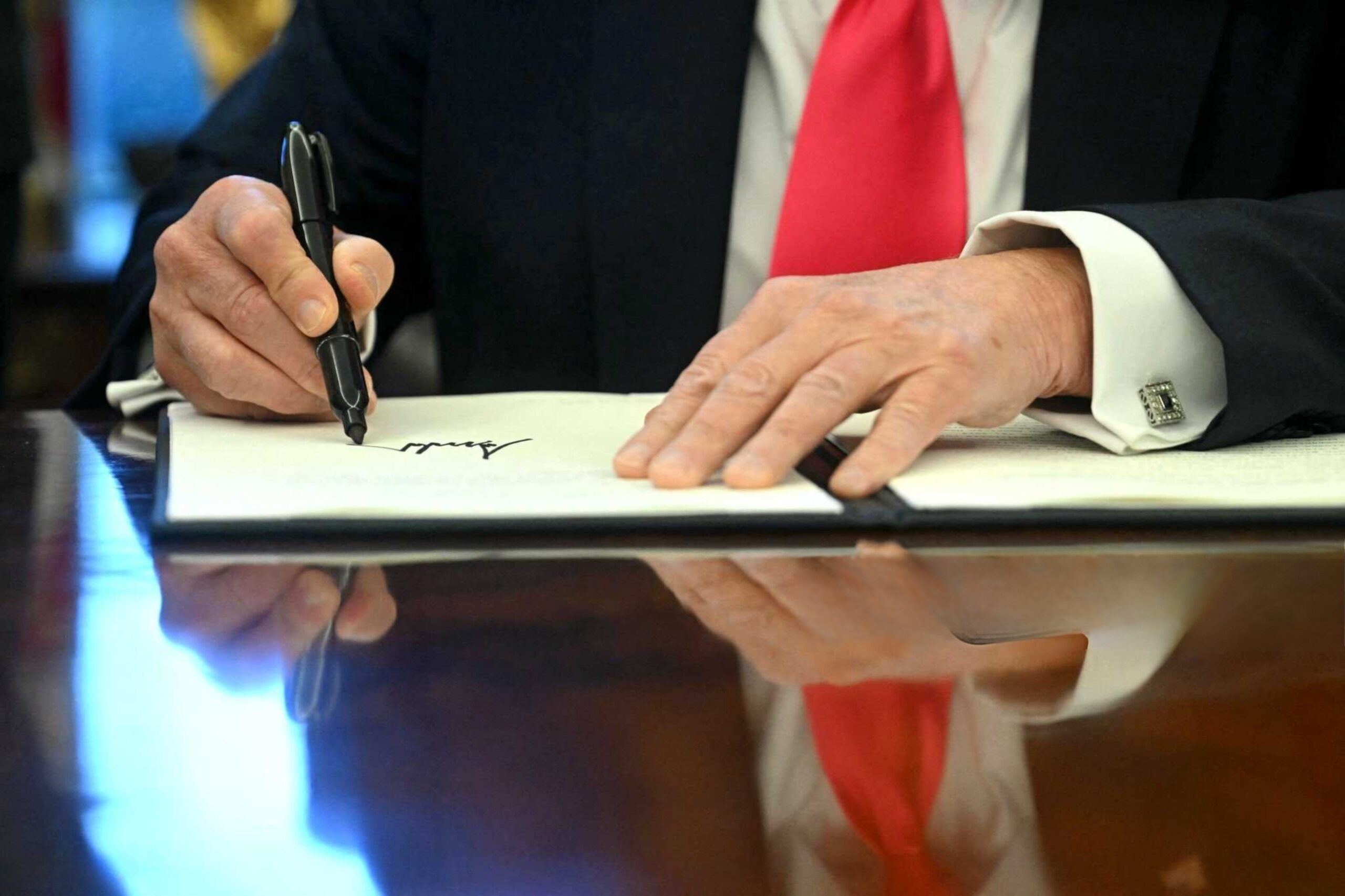
March 31, 2025 // The practice of “official time” is when unionized federal employees perform union-related activities, rather than their actual public service duties, while being paid by taxpayers. The Federal Unions EO requires that agencies, upon termination of an applicable collective bargaining agreement, reassign any workers who performed “official time” to positions where they perform solely agency business. It also contains language regarding existing grievance proceedings and allows for the head of each agency to submit a report to the President within 30 days highlighting any agency subdivisions that were not covered but should have been covered under the Federal Unions EO.
Orange County legislator pushes to restore independent contractor status for manicurists
March 13, 2025 // Ta, R-Westminster, has taken up an effort that he says would restore independence to California manicurists by challenging a state law he believes unfairly limits their ability to work on their own terms. AB 5, passed in 2019, aimed to tighten rules for independent contractors across various industries, including beauty. The law aimed to protect workers by ensuring they receive benefits like minimum wage, workers’ compensation and other labor rights — protections they could lose if classified as independent contractors. Its goal was to reduce exploitation and hold employers accountable for their responsibilities.

Backgrounder: Modern Worker Security Act
March 7, 2025 // Rep. Kiley’s legislation would ensure that the offer of portable benefits by companies would not be a factor in any calculation regarding the classification of a worker under “any federal law”—including the FLSA. The legislation defines portable benefits as a work-related benefit that stays with the worker regardless of whether they continue to perform work for that individual. Such work-related benefits can include “workers’ compensation, skills training, professional development, paid leave, disability coverage, health insurance coverage, retirement savings, income security, and short-term saving” or financial contributions toward such coverage—or a combination thereof.