Posts tagged bargaining units
FLRA to boost political involvement in federal union representation cases
March 30, 2026 // The Federal Labor Relations Authority issued a pair of interim final rules on Tuesday, revising its internal operations for how it processes the labor-management cases. Once the rules take effect next month, the FLRA’s three-member board of political appointees will become involved in initial decisions on amending bargaining units, overseeing union elections and certifying new union chapters. That initial process is currently designated to regional directors — career federal employees — from FLRA’s Office of General Counsel.
Union Organizing Plummets in 2025: A Win for Worker Freedom and Choice
January 22, 2026 // For supporters of voluntary association and employee freedom, these numbers highlight a positive reality: fewer workers are being swept into union representation through the NLRB process. This trend aligns with broader patterns showing declining union density in the private sector, where membership hovers around just 6 percent of workers.[viii] Forced unionism—where employees can be compelled to pay dues or join as a condition of employment—continues to lose ground as more Americans exercise their right to opt out or avoid unionization altogether.
Connecticut Union Raises. Incompetence or Worse?
August 25, 2025 // By telegraphing guaranteed raises, Lamont places unions on offense, emboldened to demand wage and benefit enhancements, rather than defending existing gains. As negotiation expert Chester Karrass once said, “You don’t get what you deserve; you get what you negotiate.” Revealing your playbook isn’t negotiation — it’s surrender. State unions, representing 45,000 employees, already secured a staggering 33% in raises and step increases under the 2017 SEBAC agreement, far outpacing the wage growth of the private-sector workers whose taxes pay their salaries. These contracts, negotiated in the name of taxpayers, are meant to balance fairness to employees with fiscal responsibility. Yet, taxpayers are left out, footing the bill for what resembles a feast.
Newsom used telework as a bargaining chip. State worker unions see opportunity
August 22, 2025 // With this win over telework, an issue which unions previously had little leverage over, labor groups hope they can gain even more traction in future negotiations, to secure even stronger protections over when employees can work from home. On top of that, labor’s argument against requiring state employees to be in the office four days a week received a boost from the independent audit released last week. “Now we actually have an audit that backs up what we have been saying,” said Susan Rodriguez, the chief negotiator for SEIU Local 1000. Auditors surveyed departments, many of which reported their employees were just as or more productive working from home, which Rodriguez said the union has been touting all along. Telework “saves money for the state so they can use it towards more meaningful programs,” she said.
Pa. Worker Sues Union, State Over Mishandled Promotion
June 13, 2025 // Veteran state employee Todd Burns was in line for a well-deserved promotion until state officials allegedly violated his employment contract to promote someone less qualified but who had close ties to management. Burns turned to his union for help, only for AFSCME, Council 13, to refuse to defend the contract, despite his many years as a dues-paying member. Now, Burns is suing his union for violating state law by failing to provide him with fair representation and his employer, the Pennsylvania Public Utility Commission (PUC), for breaking his employment contract.
Backgrounder: Executive Order: Exclusions from Federal Labor-Management Relations Programs
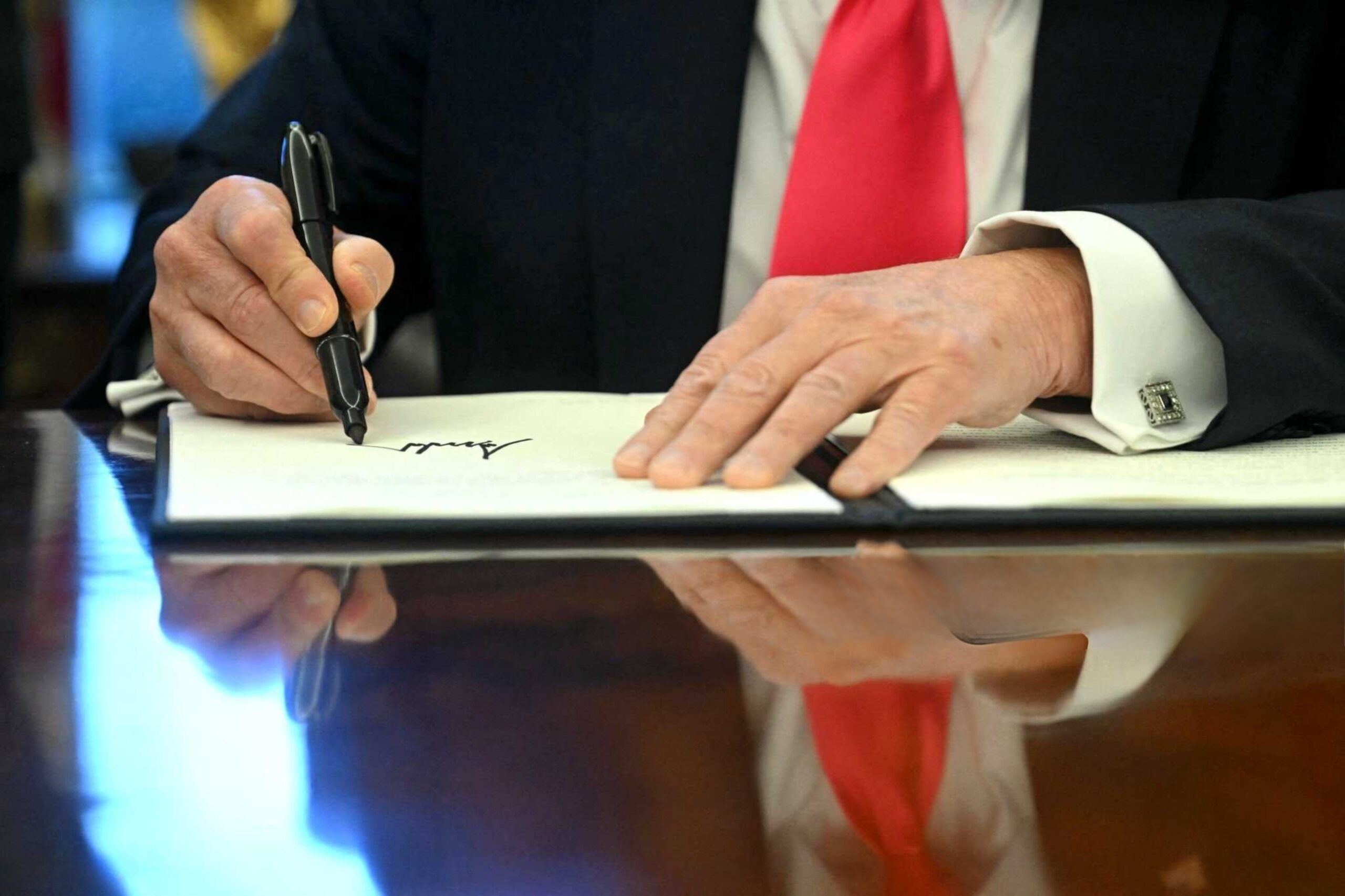
March 31, 2025 // The practice of “official time” is when unionized federal employees perform union-related activities, rather than their actual public service duties, while being paid by taxpayers. The Federal Unions EO requires that agencies, upon termination of an applicable collective bargaining agreement, reassign any workers who performed “official time” to positions where they perform solely agency business. It also contains language regarding existing grievance proceedings and allows for the head of each agency to submit a report to the President within 30 days highlighting any agency subdivisions that were not covered but should have been covered under the Federal Unions EO.
AFGE sees surge in new members as its lawsuits stall Trump’s federal workforce policies
February 11, 2025 // AFGE currently stands at 321,000 dues-paying members, its highest level ever, and is on track to reach 325,000 dues-paying members by the end of the week. Everett Kelley, the union’s national president, told reporters on Monday that AFGE originally planned to reach that membership goal by December 2025.
CUNY Professors Ask U.S. Supreme Court to Hear Case Challenging Forced Association with Antisemitism-Linked Union
July 23, 2024 // “Knight did not sanction a state forcing Jewish faculty members who are ardent Zionists to accept the representation of a union that supports policies they consider anti-Israel,” the petition continues. “The Court should grant this petition to clarify Knight and make clear that the First Amendment protects individuals’ right to dissociate themselves from advocacy groups that support policies contrary to their deeply held beliefs.”
WGA East Backs The Dodo, Thrillist in Fight to Merge Unions With Vox Media Employees: ‘One Union, One Contract’ (EXCLUSIVE)
May 16, 2024 // The Writers Guild of America East council sent a letter to Vox Media brass Monday to demand the company allow employees at its publications The Dodo and Thrillist to merge into the Vox Media Union. The Dodo and Thrillist parent company Group Nine was purchased by Vox Media in December 2021. The Group Nine publications have been incorporated into Vox Media operations, but the employees say Vox Media leadership is refusing to allow them to join the Vox Media Union.
SEPTA to negotiate new contracts with majority of workforce
September 27, 2023 // Considered “one of the most strike-prone large transit systems in the country,” SEPTA may face difficult negotiations and the potential for strikes due to the fund restrictions. Further complicating the issue is the sheer number of collective bargaining agreements that must be negotiated. “SEPTA is committed to continuing good-faith discussions toward reaching agreements that are fair to employees and fiscally responsible to farepayers and taxpayers,” SEPTA spokesperson Andrew Busch said. While each unit will bargain over individual issues, most will tackle issues related to worker shortages, pay increases, and hazard pay.