Posts tagged collective bargaining rights
Commentary: Federal unions owe workers more transparency. Congress can help.
September 24, 2026 // Congress should also ask why so few have and strengthen union accountability by requiring unions to disclose in their filings the total number of workers they claim to represent versus the number of actual members. They should also be required to report election turnout data at all levels: eligible voters, ballots sent and ballots returned — similar to shareholder-vote disclosures. For example, some unions use “delegate” qualification procedures that can insulate national incumbents from direct member voting. As a matter of fair competition, challengers should have the same access to membership contact lists as incumbents, with sufficient time to mount a campaign, with direct member voting as the preferred standard.
Union endorsements cross party lines in Mont. federal races
September 8, 2026 // Democratic candidate Sam Forstag and Republican Aaron Flint — both competing for the 1st Congressional District — signaled they support collective bargaining rights for public and private workers. This position is similar to Montana U.S. Senate candidates independent Seth Bodnar, Democratic candidate Alani Bankhead and Republican Kurt Alme. Forstag, Flint, Bodnar and Alme have union endorsements.
Opinion: Gavin Newsom’s mind-boggling record of giveaways to unions
August 25, 2026 // Richer government contracts and expanded public employee benefits don’t come from nowhere. They land on taxpayers — the same taxpayers already staring down the nation’s highest gas prices, some of the steepest home insurance increases in the country and a cost of living that keeps pushing people out of the state entirely.
NTEU sets deadline for its members to resume paying dues
August 18, 2026 // According to three union officials, NTEU members who do not sign up for dues payments by Sept. 5 will lose access to the union’s benefits until they resume paying dues. This includes eligibility for NTEU representation, either individually or as part of a group, the opportunity to receive remedies or settlements won through NTEU litigation, as well as member-only information and updates.

Op-ed: Republicans should stop helping Democrats empower union bosses
July 29, 2026 // Policies built on employee choice, such as right-to-work protections, reflect what American workers actually want. The partisan legislation now moving through Congress reflects only what union leadership wants. Pro-worker legislation is not synonymous with pro-union legislation; in fact, they often are opposites. It is time for Congress to wake up and realize this.
Nation’s largest federal employee union campaigned against veterans benefits package
July 23, 2026 // The American Federation of Government Employees argued that the Republican-led legislation, which bundles together more than 60 veterans bills, contains partisan measures that will send more veterans to the private, for-profit health system outside the traditional VA network of hospitals and clinics for their care. The AFGE represents approximately 300,000 VA employees, according to the union. AFGE was joined by dozens of other labor unions opposing the bill.
Three Denver music venues are unionizing
July 21, 2026 // Scott Happel, co-owner and partner of the Federal (3830 Federal Blvd.), the Oriental (4335 W. 44th Ave.) and HQ Denver (60 S. Broadway), along with Carnivale De Sensuale and Berkeley Bodega, is considerably less confident. A statement provided to Westword notes in part that “the vote did pass at all three venues. Beyond that, I don’t really know anything, as the union has yet to reach out to start collective bargaining.” However, he adds that “overall, the venues cannot agree to anything that would be financially harmful.”
GOP’s populists flex muscles with wins on Capitol Hill
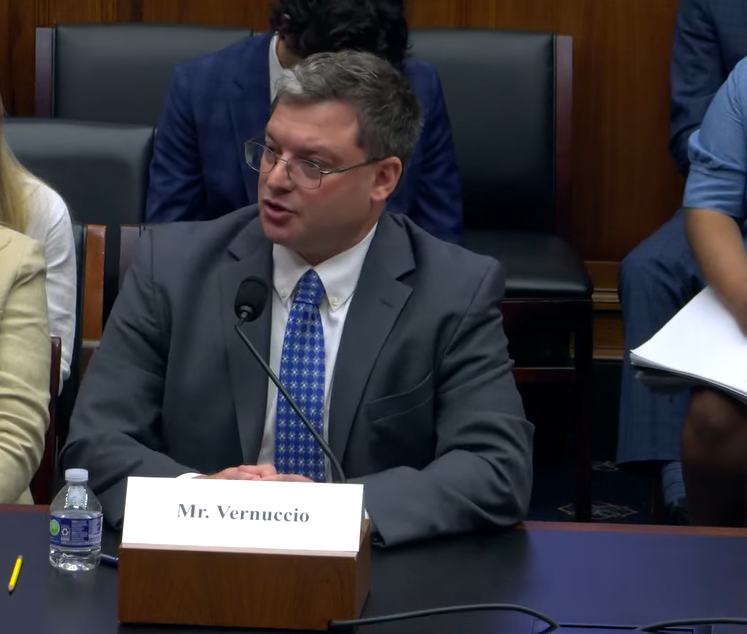
May 29, 2026 // F. Vincent Vernuccio, president of the Institute for the American Worker think tank, which has argued against the bill, pointed to hesitation that one union official expressed about that format in a Senate hearing last year, calling it undemocratic. “It takes away the whole point of a union because it takes away the vote from workers, and that’s exactly what the Faster Labor Contracts Act would do,” Vernuccio told The Hill. “If the union and the employer can’t come to an agreement within 120 days, this arbitration panel that’s appointed by government bureaucrats would write everything in that contract.”
Labor leaders call collective bargaining veto a ‘betrayal’ by Virginia governor
May 19, 2026 // “I remain committed to continuing to work with the General Assembly, unions, localities and public servants across the Commonwealth to develop a public sector collective bargaining system that works for Virginia,” Spanberger said in a statement. “However, I believe additional amendments are needed to the enrolled bill currently before me.” During the Jim Crow era, Virginia banned public sector collective bargaining in 1948 in response to a group of Black workers organizing a union at the University of Virginia hospital. Before Virginia passed a law that permits local governments to enact their own collective bargaining system in 2021, the state was one of only three that have blanket bans on collective bargaining for public sector workers. Even after the law passed, collective bargaining for state government workers remains illegal.
UAW Files Amended Lobbying Disclosure
May 7, 2026 // On labor and worker rights, the union has lobbied on the Protecting the Right to Organize Act, National Labor Relations Board appropriations, federal workers' collective bargaining rights, heat injury and illness prevention standards, and the Faster Labor Contracts Act. It has also opposed the Tribal Labor Sovereignty Act and the One Big Beautiful Bill Act.