Posts tagged Department of Veterans Affairs
Coalition Letter: Protecting Taxpayers’ Wallets Act
April 16, 2025 // Prior to the recent termination of collective bargaining rights for Transportation Security Administration (TSA) officers, the Department of Homeland Security revealed that nearly 200 TSA officers were working full-time on union matters despite being paid salaries by the government. In FY2019, the most recent year for which the data is available, over 550 employees at the Internal Revenue Service (IRS) were paid taxpayer dollars to perform union work. In another case, a union president has been allowed to occupy an executive suite that spans half of a hospital wing at the Salem VA Medical Center at taxpayer expense. Members of Congress recently introduced legislation to rectify this problem and prevent further squandering of tax dollars. The “Protecting Taxpayers’ Wallets Act of 2025,” introduced as H.R. 1210 by Congressman Scott Perry (R-Pa.) and S. 511 by Senator Joni Ernst (R-Iowa), would give agencies the power to charge labor unions for their use of official time and their use of any agency resources such as office space and equipment.
Trump’s stance on unions is what Roosevelt wanted all along
April 11, 2025 // Trump’s executive order, even with its limitations, addresses a longstanding problem in federal governance. The question isn’t whether you support unions or management, but whether you believe the government should prioritize serving citizens over protecting entrenched union interests, regardless of which party controls the White House.

Trump administration ends union dues collection for most feds without notice
April 10, 2025 // An official at another federal employee union familiar with the matter told Government Executive that local unions at agencies serviced by the Interior Department’s Interior Business Center and the Agriculture Department’s National Finance Center, both of which provide payroll services to large swathes of the federal government, took similar action this week, all without notifying the unions or customer agencies. And, in at least one case, the National Finance Center deducted union dues from employees’ paychecks and then failed to pass that money along to the union, requiring them to then refund those dues back to the employees. None of the three payroll providers responded immediately to a request for comment Wednesday. The cancellation comes amid news, first reported in The New York Times, that operatives from Elon Musk’s so-called Department of Governmental Efficiency had gained access to the Interior Department’s Federal Personnel and Payroll System, which underpins the IBC’s work.

Bill Prohibiting Union Time on Taxpayers’ Dime Would Extend Trump EO to Entire Federal Workforce
April 10, 2025 // With the average federal employee receiving almost $163,000 in total compensation (including $106,400 in pay and $56,600 in benefits), the time federal employees spend working for their union can add up quickly. The House Committee on Oversight and Accountability discovered that 1,030 Social Security Administration employees spent a total of 242,237 hours on official time in fiscal year 2023. This cost taxpayers $15.1 million, including $1.43 million to pay 14 employees who spent 100% of their time working for their union. Meanwhile, senior citizens across the country were struggling to get in touch with Social Security Administration employees and unable to get in-person appointments at their local Social Security Administration offices.

Trump puts America first with federal collective bargaining ban
April 3, 2025 // The legal basis for this move is clear — and firmly grounded in common sense. While federal law allows collective bargaining at government agencies, it also allows the president to exclude any agency that deals with “intelligence, counterintelligence, investigative, or national security work.” Collective bargaining must be “interpreted in a manner consistent with the requirements of an effective and efficient government,” according to the same federal law.
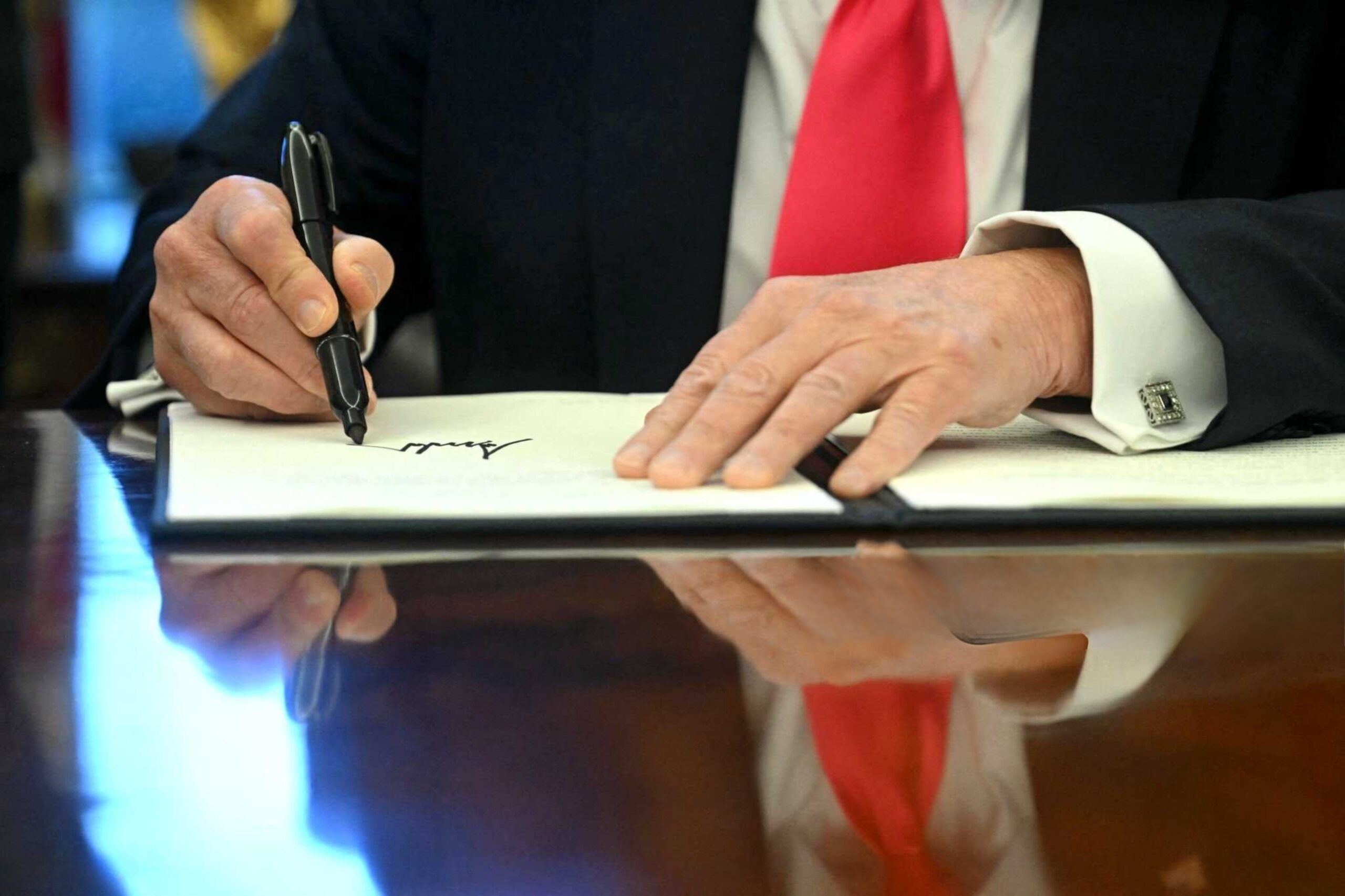
Backgrounder: Executive Order: Exclusions from Federal Labor-Management Relations Programs
March 31, 2025 // The practice of “official time” is when unionized federal employees perform union-related activities, rather than their actual public service duties, while being paid by taxpayers. The Federal Unions EO requires that agencies, upon termination of an applicable collective bargaining agreement, reassign any workers who performed “official time” to positions where they perform solely agency business. It also contains language regarding existing grievance proceedings and allows for the head of each agency to submit a report to the President within 30 days highlighting any agency subdivisions that were not covered but should have been covered under the Federal Unions EO.
Trump Order Could Cripple Federal Worker Unions Fighting DOGE Cuts
March 30, 2025 // The move added to the list of actions by Mr. Trump to use the levers of the presidency to weaken perceived enemies, in this case seeking to neutralize groups that represent civil servants who make up the “deep state” he is trying to dismantle. In issuing the order, Mr. Trump said he was using congressionally granted powers to designate certain sectors of the federal work force central to “national security missions,” and exempt from collective-bargaining requirements. Employees of some agencies, like the F.B.I. and the C.I.A., are already excluded from collective bargaining for these reasons.

Trump signs executive order to end collective bargaining at agencies involved with national security
March 27, 2025 // President Donald Trump moved Thursday to end collective bargaining with federal labor unions in agencies with national security missions across the federal government, citing authority granted him under a 1978 law. The order, signed without public fanfare and announced late Thursday, appears to touch most of the federal government. Affected agencies include the Departments of State, Defense, Veterans Affairs, Energy, Health and Human Services, Treasury, Justice and Commerce and the part of Homeland Security responsible for border security.

Commentary: Taxpayer-Funded Union Work Deserves Transparency, Limits
March 21, 2025 // The Office of Personnel Management estimated federal employees spent at least 2.6 million hours on official time in fiscal year 2019, at a cost to taxpayers of $135 million. This was after President Trump sharply curbed taxpayer-funded union time via a 2018 executive order. Because unions have a right to unspecified quantities of official time under federal statute, the most the president can do without congressional action is implement parameters around its use or, in the case of the Biden administration, crank it to 11. In his drive to become “the most pro-union president in history,” Biden rescinded Trump’s executive order limiting official time and directed federal agencies to grant unions more taxpayer-funded union time.

Commentary Rachel Greszler: What Trump Memo on Taxpayer-Funded Union Time Means for Federal Employee Unions
March 18, 2025 // In addition to tracking the number of employees and their time, agencies also have to report on other taxpayer-provided subsidies to unions. That would include, for example, “a single Veterans Affairs facility allocate[ing] half of a hospital wing—over 5,000 square feet—largely for the use of the union president and officials” as exposed in a report from the Institute for the American Worker. The irony of federal employees’ excessive use of official time is that they can’t even bargain for the biggest things most unions bargain over—pay and benefits. And working predominantly in offices (or, prior to Trump’s executive order requiring federal employees to return to the office, in their homes) hardly poses a need for lengthy worker safety negotiations. That leaves official time to be predominantly spent defending poor performers and bad actors that agencies have disciplined or dismissed, and negotiating over tedious things like the height of cubicle panels; designated smoking areas on otherwise smoke-free campuses; and the right to wear spandex at work.