Posts tagged Bob Onder
Pro-Worker or Pro-Union? Why Choice—not Coercion—Is the Future of Labor Policy, Disunion: The Government Union Report; Commonwealth Foundation
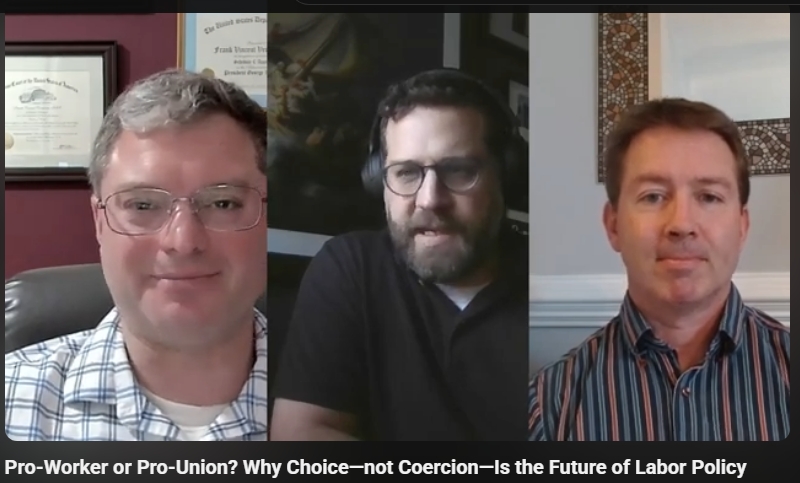
December 18, 2025 // This week on Disunion, host David Osborne is joined by Austen Bannan of Americans for Prosperity and Vincent Vernuccio, president of the Institute for the American Worker, to break down a sweeping new report: How to Empower Workers: Embracing a Pro-Worker Agenda Built on Choice. With Congress rolling out a flurry of labor bills—from right-to-work reforms and secret ballot protections to proposals backed by unions and even some Republicans—this episode cuts through the noise. The panel explains why many so-called “pro-worker” policies actually empower union bosses and government regulators, not workers themselves.

I4AW Presents 2025 Defender of Worker Freedom Awards to Rep. Onder and Kim Kavin
December 15, 2025 // “Both Rep. Onder and Kim Kavin have used their unique positions to stand up for the American worker,” said I4AW President F. Vincent Vernuccio. “Rep. Onder has been a leader in Congress, keeping workers at the center of developing labor legislation. Kim Kavin continues to publicize the struggles independent workers face against government overreach and bring real life context to how specific regulations would hinder their ability to prosper.”

Democracy in the Workplace Is Under Threat
June 30, 2025 // The National Labor Relations Board, which the NLRA created, initially agreed with the majority-of-a-unit standard. In a 1936 decision involving Chrysler, the board rejected a unionization election in which only 125 out of an eligible 700 workers had voted. While 97 percent of the voting workers supported organizing, the board rightly concluded that a mere 17 percent of workers didn’t represent the views of the majority. The law’s text required that ruling. But the NLRB reversed course within months, giving a minority of workers the power to determine the majority’s future in a case involving newspaper workers. In a separate decision, the board declared that it couldn’t require a majority of workers to vote in favor of unionization, nor could it require the lower bar of a quorum. The NLRB, in the 1930s, defended its rejection of the law’s plain text by saying that, with a majority requirement, “the purpose of the [NLRA] would be thwarted.” But the board itself is doing the thwarting of workers’ rights and workplace democracy.