Posts tagged Labor Management Reporting and Disclosure Act of 1959
Union Bosses Admit They Spent $1.8 Billion on Politics in the 2024 Election Cycle — The Real Number is Likely Over $28 Billion
December 19, 2025 // It is nearly impossible to produce perfectly accurate figures from the LM-2 because subsidiary unions file separate forms from the larger national unions they fall under, and transactions between these unions could be listed multiple times in the data. This only worsens the problems of inconsistent and potentially inaccurate reporting mentioned above. The LM-2 does not lend itself to a precise analysis of union boss spending, but it does give a sense of its scale. When sympathetic media outlets report unions’ political influence in the tens or even hundreds of millions of dollars that is a dramatic underrepresentation.
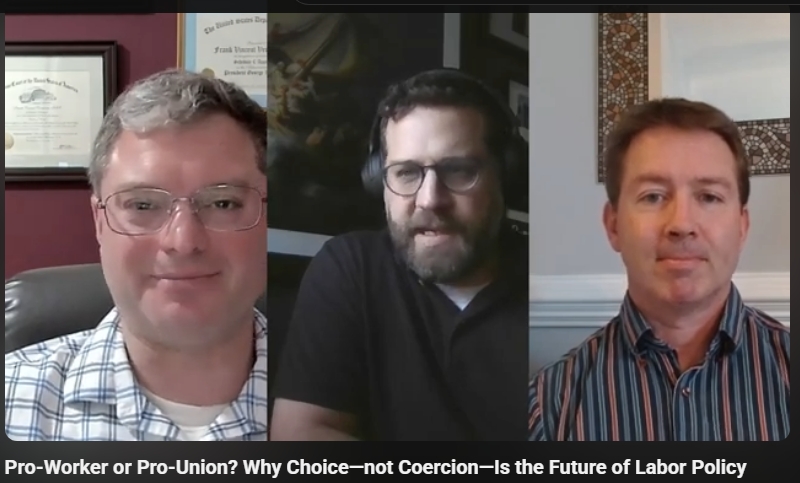
Pro-Worker or Pro-Union? Why Choice—not Coercion—Is the Future of Labor Policy, Disunion: The Government Union Report; Commonwealth Foundation
December 18, 2025 // This week on Disunion, host David Osborne is joined by Austen Bannan of Americans for Prosperity and Vincent Vernuccio, president of the Institute for the American Worker, to break down a sweeping new report: How to Empower Workers: Embracing a Pro-Worker Agenda Built on Choice. With Congress rolling out a flurry of labor bills—from right-to-work reforms and secret ballot protections to proposals backed by unions and even some Republicans—this episode cuts through the noise. The panel explains why many so-called “pro-worker” policies actually empower union bosses and government regulators, not workers themselves.
Op-ed: Trump DOL Rule Would Reduce Union Transparency
July 2, 2025 // Keeping the reporting threshold at $250,000 in receipts is a good way to increase union transparency automatically. As that has become a smaller number in real terms over time, more unions have been subject to the highest level of scrutiny in their reports. Conservatives should applaud this win for public accountability. Instead, the Trump administration is looking to shield hundreds of unions from greater accountability by raising the reporting threshold. It’s not as though unions have been doing anything for Trump, as the AFL-CIO and government employee unions remain some of his top political adversaries.

Podcast Newt Gingrich, Vinnie Vernuccio; Episode 837: Protecting the American Worker
May 5, 2025 // Newt’s guest is Vincent Vernuccio, president and co-founder of the Institute for the American Worker. They discuss the significant labor policy developments and legislative efforts aimed at increasing transparency and accountability in both public and private sectors. Their conversation covers the introduction of the Start Applying Labor Transparency (SALT) Act, which seeks to amend the Labor Management Reporting and Disclosure Act of 1959 to ensure greater transparency in financial transactions between unions and labor consultants. Vernuccio also explains the implications of President Trump's executive action, Schedule F, which aims to make certain federal employees at-will to enhance accountability. They also discuss the challenges posed by public sector unions and the potential impact of Senator Josh Hawley's Faster Labor Contracts Act, which could impose arbitration on private sector union negotiations. Vernuccio emphasizes the need for modernizing union models to align with today's workforce demands for flexibility and merit-based advancement.
Massachusetts: Defying Spilka, senate staffers vow to continue union fight
August 3, 2022 // Spilka invited staff members to meet with Senate counsel Friday afternoon to discuss a legal review that she said found no path forward for union recognition because of the unique structure of the senate. Two staffers who attended the closed-door meeting, Morgan Simko and Evan Berry, said afterwards the lawyers identified which state laws create hurdles to union recognition. They said changing those laws is a question of legislators' willpower. "Ball's in their court," Berry said. "If they really want to say to the unions that have supported them election cycle after election cycle that they are pro-labor, they will show up and say, regardless of where you are in Massachusetts, you deserve a union and Beacon Hill is no exception." Sen. Becca Rausch, Senate President Pro Tempore Will Brownsberger,
Contesting the PRO Act’s Coercive Vision
April 1, 2022 // The Employee Rights Act presents a firm contrast with the vision outlined in the PRO Act and supported by Big Labor and its allies in Congress and the Biden administration. Where the PRO Act increases union financial coercion of workers to aid its political allies, the ERA reduces it. Where the PRO Act infringes on workers’ informed consent on union formation, the ERA protects it. Where the PRO Act limits worker privacy, the ERA expands it. Where the PRO Act fails to provide financial transparency and scrutiny in union operations, the ERA provides it. And where the PRO Act endorses Big Labor’s every-job-a-factory-job vision, the ERA promotes modern understandings of compensation and flexibility in working arrangements.