Posts tagged Tennessee
Over 100 women’s college basketball players team up in unionization effort
August 3, 2026 // NCAA leaders have long opposed the idea of players becoming employees of their schools, though the idea isn't universally opposed by college leaders. Tennessee athletic director Danny White has been among those who have said collective bargaining is the only real solution to the problems that confront schools that are now paying millions to their players. Attempts to create unions for college athletes at Dartmouth and Southern California stalled in 2024 due to the changing landscape in college sports and the then-incoming Trump administration's new National Labor Relations Board, which wasn't expected to approve the moves.
Schnellecke Logistics workers vote 2-1 to unionize with UAW at VW Chattanooga plant
June 7, 2026 // Workers at Schnellecke Logistics voted by a 2-1 margin in a National Labor Relations Board election to form a union with the United Auto Workers, marking a major organizing win at the company that handles materials for Volkswagen’s Chattanooga assembly operation.
Op-ed: When Labor Policy Leaves Its Workers Behind
June 2, 2026 // The Faster Labor Contracts Act empowers unions at workers’ expense. Some Republicans failed to see this charade in the House, but hopefully the Senate will have more common sense.

Report: The diminishing power of teacher unions
May 29, 2026 // The result is A Crowded Table: Teacher Union Strength in 2026. Building on our original study, the authors set out to gauge teacher union strength in each of the 50 states and the District of Columbia (D.C.). Collectively, the 59 measures—which include 29 new measures that were not in the original report—seek to quantify union strength in five key areas: Resources and Membership; Involvement in Politics; Labor and Bargaining Policies; Policy Wins and Losses; and Perceived Influence, which draws from an original survey examining how stakeholders in each of the 50 states and D.C. perceive teacher union strength today. The states with the strongest teacher unions are Vermont, California, Massachusetts, New Jersey, and Hawaii. The states with the weakest teacher unions are Arkansas, Oklahoma, Tennessee, North Carolina, and Mississippi. (See our interactive table on the report website for the overall rankings alongside the rankings for each of the five areas.)

Faster Labor Contracts Act would silence workers’ voices and empower bureaucrats
May 28, 2026 // While forced arbitration for union contracts would be new in the private sector, there is a corollary in the public sector called “interest arbitration” that some states most frequently apply to police and firefighter labor disputes. It’s not entirely analogous because a government that imposes forced arbitration is also the employer and thus part of the contract negotiations. Moreover, governments aren’t subject to the same bottom line as private sector companies because, unlike businesses, states generally can’t go bankrupt. Nevertheless, interest arbitration contracts have burdened state and local governments, arguably contributing to rising property tax rates in New Jersey, unfunded pensions in Chicago, and even municipal bankruptcy in Detroit.
A Federal Court Limits the NLRB’s Power to Force Union Bargaining: What Hospitality Employers Should Know
May 5, 2026 // On March 6, 2026, the U.S. Court of Appeals for the Sixth Circuit issued a significant decision in Brown-Forman Corp. v. National Labor Relations Board. The case addresses how the National Labor Relations Board (Board) may impose bargaining orders when employers interfere with union organizing campaigns
Commentary: Unions make slight gains in South, mirroring national trends
April 29, 2026 // Southern states continue to lag significantly behind the rest of the country in union membership. Close to 4.9 percent of workers in the South belong to a union, and 5.9 percent of workers are employed in a workplace that enjoys union representation. That compares to 12.7 percent union density in the rest of the country, and 14 percent of non-Southern workers having union representation at their workplace. Labor’s modest gains come amidst a wide-ranging assault on worker protections under the Trump administration. Since coming into office, Trump has sought to strip collective bargaining rights for more than 1 million federal workers and eviscerated worker health and safety protections.
Ninth Circuit Affirms Bargaining Order in Cemex Without Opining on NLRB’s Cemex Framework
April 25, 2026 // The Ninth Circuit could have joined the Sixth Circuit in rejecting the Cemex Framework outright, or it could have affirmed the Cemex Framework, which would have established a circuit split and set the stage for Supreme Court review. By choosing to do neither, the Ninth Circuit’s decision means the Board’s authority to issue bargaining orders under the Cemex Framework will remain unsettled. In the meantime, employers outside of the Sixth Circuit (Michigan, Ohio, Kentucky, Tennessee) should be aware that the Board will likely continue to enforce the union-friendly Cemex Framework (as it did after Brown-Forman). Dinsmore’s labor and employment attorneys will continue tracking these developments closely and provide updates as courts weigh in on the future of the Cemex Framework.
OPINION: Union Politics Is Poisoning Washington’s Business Climate
April 23, 2026 // Between 2021 and 2026, Washington fell from #16 to #45 in the Tax Foundation’s State Tax Competitiveness Index, a dramatic drop that signals a rapidly deteriorating business climate. Meanwhile, the cost of living has surged. The Washington Roundtable now ranks the state among the five most expensive in the country. This did not happen by accident. It is the direct outcome of a policy agenda backed by union money and enacted by elected officials who benefit from it: higher minimum wages, expansive paid-leave mandates, new healthcare requirements, and an increasingly complex regulatory environment.
A giant barrier to being self-employed is falling, state by state
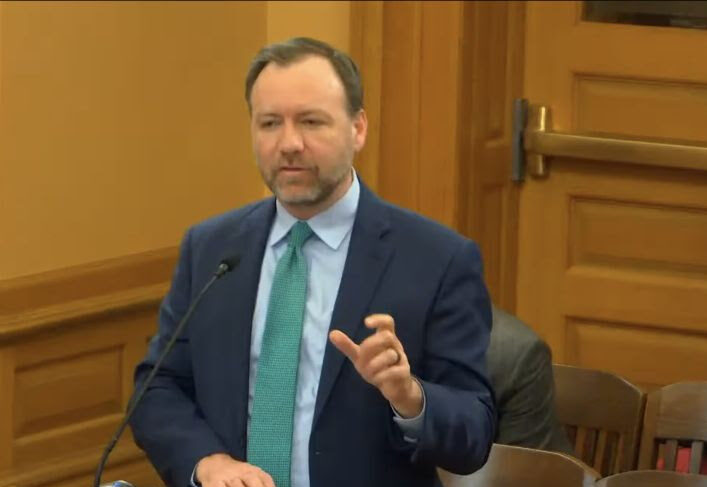
April 13, 2026 // As more states pass permanent reforms, millions of independent contractors could gain access to benefits they’ve never enjoyed. But states aren’t the only ones that can act. Congress could also amend federal law so that companies may offer benefits without facing liability. Sen. Bill Cassidy (R-Louisiana) and Rep. Kevin Kiley (I-California) have introduced bills to that effect in their respective chambers. They deserve the support of the full Congress and the White House in giving millions more workers long-term financial security along with the flexibility that self-employment provides. The portable benefits revolution can’t sweep the nation fast enough.