Posts tagged pro-worker

Report: The Battle for Worker Freedom: Grading State Public Sector Labor Laws
September 10, 2026 // Union executives are prioritizing recruitment. The fastest-growing category of public sector labor legislation expands collective bargaining into new workplaces. On the strength of these new laws, union executives are slowly replacing their membership losses since 2018. From 2018 to 2025, the country’s four largest government unions report a net decline in membership of 87,919, or 1.3 percent. However, they also report a collective gain of 232,502 members, or 3.5 percent since 2024. This report awards full letter-grade increases to Idaho (now A) and Louisiana (now B) due to their adoption of pro-worker labor reforms this past legislative session. However, the drops in grades—Nebraska (D), Nevada (D), and Rhode Island (F)—are the result of these states prioritizing union executives over workers and enacting laws helping unions recruit, politick, organize, and strike. Thirteen states now have an “A” or “A+” grade—up from twelve in the previous edition of this report—while six states earned an “F”—up from five over the same time period. Overall, the research finds 25 states fall below a “C.”

Defend worker freedom this Labor Day
September 9, 2026 // “States with right-to-work laws enjoy lower unemployment rates, higher job growth, and higher wage and income growth compared with forced union states.” That’s according to a 2022 John Locke Foundation report from F. Vincent Vernuccio, former US Department of Labor official and current president of the Institute for the American Worker. Specifically, the report notes that between 2000 and 2019, personal income in right-to-work states grew by 56.4%, compared with just 40.6% in states without such laws. Also during that time, private-sector jobs in right-to-work states grew by 23.1%, which was almost double the 12.1% of growth in non–right-to-work states. The report also cites lower unemployment rates in right-to-work states. In states with the highest unemployment rates, the majority of them lacked such protections. Based on these superior worker outcomes, Vernuccio declares, “Right-to-work laws are decidedly pro-worker.” He concludes by saying, “In the end, right-to-work is about one thing: freedom. It protects workers by taking away a union’s ability to get them fired for not paying union dues.”
Op-ed: To High Praise and Hallelujahs, Trump Nominates Keith Sonderling for Secretary of Labor
June 30, 2026 // As Acting Secretary, Sonderling has strongly advocated for Trump's pro-business and pro-worker agenda, touting the manufacturing jobs that have been returned to the U.S., and has worked tirelessly to beef up and expand apprenticeships through the U.S. Department of Labor for small businesses and private-sector concerns. Under Biden's DOL, apprenticeships were issued through the major labor unions like the AFL-CIO and SEIU, effectively cutting out any private sector opportunities. Sonderling has also long been a champion for defined benefit pension plan sponsors to be able to use group annuities to protect pension benefits through pension risk transfers, and to allow employers to incorporate retirement plan options like cryptocurrency assets and private credit funds. But most pivotal, Sonderling is working hand-in-hand with the Fraud Task Force to eradicate the rampant unemployment insurance fraud.
The House Just Passed a ‘Pro-Worker’ Bill That Takes Power Away From Workers
June 11, 2026 // "Supporters of this bill assure businesses and workers that it is about worker empowerment and efficiency," Walberg said. "I may be misremembering the definition of empowerment, but I can guarantee it does not mean taking away a worker's right to vote on his or her own contract and giving that power to a Washington bureaucrat with no stake in the outcome."
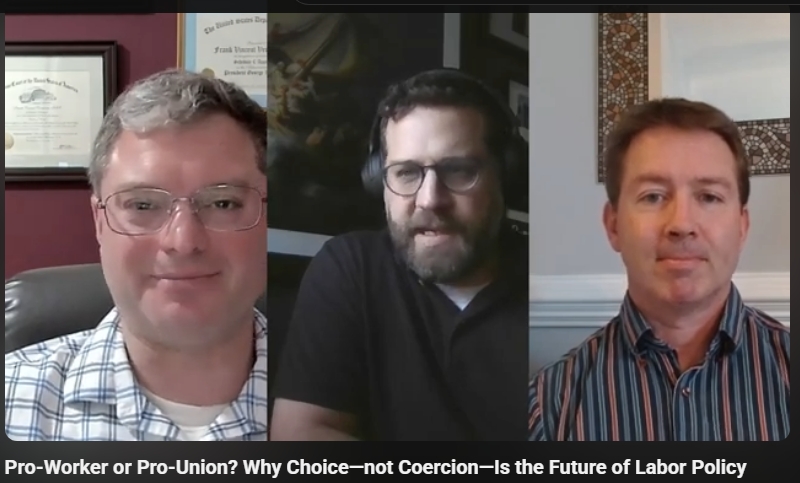
Pro-Worker or Pro-Union? Why Choice—not Coercion—Is the Future of Labor Policy, Disunion: The Government Union Report; Commonwealth Foundation
December 18, 2025 // This week on Disunion, host David Osborne is joined by Austen Bannan of Americans for Prosperity and Vincent Vernuccio, president of the Institute for the American Worker, to break down a sweeping new report: How to Empower Workers: Embracing a Pro-Worker Agenda Built on Choice. With Congress rolling out a flurry of labor bills—from right-to-work reforms and secret ballot protections to proposals backed by unions and even some Republicans—this episode cuts through the noise. The panel explains why many so-called “pro-worker” policies actually empower union bosses and government regulators, not workers themselves.

Union members like me need these reforms from Congress
December 2, 2025 // Three years ago, I was forced into a union against my will. While my coworkers and I tried to free ourselves, we were stifled every step of the way. We needed better federal labor laws — such as the bills introduced in both the House and Senate in recent days. Leaders such as Sen. Bill Cassidy (R-LA) and Reps. Virginia Foxx (R-NC) and Randy Fine (R-FL) have recently written some of the most pro-worker legislation in decades. My own experience with unionization shows how necessary these reforms are.
RADIO: Vincent Vernuccio- Pro-Worker Labor Legislation That Promotes Worker Freedom
November 17, 2025 // Senator Bill Cassidy announced a swath of pro-worker labor legislation that promotes worker freedom and curbs undue influence and abuse by unions
U.S. Senators Unveil Bills to Strengthen Workers’ Rights
November 12, 2025 // F. Vincent Vernuccio, President, Institute for the American Worker. “Together, these bills reflect a modern approach to labor relations — one that trusts workers, promotes transparency, and ensures the law is applied fairly. The committee, led by Chairman Bill Cassidy (R-LA), deserves credit for advancing a balanced package that empowers American workers and strengthens freedom in the workplace.”

Testimony: Rachel Greszler: Labor Law Reform Part 1: Diagnosing the Issues, Exploring Current Proposals
October 10, 2025 // SummaryToday’s challenges—from the rise of artificial intelligence to the expansion of independent work and the growing demand for flexibility, autonomy, and new skills—necessitate modernized labor laws that are pro-worker and pro-employer, regardless of the type of workplace. Heavy-handed government interventions and attempts to bring back the 1950s’ ways of work are not the answers. American labor laws should preserve the freedom, dignity, and opportunity that make American work exceptional.
Georgia sets the national standard for pro-worker leadership
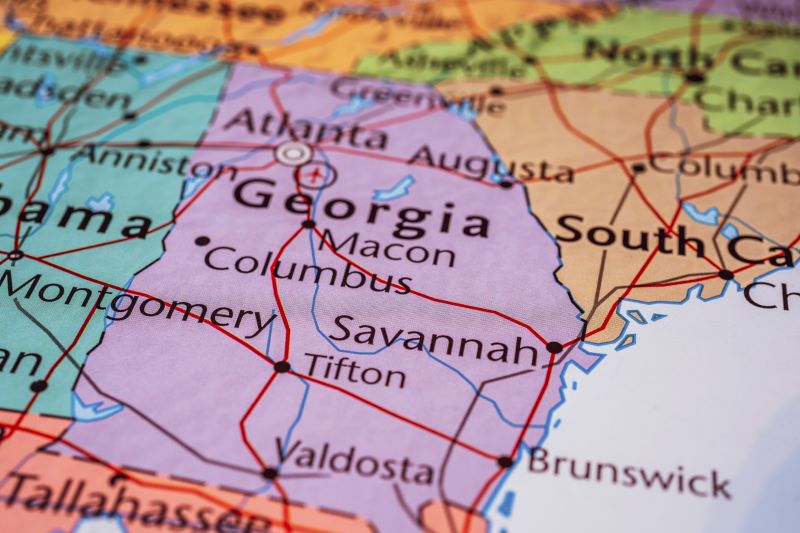
September 2, 2025 // Rep. Rick Allen, from Georgia’s 12th congressional district, recently re-introduced the Employee Rights Act—the single most important pro-worker in America today. The Employee Rights Act is full of reforms that would protect and strengthen workers’ rights. Building on Georgia’s state policy, it would require the secret ballot for all unionization elections in America—no more card check. It would also protect workers’ privacy by letting them determine what personal information unions can access. And in the 26 states like Georgia with right-to-work laws, the Employee Rights Act would let workers who opt out of union membership negotiate their own contracts—something they’re currently banned from doing.