Posts tagged Bill Cassidy

Vinnie Vernuccio: Labor reform finally has congressional momentum
September 30, 2026 // Those reforms will take time to pass, whereas ending racist or sexually harassing language in unionization campaigns should be easy to get across the finish line soon. Clearly, Congress is capable of rallying behind pro-worker labor reforms. The House’s bipartisan passage of the Ending Predator Access to Union Power Act proves it, and hopefully it will clear the Senate soon.

Op-Ed: Brigette Herbst: Congress should Investigate the National Education Association’s charter
September 15, 2026 // However, over the past several years, the NEA has supported divisive partisan politics and extremist ideologies. By way of example, the NEA Advocacy Fund, a super PAC, and the NEA Fund for Children and Public Education have directed much of their political spending toward Democratic candidates and aligned political organizations. According to filings, the NEA Fund for Children and Public Education has historically contributed more than 90 percent of its candidate-directed funds to Democrats, while independent expenditures by the NEA Advocacy Fund have similarly supported Democratic candidates and causes — a far cry from “promot[ing] the cause of education in the United States.”
Chairman Cassidy Slams Far-Left Union for Colluding with Murderous Cuban Regime, Forcing Workers to Fund Anti-American Propaganda
August 14, 2026 // A recent bombshell report from the U.S. Department of State highlighted how the Cuban regime has co-opted labor unions to promote their aims. It also referenced a report that IAM officials used workers’ dues to promote Cuban propaganda. IAM officials organized an event on union property with David Ramírez Álvarez, a Cuban diplomat, who instructed workers on ways to support the Cuban regime and oppose U.S. policy on Cuba. Additionally, Kevin Kucera, a senior local IAM official, appeared in a video released by the Cuban Embassy urging Americans to protest in defense of “the solidarity of Cuba.” For decades, the Cuban regime has engaged in schemes like these in other sectors to influence policymaking and disrupt American society.
Op-ed: California doubles down on pension debt — and dares Congress to bail it out
July 23, 2026 // On July 1, California’s Assembly Appropriations Committee advanced AB 1383, a bill that guts the pension reform Sacramento passed in 2013 to keep its own promises honest. It would drop the public safety retirement age from 57 to 55, invent a new 3%-at-55 benefit formula, and let cities bargain away the cost-sharing rules that reform required. CalPERS already carries more than $179 billion in unfunded liabilities. California’s total state and local pension debt tops $200 billion. Sacramento’s answer, apparently, is to promise more.

Social conservatives split over abortion and transgender medicine in union contracts bill
June 16, 2026 // Beck said he believes abortion and transgender medical coverage would be “an easy thing” for arbitrators to use as a bargaining chip to reach an agreement on the three-person panel. “It’s going to be easy for the arbitrator to say, ‘OK, employer, I’m not going to make you pay the high wages that the union is demanding,’” Beck said as a hypothetical. ‘“But what I am going to make you do is I’m going to make you give generous health benefits and give very generous access to abortion on demand and give very, very generous access to so-called gender-affirming care.”
The House Just Passed a ‘Pro-Worker’ Bill That Takes Power Away From Workers
June 11, 2026 // "Supporters of this bill assure businesses and workers that it is about worker empowerment and efficiency," Walberg said. "I may be misremembering the definition of empowerment, but I can guarantee it does not mean taking away a worker's right to vote on his or her own contract and giving that power to a Washington bureaucrat with no stake in the outcome."

Congress Should Reject the “Faster Labor Contracts Act”
May 15, 2026 // “What would happen if workers lost that ability to ratify a contract?” Cassidy asked. “That would be removing democracy from the workplace,” replied the Democrats’ witness, himself a union organizer. Despite this, the Faster Labor Contracts Act has since gained more cosponsors, which are almost entirely Democrats. In the House, Democrats are pushing for the passage of a discharge petition to force the bill through Congress. Union bosses such as Teamsters President Sean O’Brien are running an aggressive campaign to push for the bill’s passage, including attempts to fool Republicans into signing on.
Republicans must not help Democrats gut workplace democracy
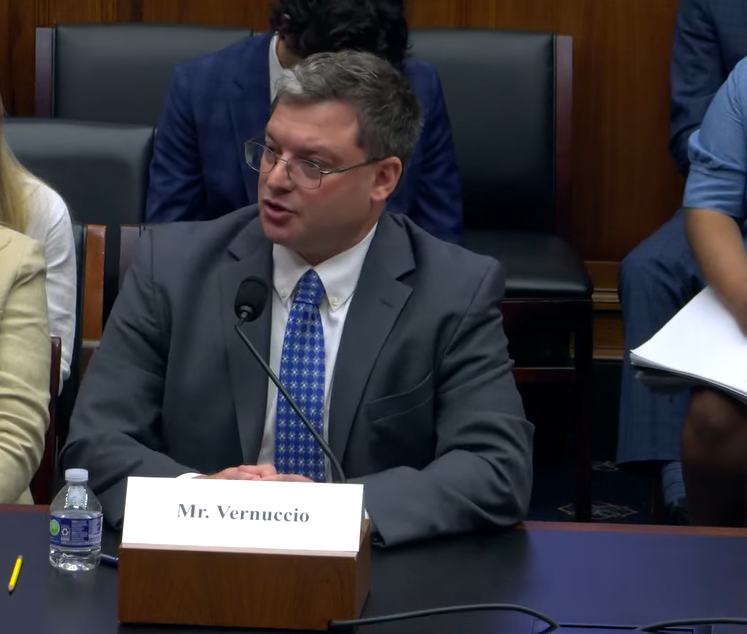
April 29, 2026 // If they can’t reach an agreement in time, the federal bureaucrats would force the creation of an arbitration panel, which would then unilaterally impose a collective bargaining agreement. But workers wouldn’t be allowed to vote for the contract, even though it dictates the terms of their employment. Voting on a contract is standard practice precisely because it lets workers make their voice heard and control their future. Before Cassidy named the bill, he described what it would do. The shop steward replied that taking away the contract vote would mean “removing democracy from the workplace.” He then said that democracy “is the whole point of the union.” The shop steward may not have known then that the senator was describing a proposal that his own union supports. But he was absolutely right: Forcing a contract on workers without a vote is the opposite of workplace democracy.
A giant barrier to being self-employed is falling, state by state
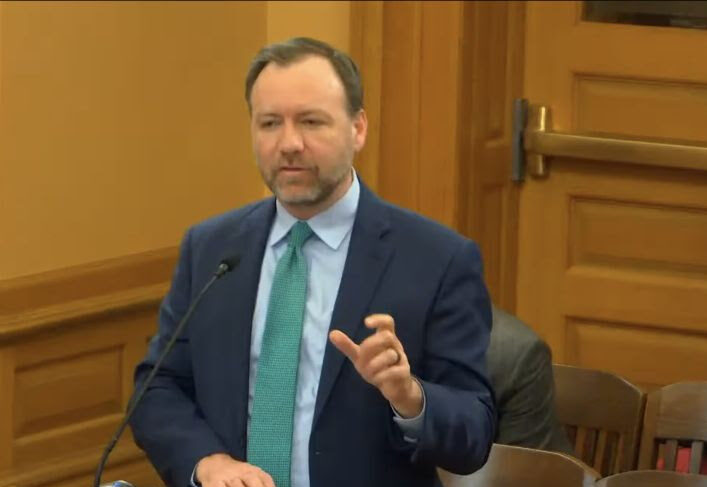
April 13, 2026 // As more states pass permanent reforms, millions of independent contractors could gain access to benefits they’ve never enjoyed. But states aren’t the only ones that can act. Congress could also amend federal law so that companies may offer benefits without facing liability. Sen. Bill Cassidy (R-Louisiana) and Rep. Kevin Kiley (I-California) have introduced bills to that effect in their respective chambers. They deserve the support of the full Congress and the White House in giving millions more workers long-term financial security along with the flexibility that self-employment provides. The portable benefits revolution can’t sweep the nation fast enough.
Op-ed: A bipartisan bill that would hurt employers and unions
April 12, 2026 // The bill would mandate that workers sometimes be subjected to labor contracts that they never vote for. The idea is to reduce the amount of time it takes between a union being recognized as the collective bargaining agent in a workplace and the enactment of an agreement. The National Labor Relations Act requires recognized unions and employers to negotiate in good faith, but it does not say how long that negotiating may last. In some cases, it can last years.