
Posts tagged Unionization
Graduate program shifts fellowship classifications, sparking contention in historic unionization effort
September 29, 2026 // The doctoral program in behavioral and social health sciences previously designated many first-year students as fellows — a nonunionized class that does not have access to the same grievance processes that unionized graduate employees have. Under current University policy, fellows are not considered employees, since the University views their funding as not contingent on their working for Brown. As a result, they are not covered by GLO’s main contract. But the SPH officials determined that their fellows had similar work requirements to other students in the BSHS program — including research assistants — who are included in the Graduate Labor Organization’s contract, BHSS program director Kate Carey said.
Illinois’ new rideshare union law could hurt drivers, passengers
September 23, 2026 // The law could lead to job losses for rideshare drivers if they become more expensive to the companies than emerging self-driving technologies. Companies such as Waymo are already replacing human drivers with autonomous vehicles. In February, Waymo started the process of mapping out the city of Chicago for its fleet of driverless vehicles and announced that “we look forward to serving the city in the future.” While autonomous vehicles haven’t rolled out in Illinois yet, Waymo will be ready if lawmakers approve legislation to allow them to operate.

Commentary: Finally, it’s time for the Trump NLRB to go on offense
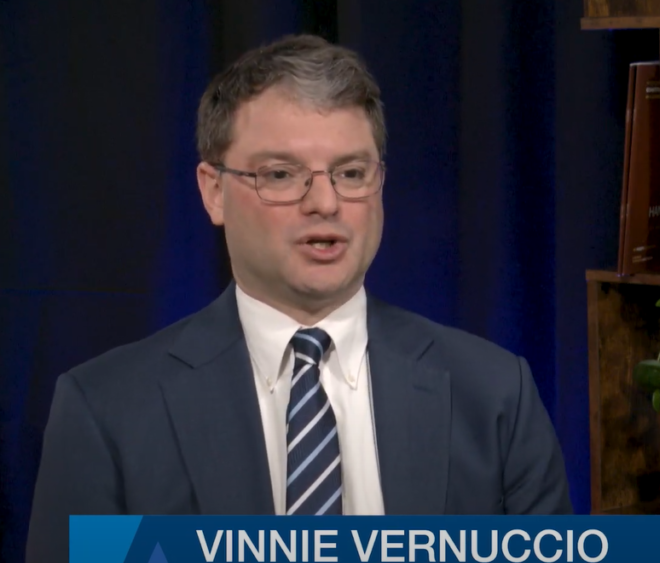
September 21, 2026 // The Cemex decision was legally problematic, and the precedent the Biden NLRB has set was challenged in federal courts. But now, Carey has targeted the Cemex decision for reversal, arguing the decision is “contrary to Supreme Court precedent and sound labor policy.” As labor policy expert Vinnie Vernuccio of the Institute for the American Worker explains: Her [Carey’s] brief notes that the Biden-era board ignored “the significant impact its decision had on worker free choice,” which she rightly calls a “backbone” of federal labor law. The General Counsel’s ultimate point could hardly be clearer or more pro-worker: “The right of employees to vote in a secret ballot election, free from coercion and from an informed position, once meant something — it should again.”

Commentary: Are Unions Rising from the Political Grave?
September 21, 2026 // Here again, however, there may be less than meets the eye. Despite its surprising bipartisan support, the FLCA would raise significant constitutional questions if enacted. By relying on a government-mandated arbitration panel to resolve labor disputes, the law effectively empowers the state to impose contractual terms on private parties—a form of what constitutional lawyers call “state action.” As attorneys Alex MacDonald and Vinnie Vernuccio observe: “[S]tate action opens the door to a slew of constitutional requirements and restrictions, notably to protect rights of free speech and association.”

Government Unions Are Making a Comeback — and Taxpayers Will Pay the Price
September 15, 2026 // Taken together, those same four unions have added back more than 230,000 members since 2024, the Commonwealth Foundation reports. That’s a 3.5 percent jump, and it has wiped out most of what looked like a permanent decline. Two of the four unions, AFSCME and SEIU, now have more members than they did before Janus. Only one union, the NEA, is still losing members, but even that decline has slowed.
NJ remains one of nation’s most unionized states, Rutgers report finds
September 9, 2026 // The researchers estimate New Jersey has about 22,000 more union members than in a previous Rutgers study. But the share of workers belonging to unions slipped slightly because nonunion employment grew faster. New Jersey's average unionization rate was 15.47% from 2023 through 2025, ranking sixth-highest among the 50 states and well above the national rate of about 10%.
Biden’s NLRB stole workers’ secret ballot. It’s time to give it back
September 8, 2026 // It’s hard to overstate how harmful — and insulting — the Cemex decision has been to workers. Before the Biden-era NLRB handed down this decision, unionization elections typically followed a straightforward process. Unions kicked things off by convincing workers to sign cards in support of unionization. The union then presents the cards to the employer, demanding that management recognize the union via “card check” or hold a secret-ballot election.
L.A. Mayor Karen Bass sends letter to USC president urging administration to drop appeal and allow faculty to unionize
September 7, 2026 // Los Angeles Mayor Karen Bass told USC President Beong-Soo Kim she was “concerned” by their move to ask the National Labor Relations Board to evaluate whether university faculty had a right to form a union in a letter Sept. 1.

Union bosses remain hostile to MAGA
September 3, 2026 // Today, unions are banking on garnering enough Republican support to pass an anti-business Faster Labor Contracts Act. That legislation would strip workers of their right to vote on the terms and conditions of their employment if an agreement can’t be locked down over a few months. The legislation gives government bureaucrats the power to force workers and employers into union contracts while further expanding the size and power of the federal government. The legislation could also force workers and employers to adopt DEI programs, block immigration enforcement, and impose transgender policies. Given the long history of union leadership opposing Republican candidates and the Trump Agenda, it makes zero sense for Republicans to support legislation that would give even more power and money to union bosses.
George Eastman Museum workers file for union vote
September 2, 2026 // Located at 900 East Ave., once the home of Kodak founder George Eastman, the museum employs nearly 100 people — including projectionists, preservationists, restaurant workers, curators and administrators — and the majority favor unionization, George Eastman Museum Workers United said in a statement.