Posts tagged arbitration
OPM directs agencies to move forward with ending collective bargaining
February 16, 2026 // An additional “frequently asked questions” document that OPM updated Thursday details various changes agencies should make to comply with Trump’s orders revoking collective bargaining. The guidance, for one, tells agencies to revise federal employees’ personnel files to reflect that they are no longer in a bargaining unit. It also directs agencies to cancel ongoing arbitration proceedings and unfair labor practice (ULP) charges in cases where collective bargaining is being rescinded. OPM said agencies are also allowed to “disregard” union grievances for bargaining units or federal employees that the president has deemed no longer eligible for collective bargaining. Additionally, OPM said agencies should “withdraw” from ongoing union negotiations in cases where collective bargaining is being canceled. Impacted agencies should reclaim office space and resources that were being used for official time, OPM added.

Breaking: Government Report Reveals Over $180 Million Spent on Taxpayer-funded Collective Bargaining Costs
February 10, 2026 // The report details the scope and cost of taxpayer-funded collective bargaining activities across the federal government for Fiscal Year 2024. Federal agencies reported approximately $181.6 million in collective bargaining-related expenses paid by American taxpayers. Such spending included time devoted to negotiations, grievances, and arbitration, and related costs such as travel and office space- detailed expenses previously unknown to the public. I4AW’s Vinnie Vernuccio released the following statement: “I applaud OPM for shining a light on the cost of collective bargaining. Now we can begin to closely examine these expenses and allow the public to determine whether or not these costs are a justified use of taxpayer money.”
TSA’s union distractions thwart air safety — so Trump is stepping in
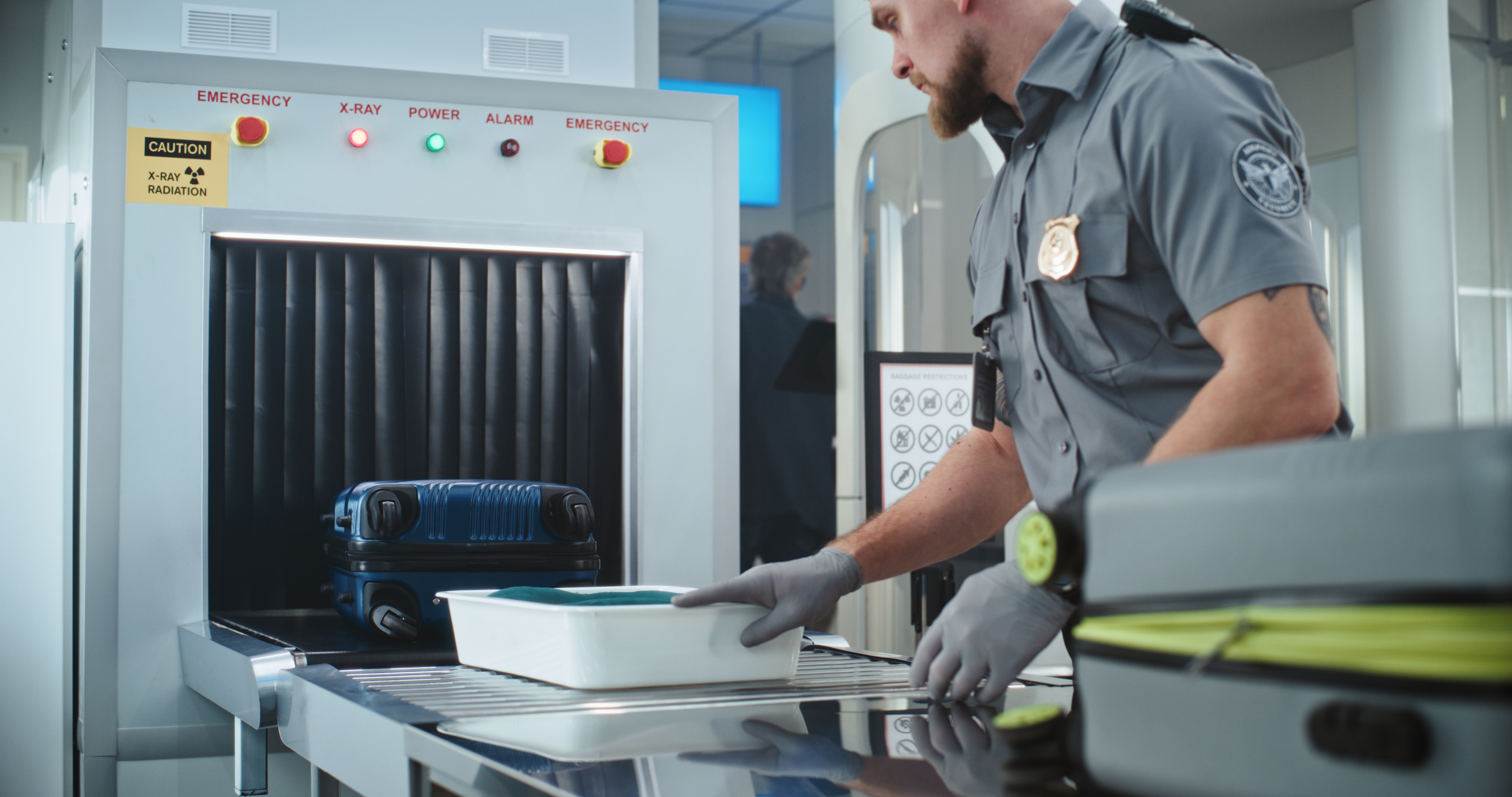
December 30, 2025 // A recent report from my colleagues at the Institute for the American Worker shows collective bargaining at assorted federal agencies involve such pressing issues as the height of cubicle desk panels, smoking areas in tobacco-free federal properties and the right to wear sweatpants and spandex in federal offices. At the Department of Veterans Affairs, taxpayers foot the bill for a labor union to occupy half a hospital wing. Across the federal government last year, federal employees spent more than 3.2 million hours doing union work instead of their jobs
Unionized POLITICO Journalists ‘Win Landmark Arbitration’ On AI Protections
December 9, 2025 // Unionized Journalists employed at POLITICO and E&E News (The PEN Guild) have secured a major victory in their arbitration case against POLITICO management over the company’s unilateral introduction of Artificial Intelligence (AI) tools that bypassed negotiated safeguards and undermined core journalistic standards. In a detailed decision, the arbitrator found POLITICO violated the Collective Bargaining Agreement when it launched two AI-driven products - a “Live Summaries” feature used during the 2024 Democratic National Convention and Vice Presidential Debate, and the Capitol AI Report-Builder tool for POLITICO Pro subscribers - without providing required notice, bargaining, or human oversight, as required by the contract.
Congress Can Empower Workers Through Choice—Not Coercion
November 24, 2025 // A case in point is the legislative package that Sen. Bill Cassidy (R-La.) introduced on Nov. 10, joined by others including Sens. Tommy Tuberville (R-Ala.) and Tim Scott (R-S.C). They’d protect workers’ paychecks by requiring unions to get approval before spending dues money on politics. They’d also protect workers’ privacy by letting them choose what contact information unions get during the organizing process. And they’d protect workplace democracy by requiring that at least two-thirds of workers participate in union elections — preventing a minority of people from determining the fate of every employee. Another praiseworthy reform is the Employee Rights Act, which Scott introduced in the shutdown’s early days after Rep. Rick Allen (R-Ga.) previously introduced it in the House. Among its many good ideas, the Employee Rights Act guarantees the secret ballot and protects workers from intimidation and harassment. It also gives unionized workers in the 26 right-to-work states the freedom to negotiate their own contract with their employer, so they can better address their individual needs. And the Employee Rights Act guarantees that self-employed workers have maximum flexibility to design their jobs to fit their lives.
Football Union Evidently Colluded With NFL
October 17, 2025 // One plausible, though yet to be proven explanation is that, even as he was ruling over the NFLPA, Mr. Howell was also working as a “paid, part-time consultant for the Carlyle Group, one of a select group of league-approved private equity firms now seeking minority ownership in NFL franchises,” as Mr. Van Natta and Ms. Kahler reported in a July 10 followup story for ESPN. “Enhancing the profitability of NFL teams by tamping down the compensation of football players arguably advanced the interests of the Carlyle Group,” explained Mr. Mourad. “That could be why Mr. Howell seemingly sided with NFL executives and against the players he purportedly represented.”
Connecticut Union Raises. Incompetence or Worse?
August 25, 2025 // By telegraphing guaranteed raises, Lamont places unions on offense, emboldened to demand wage and benefit enhancements, rather than defending existing gains. As negotiation expert Chester Karrass once said, “You don’t get what you deserve; you get what you negotiate.” Revealing your playbook isn’t negotiation — it’s surrender. State unions, representing 45,000 employees, already secured a staggering 33% in raises and step increases under the 2017 SEBAC agreement, far outpacing the wage growth of the private-sector workers whose taxes pay their salaries. These contracts, negotiated in the name of taxpayers, are meant to balance fairness to employees with fiscal responsibility. Yet, taxpayers are left out, footing the bill for what resembles a feast.
Canadian government forces Air Canada, flight attendants into arbitration
August 17, 2025 // Air Canada and its striking flight attendants were forced back to work and into arbitration Saturday by Canada's government after an early morning strike stranded more than 100,000 travelers around the world during the peak summer travel season. Federal Jobs Minister Patty Hajdu said now is not the time to take risks with the economy while announcing the intervention. It means the 10,000 flight attendants will return to work soon.
Workers at Children’s Hospital Oakland Extend Strike Into Second Week
June 25, 2025 // In April, 98% of union members voted against integrating with UCSF, according to NUHW, which represents some 1,300 workers at the hospital. The union, which argues that the takeover plan is in violation of its contracts with the hospital, filed a motion to force arbitration as part of a last-ditch effort to block the move. A court hearing on the motion is scheduled for Thursday, just over a week before the transition is set to take effect, on July 6.
Union employees to vote on new VTA contract proposal months after transit strike
June 6, 2025 // In March, a county judge had ended a historic, multi-week strike - demanding the employees back to work. Now almost three months of negotiations later, VTA spokesperson Stacey Hendler Ross says a new proposal is on the table. "VTA has made a significantly different proposal this time with a cumulative increase in wages of 14.5% over four years," Hendler Ross said. "So that's 4%, 3.5%, 3% and 4%."