Posts tagged Act 10
WISCONSIN: Unions respond to Act 10 decision
July 11, 2024 // The 2011 law created two categories of public workers — public safety employees, and general employees. The law prohibited unions representing general employees from collectively bargaining for any benefits outside of raises that would be capped to inflation. The judge ruled that the state Legislature did not have a "rational basis" for how it created those different categories, and the law is unconstitutional because of that.
Act 10 lawsuit: Wisconsin judge strikes down parts of bill
July 9, 2024 // "The issue was, are people receiving equal treatment?" UW-Milwaukee Professor Emeritus Mordecai Lee said. Republicans argue that Act 10 solved Wisconsin’s deficit problem, while Democrats say it hurts schools and public employee pay.
Wisconsin unions argue for overturning 2011 law that ended nearly all collective bargaining
May 30, 2024 // Public worker and teachers unions argued Tuesday that their lawsuit seeking to strike down a Wisconsin law that drew massive protests and made the state the center of a national fight over union rights should be allowed to proceed, even as the Republican-controlled Legislature sought to have it dismissed. It is the first challenge to the law known as Act 10 since Wisconsin’s Supreme Court flipped to liberal control last year.

Tens of thousands of workers in Florida have just lost their labor unions. More is coming.
February 22, 2024 // The numbers are not being tracked or published by the state or any labor organization, so WLRN requested the records and created a public database to track the fallout of the law. Most affected employees perform core public sector jobs like teaching in schools, doing clerical work for state and local government, repairing engines and machinery for government agencies, answering 911 calls at call centers and working at city parks.

WILL sues to preserve Act 10
January 30, 2024 // “There is no question that 2011 Wisconsin Act 10 significantly changed labor relations in Wisconsin. But since Act 10’s enactment over a decade ago, state and federal courts have repeatedly rebuffed constitutional challenges to the law by those who oppose it,” WILL wrote in its memo to the court. “Both the U.S. District Court for the Western District of Wisconsin and Seventh Circuit in [the Walker case] had little trouble concluding that Wisconsin was free to distinguish between public safety and general employees, with the latter labeling this conclusion as ‘uncontroversial.’”

Wisconsin’s Anti-Union Model Faces Reckoning as Top Court Shifts
December 12, 2023 // “They’ve been trying to overturn it through the legislature and the ballot box and have been wholly unsuccessful,” said Brett Healy, president of the conservative John K. MacIver Institute for Public Policy, which estimates Act 10 has saved taxpayers $16.8 billion as of this year. Act 10 also made it easier for school districts to fire low-performing teachers and retain good ones, said Walker, now president of the Young America’s Foundation, a conservative activist organization for youth. The former governor pointed to the state’s standardized test scores and graduation rates, which typically meet or exceed national averages. “We’ve seen tremendous success,” Walker added. “All the attacks they said at the time, how this would devastate schools, proved be just that—attacks. They don’t match reality.”

Government Unions Love Democrats
December 6, 2023 // The four largest government unions are the National Education Association (NEA), American Federation of Teachers (AFT), Service Employees International Union (SEIU) and the American Federation of State, County and Municipal Employees (Afscme). In the 2021-2022 election cycle, they spent more than $708 million combined on politics.
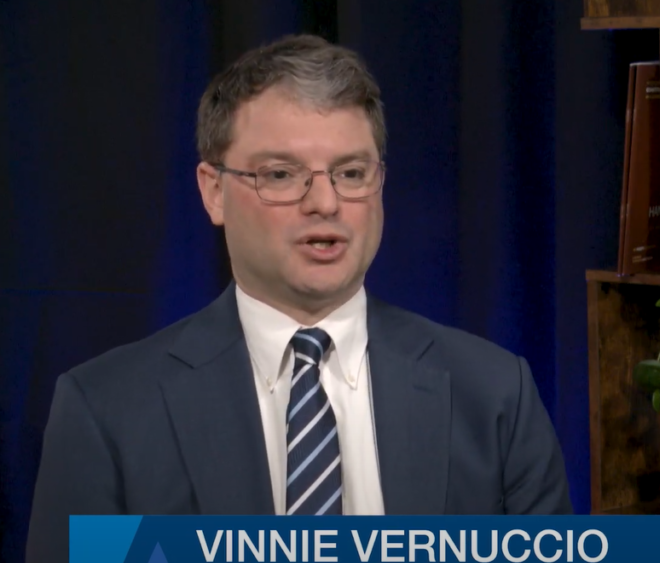
Video: ALEC’s Labor of Love: A History of Championing Worker Freedom
March 10, 2023 // Today, ALEC debuts its first episode, “Worker Freedom,” in our 50th anniversary video series. The episode features ALEC champions Scott Walker (45th Governor of Wisconsin), Matt Hall (Michigan House Minority Leader and ALEC Board of Directors Member), and Vinnie Vernuccio (Senior Fellow, Mackinac Center), discussing ALEC’s pivotal role in securing Worker Freedom policy wins across the states. In some states, private sector workers can be forced to join, leave, or pay fees to a union as job requirement. The Right-to-Work Act, which ALEC task forces approved as a model policy, provides a solution to this issue. It prevents private employers from requiring or banning union membership (or fees) as conditions for employment, giving workers in Right-to-Work states a guaranteed right to support a union or not to support a union without this choice affecting their hiring or job security.
Opinion: Imagine there’s no public employee unions
February 21, 2023 // But try as President Joe Biden has, it just hasn’t been enough. Automation (including not only factory machinery but also the gig economy), trade, high-profile union corruption cases, failing pension funds, and a string of adverse court rulings are among the many factors rendering private sector unions irrelevant to workers in most modern fields. This has led the unions to desperate measures, such as organizing esoteric, low-income professions, including graduate student teachers and video game testers. Yet the story is quite different for unions in the public sector. The unionization rate of public employees remains robust, at more than 33% of all government workers nationwide. Local government workers are the most likely to be unionized, at a rate of nearly 39%, and public sector union members are concentrated in states that mandate collective bargaining. The states with higher rates of unionization seem to correlate with the nation's least functional state governments: California (54.5%), Illinois (48.7%), New York (66.7%), and New Jersey (59.3%) among them. As their private sector cousins starve, public employee unions are fat and happy — a strange development, given that there was no public sector collective bargaining at all 70 years ago, when unions were at their apex.
SEIU intervenes in Wisconsin nurse unionization dispute
December 6, 2022 // Though SEIU cannot officially represent them, the union negotiated on behalf of UW Health nurses during the strike threat. The union gained concessions from UW Health and state lawmakers, ending the strike before it happened and paving the way for future unionization. The contradictions and various legal opinions surrounding this case suggest that WERC’s ruling will be appealed to the Wisconsin Supreme Court. A UW Health spokesperson said that the hospital will seek additional legal opinion on the issue, “We believe that an expedited decision on these important legal issues will best allow us to move forward, which is why we are petitioning the Wisconsin Supreme Court for an opinion on these questions.” WERC’s ruling is a temporary legal setback, but all signs point to further legal challenges to state laws on collective bargaining.