Posts tagged Liya Palagashvili
Op-ed: AI isn’t replacing workers. It’s creating bosses.
August 4, 2026 // Palagashvili posits that solo self-employment could be growing due to AI. The paper considers the industries with the highest AI adoption rates and likelihood of AI exposure: professional services, information, education, finance and insurance. It uses construction and wholesale trade as control groups, since those industries have low AI adoption and exposure.
Freelance Busting: The Lady Problem
June 15, 2026 // The Legislature should support this concurrent resolution, not just because of testimony in recent months that revealed employee misclassification isn’t a big problem in the first place, but also to make clear that the state supports all of us women who own and operate New Jersey’s smallest of small businesses. We are the translators, the financial advisers, the graphic designers, the traveling nurses, the dog walkers, the wedding planners, the writers, the photographers and so many, many more types of professionals who are worthy of real protection against this relentless, remorseless freelance busting.
Republicans must not help Democrats gut workplace democracy
April 29, 2026 // If they can’t reach an agreement in time, the federal bureaucrats would force the creation of an arbitration panel, which would then unilaterally impose a collective bargaining agreement. But workers wouldn’t be allowed to vote for the contract, even though it dictates the terms of their employment. Voting on a contract is standard practice precisely because it lets workers make their voice heard and control their future. Before Cassidy named the bill, he described what it would do. The shop steward replied that taking away the contract vote would mean “removing democracy from the workplace.” He then said that democracy “is the whole point of the union.” The shop steward may not have known then that the senator was describing a proposal that his own union supports. But he was absolutely right: Forcing a contract on workers without a vote is the opposite of workplace democracy.

States Lead the Way on Portable Benefits and Flexible Work
March 24, 2026 // The momentum behind portable benefits reflects the strength of a growing network of organizations and leaders committed to modernizing workforce policy. Americans for Prosperity has worked in conjunction with a diverse range of state and national organizations including the Mercatus Center, Libertas Institute, Institute for the American Worker, Independent Women, R Street Institute, and more from state to state. With research, data, examples of those who would benefit, and a dose of optimism, the educational outreach to highlight how beneficial these reforms are to American families has created a surge of interest among state lawmakers who increasingly understand this golden opportunity to help their residents thrive in today’s economy including shifts due to the rise of AI and other technology.
Commentary: The Uber Narrative
March 2, 2026 // This policy issue isn’t primarily about Uber, no matter how many media outlets try to frame it that way. It’s about us all, and about whether we are going to allow our government to restrict our freedom to be entrepreneurial.
How the Teamsters Cost 30,000 People Their Jobs
July 10, 2025 // "That's true," says Palagashvili. "[Yellow Corp] was having a lot of financial issues. But if you're on the verge of collapse, the last thing you need is a Teamsters Labor Union contract that says you have to increase labor costs. Yellow is basically covered in gasoline, and Sean O'Brien comes and lights the match." Meanwhile, union leadership help themselves. The Teamsters now brag that it has $1 billion in assets. Sean O'Brien pays himself more than $430,000 per year. The same year Yellow went bankrupt, United Auto Workers went on strike against Stellantis, the company that owns Chrysler. Stellantis gave in, giving the UAW a pay raise and promising to open a new plant. But then Stellantis started laying off workers: 1,340 during the strike and 2,450 more the next year.
Republican senators unveil “portable benefits” bill for gig workers
July 7, 2025 // Sen. Bill Cassidy (R-L.A.) unveiled a bill on Monday that would make it easier for companies to offer benefits to gig workers without making them full-fledged employees. Why it matters: As more Americans turn to gig work and self-employment, there's a growing push to get them access to things like paid sick leave, health insurance and retirement benefits. Zoom in: Called the Unlocking Benefits for Independent Workers Act, the bill is part of legislative package from Cassidy, along with Sen. Tim Scott (R-S.C.) and Sen. Rand Paul (R-Ky.). Both also plan on unveiling related bills Monday.

Chair Cassidy, Scott, Paul Release Legislative Package Empowering Independent Workers to Access Portable Benefits
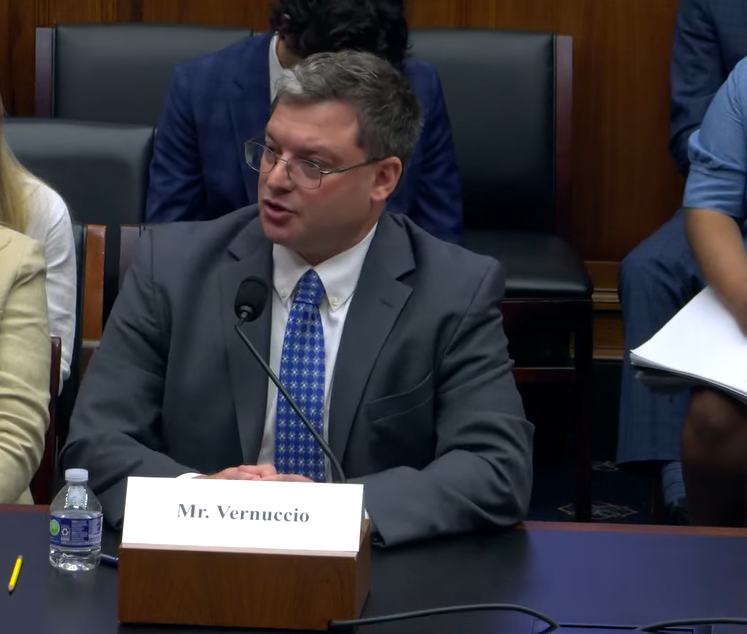
July 7, 2025 // “We applaud Sen. Cassidy for striving to ensure independent contractors can be protected and receive benefits similar to employees without jeopardizing their entrepreneurship or independence. The Unlocking Benefits for Independent Workers Act supports independent contractors and freelancers by allowing businesses to provide benefits without redefining worker status. In today’s evolving economy, flexible work shouldn’t come at the cost of healthcare or retirement security. This legislation helps ensure that all American workers – regardless of classification – can have access to benefits like health care and retirement plans,” said F. Vincent Vernuccio, J.D., President, Institute for the American Worker.
Independent Contractors Take Center Stage for ‘Empowering the American Worker’
May 27, 2025 // However, expert witness Dr. Liya Palagashvili showed data of the deliberate harm done through California’s law AB5 and its ABC test that is also embedded in the federal Protecting the Right to Organize Act (PRO) Act and other statewide legislation seeking to restrict the work of independent professionals. Now, these results are causal, meaning we can definitely say that ABC tests cause these negative outcomes. No other studies to date have found positive employment effects from these laws. The research shows that restrictive ABC tests do not create more work opportunities. They eliminate both independent and W-2 jobs.
ATA Endorses Modern Worker Empowerment Act
May 26, 2025 // The ATA official also pointed to a Republican-sponsored bill as a tool meant to reinforce the industry’s support for the Trump-era independent contractor model. The Modern Worker Empowerment Act, introduced by Rep. Kevin Kiley (R-Calif.) in February, would establish a comprehensive test for arriving at a worker classification. “If enacted,” Mehrens explained, “this bill would codify the common-sense framework from the first Trump term to determine whether an individual is an independent contractor or an employee.”