
Posts tagged Federal Mediation and Conciliation Service
Exclusive: Group warns labor bill allows govt takeover of union contract negotiations
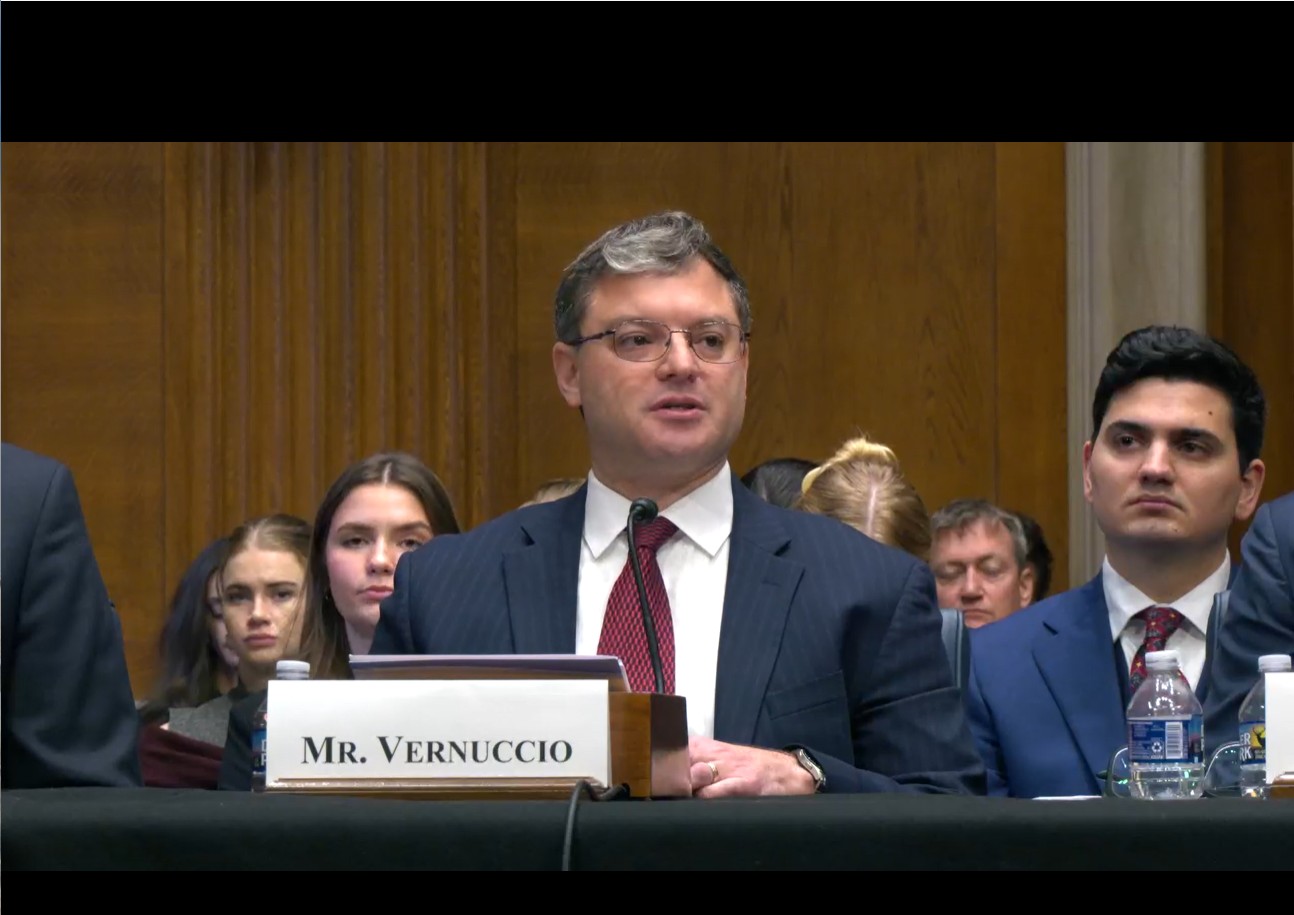
June 14, 2026 // Institute for the American Worker President Vinnie Vernuccio called the House-passed bill an example of “gross government overreach.” “There are better ways out there, things that increase collaboration, increase penalties even, to get people to negotiate,” Vernuccio told The Center Square. “Those are far preferable than government forced arbitration.”
The House Just Passed a ‘Pro-Worker’ Bill That Takes Power Away From Workers
June 11, 2026 // "Supporters of this bill assure businesses and workers that it is about worker empowerment and efficiency," Walberg said. "I may be misremembering the definition of empowerment, but I can guarantee it does not mean taking away a worker's right to vote on his or her own contract and giving that power to a Washington bureaucrat with no stake in the outcome."
Why Would Any Republican Support Forced Unionism?
June 9, 2026 // What makes this even more shocking is that President Trump has proposed completely eliminating the Federal Mediation and Conciliation Service, which the bill would supercharge. The president understands that contracts imposed by government bureaucrats are more likely to be based on political than economic logic, and that negotiations are better left to the private parties. Ironically, government-imposed contracts are likely to harm the workers whose union bosses are pushing this idea. Because when economics don’t add up, it’s the workers who pay in layoffs, reduced hours and the diversion of capital investments that would have raised productivity. This risks broader economic disruption by creating a threat perception that, at any time, a single union request could trigger a government-enforced contract clock. That perception would tend to chill hiring and investing, especially by smaller businesses that can’t afford to fight out an arbitration battle.
Workers for Opportunity joins the fight against the Faster Labor Contracts Act
June 8, 2026 // Vincent Vernuccio, a senior fellow with Workers for Opportunity and president of Institute for the American Worker, recently recapped a Senate hearing where he testified. An unwitting union official opposed the Faster Labor Contracts Act idea of forced arbitration. Vernuccio wrote: [U.S. Senator and Chair of the federal labor committee Sen. Bill] Cassidy explained this policy in real-world terms, saying that it would “take workers out of the process by removing the need to ratify a contract.” He put a finer point on it by saying that if the government mandated arbitration, workers “cannot reject” the resulting agreement, even though it would be binding on them. “What would happen,” he asked, “if workers lost that ability to ratify a contract?” The union official didn’t mince words: “That would be removing the democracy from the workplace.” Then he doubled down: Such democracy “is the whole point of the union,” he said, because it gives workers “a say.”
Why Is Josh Hawley Carrying Water for Union Bosses?
May 21, 2026 // This government-mandated arbitration panel would then have the power to impose contract terms on the business and union involved. In other words, the give-and-take of labor contract negotiations would be taken out of the hands of private entities such as businesses and unions and placed into the hands of a government-mandated panel. This would let union bosses refuse to budge in negotiations and punt to a friendly mediator to impose contract terms. This is absolute madness from an allegedly conservative Republican.
Why Are Republicans Looking To Pass Obama-Era Forced Unionization Bill?
May 20, 2026 // Instead of contract bargaining, there would be “binding arbitration.” For 90 days, unions and employers would come to the table as normal and work toward an agreement. After that, the Federal Mediation and Conciliation Service could be called in to “mediate” the talks for an additional 30 days. If no agreement was reached, the agency gained the power to convene an arbitration panel that would write up a contract that bound both the union and the employer for two years. EFCA made unionization faster, but only by taking away checks that workers and employers had on union bosses. Today, unions are still pushing for the “binding arbitration” half of EFCA. It’s on the smorgasbord of provisions in the so-called PRO Act, a union-backed bill supported by all but a few congressional Democrats, and it’s central to the Faster Labor Contracts Act.
Commentary: Josh Hawley’s Pro-Union Bill Would Let Washington Write Your Contract
May 16, 2026 // A Hawley-backed bill, known as the Faster Labor Contracts Act (FLCA), seems to be picking up steam and may soon pass the House of Representatives. Unfortunately, the FLCA is a trifecta of bad public policy: It suffers from constitutional infirmities, revives a corrupt government agency, and takes away the voice of both businesses and workers. Earlier this Congress, Hawley introduced the FLCA in the Senate, alongside one other Republican senator and three Democratic senators; he has since picked up another Republican and 10 more Democrats. Companion legislation in the House has 99 cosponsors, 17 of which are Republican.

Congress Should Reject the “Faster Labor Contracts Act”
May 15, 2026 // “What would happen if workers lost that ability to ratify a contract?” Cassidy asked. “That would be removing democracy from the workplace,” replied the Democrats’ witness, himself a union organizer. Despite this, the Faster Labor Contracts Act has since gained more cosponsors, which are almost entirely Democrats. In the House, Democrats are pushing for the passage of a discharge petition to force the bill through Congress. Union bosses such as Teamsters President Sean O’Brien are running an aggressive campaign to push for the bill’s passage, including attempts to fool Republicans into signing on.
DAVIS: An Example Of A Big Government Overreach We Seriously Do Not Need
May 1, 2026 // A Mercatus Center analysis of 147 studies over three decades found that when union contracts are driven by outside pressure rather than mutual agreement, the result is slower job growth, reduced business investment, and a higher likelihood of layoffs down the road. Big wins at the bargaining table, secured by outsized union leverage rather than cooperation, have a way of costing workers more than they gained. The FLCA also isn’t a new proposal. It is a single provision pulled from the PRO Act, the Democrats’ broad rewriting of labor law. That legislation has failed to make it into law for good reason—it would hurt the very workers it claims to protect.

Commentary: Congress is about to undo DOGE’s biggest win
April 13, 2026 // That corrupt flow of campaign cash into Congress’s coffers is ultimately why, instead of being eliminated by DOGE, the FMCS is on track to be given a whole new set of powers. New Jersey Democrat Donald Norcross recently filed a discharge petition on the Faster Labor Contracts Act. The petition will force the House to vote on the bill once it reaches 218 signatures. The bill can easily hit that target if all 214 House Democrats sign the petition, along with any four of the bill’s 17 Republican cosponsors. Understanding a politician’s real priorities often requires zooming into these quiet battles over little-known agencies.