Posts tagged Tim Walberg
Vinnie Vernuccio: Labor reform finally has congressional momentum
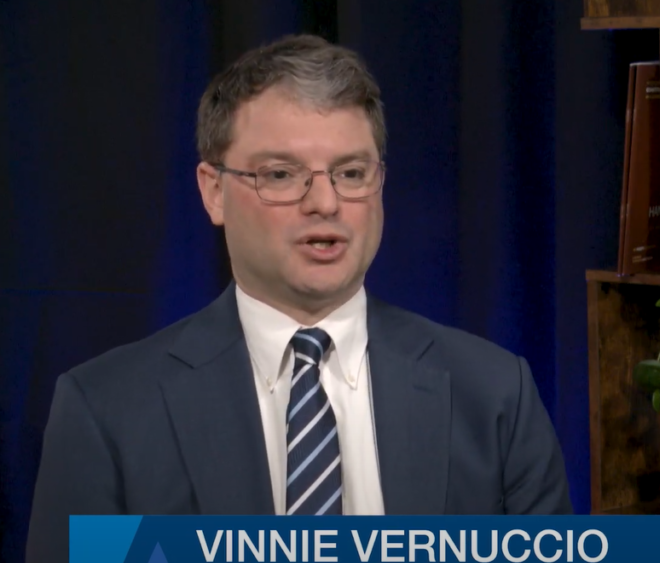
September 30, 2026 // Those reforms will take time to pass, whereas ending racist or sexually harassing language in unionization campaigns should be easy to get across the finish line soon. Clearly, Congress is capable of rallying behind pro-worker labor reforms. The House’s bipartisan passage of the Ending Predator Access to Union Power Act proves it, and hopefully it will clear the Senate soon.

Trucking groups challenge bill that expands labor arbitration
August 7, 2026 // Representing American Trucking Associations as president, Chris Spear described the bill as government-mandated contracting instead of collective bargaining. He said if passed, the changes would eliminate employees from voting to approve an arbitration-imposed contract.

Editorial: Randi Weingarten’s book sleaze might mean the end of corrupt teacher-union power
July 13, 2026 // Under Reps. Tim Walberg (R-Mich.) and Rick Allen (R-Ga.), the committee is following up on Post reporting on dubious transactions uncovered by the Freedom Foundation that amount to hundreds of thousands of AFT dollars spent to help produce the book Of course, that’s just a fraction of how union higherups profit from members’ dues: Weingarten’s pay is now $470,000 a year, not to mention ample perks. Maybe she’s worth it — to the union itself, at least: She’s been a Democratic Party powerbroker for decades, using that influence to protect the power of the AFT and its larger ally, the National Education Association.

House launches probe into AFT boss Randi Weingarten tapping teachers’ union spending to write ‘manifesto’ book
July 8, 2026 // As part of its sweeping investigation, it requested Weingarten turn over by July 21 all AFT expenditures related to the drafting, publishing, promoting and tour activities associated with the book; all agreements between AFT and outside parties and documents of all work performed by AFT employees on the book. See Also An image collage containing 2 images, Image 1 shows Randi Weingarten holding her book "Why Fascists Fear Teachers: Public Education and the Future of Democracy", Image 2 shows Randi Weingarten holding a copy of her book, "Why Fascists Fear Teachers: Public Education and the Future of Democracy." AFT boss Randi Weingarten tapped union resources worth over $1.4M to write ‘manifesto’ book Walberg and Allen said they have a responsibility to ensure that unions representing American workers operate “transparently and that union members receive a full accounting of how their dues are utilized.”
The House Just Passed a ‘Pro-Worker’ Bill That Takes Power Away From Workers
June 11, 2026 // "Supporters of this bill assure businesses and workers that it is about worker empowerment and efficiency," Walberg said. "I may be misremembering the definition of empowerment, but I can guarantee it does not mean taking away a worker's right to vote on his or her own contract and giving that power to a Washington bureaucrat with no stake in the outcome."
Faster Labor Contracts Act passes House after GOP rebels join Democrats
June 10, 2026 // The bill, though, exposed a trend of more populist Republicans bucking House leadership and free-market conservative groups that had been traditional allies of the GOP. Steven Bernstein, co-chair of the Fisher Phillips law firm’s labor relations practice group, said in a statement ahead of the vote that the legislation if enacted would “lead to a sea change in the country’s well-established labor dynamic by taking away the rights of employers and unions to decide for themselves what goes into their initial collective bargaining agreements.”

How Teachers’ Unions Became Political Big Spenders
May 18, 2026 // A new report out today accuses both the American Federation of Teachers (AFT) and the National Education Association (NEA) of spending tens of millions of dollars on electing Democratic political candidates, and prioritizing politicking over the needs and interests of their union members. The report, conducted by the Network Contagion Research Institute (NCRI), Gevura Fund, and Rutgers University, among others, found that of the NEA’s $450 million annual disbursement budget from fiscal year 2025, less than $46 million, or 10 percent, was spent on activities directly representing the union’s constituents.
Webinar with The Federalist Society: Labor Law Reform on Capitol Hill: Opening Offer or Impasse?
February 17, 2026 // Last session saw no shortage of proposals in Congress for labor-law reform. In the Senate, lawmakers introduced proposals ranging from mandatory interest arbitration to bans on organizing undocumented workers. In the House, representatives proposed a range of union-democracy reforms, including a requirement for unions to poll their members before endorsing a candidate for president. And in between, scholars and practitioners offered their own ideas, including a proposal to transform the National Labor Relations Board into an article I court.
Walberg Announces First Hearing in AI Series
January 7, 2026 // Committee on Education and Workforce, chaired by Rep. Tim Walberg (R-MI), will hold the first hearing in a series examining artificial intelligence, titled “Building an AI-Ready America.”
House GOP panel accuses nation’s largest teachers union of exploiting members’ retirement benefits
September 29, 2025 // Committee Chairman Tim Walberg of Michigan and committee members Rick Allen of Georgia, Kevin Kiley of California and Virginia Foxx of North Carolina shared a Securities and Exchange Commission filing that showed retirement services provider Security Benefit paid the nation’s largest teachers’ union a $4 million annual “base fee” for the exclusive right to sell annuities and mutual funds to teachers in 2023-24. They noted that Department of Labor reports show the NEA receiving more than $61 million in “service level agreement” or “advertising revenue” since 2005, even as the union maintains in its 2024 SEC filing that it received “no dividends, royalties, profit, or licensing fees” from Security Benefit.