Posts tagged Federal Mediation and Conciliation Service
Frequently Asked Questions About the Faster Labor Contracts Act
September 4, 2026 // Collective bargaining has always been a consensual process where the two parties mutually agree on a contract that works for them both. It was never intended that government would get involved and mandate an agreement, but the FLCA puts Washington at the center of negotiations.
New Jersey employers face evolving union negotiations
August 11, 2026 // New Jersey’s worker-protection laws add further complexity. “When worker-protection laws are enacted or amended in New Jersey, they add layers to collective bargaining,” Gonzalez said. “There’s no requirement to bargain over a law’s implementation, but where statutes are ambiguous, employers must negotiate the gaps.” She pointed to CREAMMA [the state’s Cannabis Regulatory, Enforcement Assistance, and Marketplace Modernization Act] as an example. “The law prohibits adverse action based on cannabis use outside of work,” she noted. “But unionized employers still need to address how drug testing, safety policies, and fitness-for-duty standards interact with the CBA.” Benefits like paid sick leave and NJ WARN Act severance can also stack on top of contractual obligations. “That dual obligation can catch employers off guard if they are not planning for it at the bargaining table,” she detailed.
Bipartisan Bill to Accelerate Labor Contracts Roils Employers
August 6, 2026 // “The notion that I’m going to bargain a fresh contract and think of all the terms and conditions of employment that get woven into a contract, a contract that on the light side might be 10 or 15 pages single space and on the long side 50 pages, that’s just ridiculous,” he said. “People that have never bargained wrote this law.” The bill could also exacerbate timelines instead of accelerating them, as arbitrators and mediators become increasingly overwhelmed with an influx of contract disputes. That could be especially aggravated by ongoing staffing challenges at the Federal Mediation and Conciliation Service, said Steven M. Bernstein, regional managing partner and Labor Relations Group co-chair at Fisher & Phillips LLC.

Op-ed: Republicans should stop helping Democrats empower union bosses
July 29, 2026 // Policies built on employee choice, such as right-to-work protections, reflect what American workers actually want. The partisan legislation now moving through Congress reflects only what union leadership wants. Pro-worker legislation is not synonymous with pro-union legislation; in fact, they often are opposites. It is time for Congress to wake up and realize this.
Beckley beverage delivery strike continues without agreement
July 26, 2026 // The Washington, D.C.-based Federal Mediation and Conciliation Service, an independent federal agency that assists unions and employers in resolving labor disputes, provided the mediator. However, the agency lacks the authority to force either party to accept an agreement. Farley said the mediator separated the parties and explored possible compromises during an eight-hour session that ran from about 9 a.m. to 5 p.m.
Op-ed– MY TURN: Washington’s one-size labor law doesn’t fit Alaska
July 9, 2026 // Forced arbitration doesn’t resolve disputes. It delays them and adds uncertainty to project timelines that are already difficult to manage. For the major energy and infrastructure projects Alaska is now positioned to advance, that uncertainty isn’t just an inconvenience. It could be catastrophic. America needs bold steps toward a more robust energy future, and shortsighted federal mandates stand in the way of that.
Faster is Not Always Better: House Passes Bill Seeking Radical Change in First Contract Bargaining
June 17, 2026 // The bill also raises questions about the lawfulness of strikes and lockouts during these first contract negotiations. Typically, where parties agree to interest arbitration (or where it exists in the public sector) it is premised on a mutual commitment of labor peace, i.e., the union will not go on strike, and the employer will not lock employees out while negotiations are ongoing and the arbitration is pending. However, in the private sector and in the absence of such a mutual commitment, both such economic weapons may be used offensively in furtherance of a party’s bargaining demand. The FLCA does not explain if or how a party may exercise such an economic weapon in furtherance of their bargaining position if the dispute will be submitted to an FMCS panel for binding interest arbitration. Equally troubling is the FLCA’s potential impact on unilateral implementation. Unilateral implementation upon reaching a good-faith bargaining impasse has long been a vital bargaining tool for employers. The possibility of implementing terms when negotiations stall has been an effective tool to encourage the parties to continue making movement towards the other. Eliminating this option will alter bargaining leverage and strategies particularly in successor contracts where the FLCA’s temporal framework does not apply.

Social conservatives split over abortion and transgender medicine in union contracts bill
June 16, 2026 // Beck said he believes abortion and transgender medical coverage would be “an easy thing” for arbitrators to use as a bargaining chip to reach an agreement on the three-person panel. “It’s going to be easy for the arbitrator to say, ‘OK, employer, I’m not going to make you pay the high wages that the union is demanding,’” Beck said as a hypothetical. ‘“But what I am going to make you do is I’m going to make you give generous health benefits and give very generous access to abortion on demand and give very, very generous access to so-called gender-affirming care.”
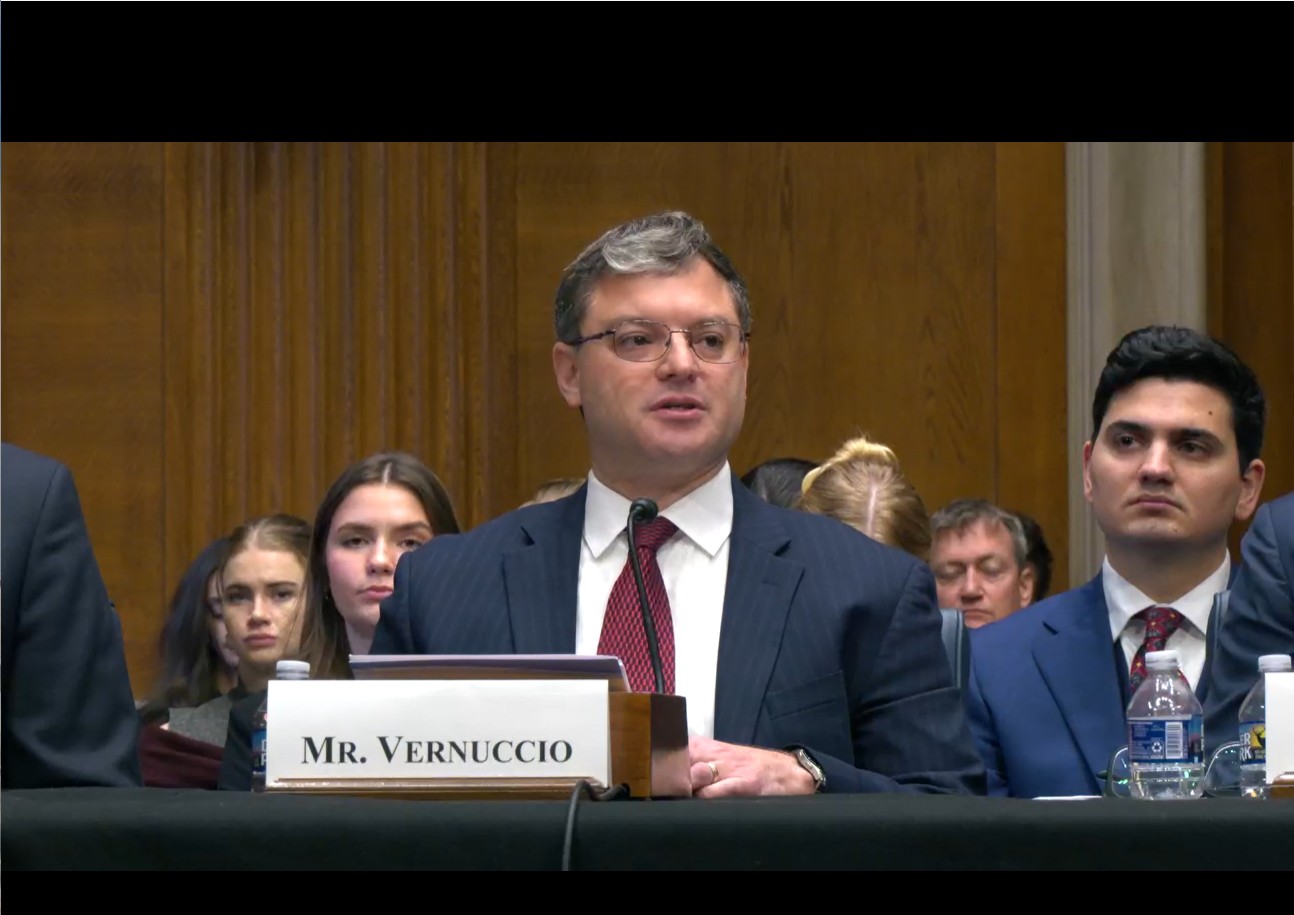
Exclusive: Group warns labor bill allows govt takeover of union contract negotiations
June 14, 2026 // Institute for the American Worker President Vinnie Vernuccio called the House-passed bill an example of “gross government overreach.” “There are better ways out there, things that increase collaboration, increase penalties even, to get people to negotiate,” Vernuccio told The Center Square. “Those are far preferable than government forced arbitration.”
The House Just Passed a ‘Pro-Worker’ Bill That Takes Power Away From Workers
June 11, 2026 // "Supporters of this bill assure businesses and workers that it is about worker empowerment and efficiency," Walberg said. "I may be misremembering the definition of empowerment, but I can guarantee it does not mean taking away a worker's right to vote on his or her own contract and giving that power to a Washington bureaucrat with no stake in the outcome."