
Posts tagged Franklin D. Roosevelt
Teachers’ Unions Are Losing One of Their Government Perks
July 22, 2026 // The question is not whether teachers unions should exist, but whether taxpayers should subsidize organizations that subsequently seek more taxpayer subsidy, often for actions the taxpayer wouldn’t otherwise support. Removing public subsidies forces unions to rely on voluntary member support, increases accountability, and keeps government resources focused on their proper purpose: educating children. The reforms in Idaho, Florida, and Arizona mark the beginning of a necessary correction.
Disregard for students showcased in Sheridan teacher strike
May 27, 2026 // The Sheridan teachers did have a legal right to strike, but not a morally justifiable one. They seriously disrupted the lives of innocent schoolchildren and their parents, holding them hostage to the union’s demands. When a grocery union strikes, customers can do business elsewhere. However, teachers are government employees within a school district that has a monopoly on publicly-funded education. And unlike private sector employers, Colorado school boards can refuse to allow a union. In 2012, a new Republican majority on the Douglas County School Board decertified its teacher union when the collective-bargaining agreement expired. (A new Democrat majority on the DougCo school board will likely welcome the union back with open arms.)
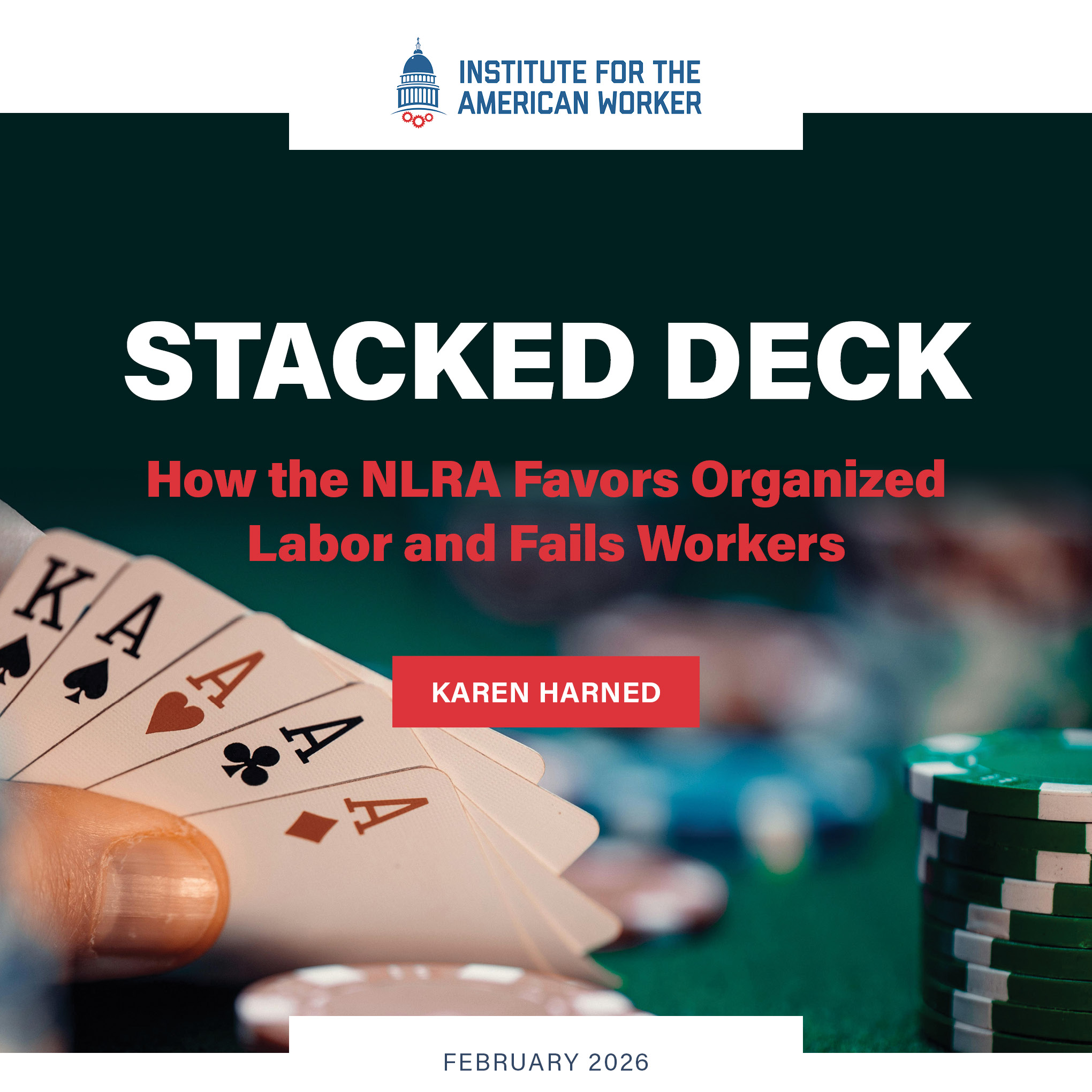
Stacked Deck: How the NLRA Favors Organized Labor and Fails Workers
March 4, 2026 // Today we find a law of unintended consequences. The interests of the workers are often buried under legal precedents and arcane labor rules that make it hard, if not impossible, to make informed decisions regarding unionization. Moreover, the NLRA’s legal landscape is unpredictable and so complex that only the largest employers have a chance of successfully navigating it.

Opinion: Did Biden save unions? Now we have numbers.
February 23, 2026 // Local government employs more union workers than any other industry, by a lot. State government is the next largest employer. The category education and health services comes next, and even though it’s counted as a private industry, most of those jobs are closely connected to government programs. The federal government has more union members than the entire manufacturing sector.
You paid $181 million for union bosses to negotiate against you in 2024, but the Trump administration is doing something about it
February 19, 2026 // Even the “usual” topics of labor-relations negotiations are not part of federal bargaining. As Molly Conway, who served as Chief of Staff to the Department of Labor in the first Trump administration, wrote in a primer for the Institute for the American Worker: Management rights and any matters “specifically provided for by Federal statute” are not bargainable. This includes pay, health insurance, retirement, and certain workplace insurance (e.g., workers’ compensation, unemployment insurance), among others. [citations omitted]
Trump Hasn’t Undone Workers’ Union Rights Op-ed: Maxford Nelsen
January 2, 2026 // The presidents of both the AFL-CIO and American Federation of Government Employees both praised the House vote as necessary to “restore” federal workers’ “union rights.” But nothing in Mr. Trump’s order limits federal employees’ right to form or join a union. It simply eliminates the legal obligation of certain federal agencies to negotiate their “personnel policies, practices and matters . . . affecting working conditions” with unelected special interests. The distinction matters, as unions admit in other contexts. South Carolina, in which state and local governments can’t engage in collective bargaining, still has a teachers union that is quick to remind teachers that they can join and fork over dues money.
WSJ Op-ed: Republicans for Federal Worker Collective Bargaining
December 15, 2025 // The 20 GOP union abettors are Don Bacon (Neb.), Mike Bost (Ill.); Brian Fitzpatrick, Robert Bresnahan and Ryan Mackenzie (Pa.); Gabe Evans (Colo.); Andrew Garbarino, Nick LaLota, Michael Lawler, Nicole Malliotakis (N.Y.); David Joyce and Michael Turner (Ohio); Thomas Kean Jr., Christopher Smith and Jefferson Van Drew (N.J.); Mariannette Miller-Meeks and Zachary Nunn (Iowa); Pete Stauber (Minn.); David Valadao (Calif.) and Derrick Van Orden (Wis.). Many of these Republicans represent swing districts, but making government less efficient and responsive to the American people is unlikely to help them win re-election.
Editorial Board: America’s veterans deserve better care than government unions provide
December 8, 2025 // The smarter approach would be for Congress to affirm Trump’s decision to strip collective bargaining rights while dispensing with his flimsy national security justification. Consider the legacy of pro-union President Franklin D. Roosevelt, who opposed collective bargaining and strikes for federal employees. As Roosevelt and other pro-union leaders understood in the 1930s, collective bargaining is carried out against an employer. The government’s employer is the public. Allowing unelected labor union bosses to negotiate against the public’s elected representatives to determine how the government gets run is undemocratic.

MAXFORD NELSEN: The Other Education Choice: Freeing Teachers from Monopolistic Unions
November 17, 2025 // Public-sector collective bargaining tends to crowd out the interests of students, families, and taxpayers in education policymaking, but teachers unions’ power comes from subjecting teachers to a monopoly system of workplace restrictions. While individual educators now have the legal right to forgo union membership, state policymakers have many opportunities to improve educators’ ability to exercise that right. To level the playing field and increase teachers unions’ accountability to the public and their own members, policymakers should consider reforming or replacing collective bargaining in public education.
Editorial: Unions share blame for layoff fallout
November 1, 2025 // "To date, the Stamford law firm of Silver Golub & Teitell has been paid $50.8 million for representing the unions and the State Employees Bargaining Agent Coalition, according to the state comptroller's office," Mr. Hughes wrote. "The settlement set attorney fees at 17.5% of the total damages each class member receives," extrapolating "to roughly $290 million in compensatory and economic damages." Union attorney Jonathan M. Levine figured the actual payouts amounted to between $190 million and $215 million.