Posts tagged public-sector union
Labor deal reached for Santa Clara County city employees
August 1, 2023 // The deal also promises to include equity raises and additional wage gains for positions whose wages lag behind market rates, like public health nurses, to make these positions more attractive and help address staffing shortages. Union members are expected to ratify the new agreement in the next two weeks, followed by a formal ratification vote by the Santa Clara County Board of Supervisors.
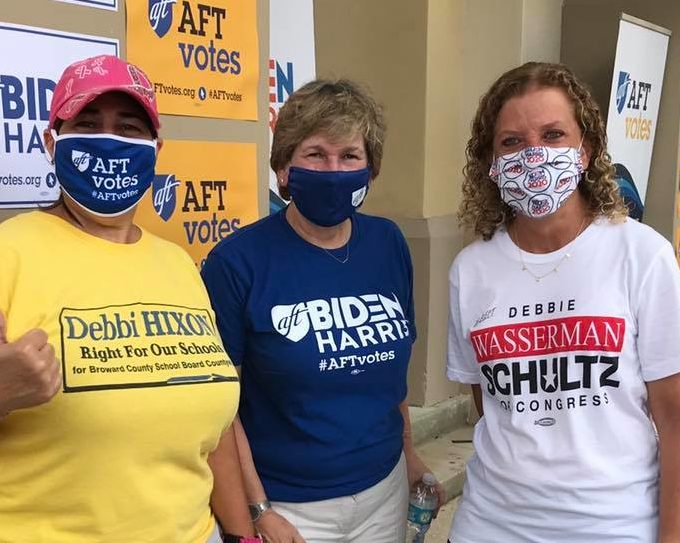
Commentary: To Unions, Organizing Time Is Fine When It’s on the Taxpayers’ Dime
June 29, 2023 // Despite public sector unions, and particularly teachers’ unions like Weingarten’s American Federation for Teachers, facing mounting scrutiny for their role in school closures and broader left-wing political activism, the practice of release time has garnered little attention.
Public-Sector Union Membership Down 10 Percent Since Janus
June 20, 2023 // Maxford Nelson of the Freedom Foundation, a conservative union-watchdog group, has crunched the numbers and found that 733,745 workers have left the four largest public-sector unions since the Janus decision, which is a decline of about 10 percent. Those four are the National Education Association (NEA), American Federation of Teachers (AFT), American Federation of State, County, and Municipal Employees (AFSCME), and Service Employees International Union (SEIU).

Michigan Democrats want to make it easier to give to unions (who give to Dems)
May 24, 2023 // Democrats-backed legislation would allow unions to collect political contributions from members via payroll deduction The legislation would reverse restrictions put in place by Republicans Unions typically donate to Democrats and have given big to the party since it took control of Lansing this year. Public resources — such as fees associated with administering the deduction program — would also be allowed to be used for payroll deductions as long as unions reimburse the costs. Employers are already allowed to deduct income tax withholdings, Social Security, overpayments and more from employees’ wages and benefits under federal and state law. They can also deduct payments for health benefits and charitable donations with employee consent.

COMMENTARY: White House Swells Federal Union Ranks – But at What Cost
May 18, 2023 // Using the estimated dues of the largest federal employee union as an example, the new union members for which the Biden administration is taking credit could represent between $37 million and $46 million in annual dues revenue. And as these employees are ushered through the union door, union officials and government agencies appear determined to slam it behind them. For employees who feel this arrangement violates their rights, litigation may be the only way out. In the past year, the Fairness Center, the public interest law firm of which I am president, has filed 36 matters on behalf of federal employees involving 16 unions and eight federal agencies.

Opinion: These powerful unions helped flip the Pennsylvania House
May 4, 2023 // Union executives’ political spending continues to break records. For the first time in Pennsylvania history, government unions’ combined political action committee spending surpassed $20 million in one election cycle, more than triple what they spent a decade ago. By comparison, the record-breaking spending in the seven-way Pennsylvania Supreme Court race in 2015 reached a total of $15.8 million across all candidates from all parties. For the governor’s race alone, public sector union executives gave nearly $5.5 million in direct political contributions to Josh Shapiro’s campaign. Three unions in particular — the commonwealth’s largest teacher union, the Pennsylvania State Education Association, and two national unions representing state workers, the Service Employees International Union and the American Federation of State, County and Municipal Employees — reported more than $1 million each. It’s no coincidence that Shapiro must soon sit down and bargain with SEIU and AFSCME executives and that the PSEA expects huge returns in terms of state funding.

TWO BILLS PASSED BY WA LEGISLATURE EXPOSE UNION HYPOCRISY ON PUBLIC EMPLOYEE PRIVACY
May 3, 2023 // One bill, HB 1533, creates a process for public employees purporting to be “survivors of domestic violence, sexual assault, harassment, or stalking” to exempt any information about themselves from being disclosed to people seeking government records under the Public Records Act (PRA). Meanwhile, the other bill, HB 1200, requires government employers in the state to regularly turn over the personal contact information—including home addresses, phone numbers, and email addresses—of their employees to labor unions. While the two bills are at odds in their substance, the common thread is that they both advance public-sector unions’ goal of being the only nongovernmental organizations with the ability to communicate with public employees. Ever since the U.S. Supreme Court in 2018 upheld public employees’ First Amendment right to refrain from joining and paying dues to a union in its Janus v. AFSCME decision, government unions in Washington and around the country have worked overtime to make signing up for membership as easy as possible while making cancelling membership unnecessarily cumbersome. Part of the approach has involved attempting to silence the Freedom Foundation’s efforts to communicate information to public employees about their rights while simultaneously increasing unions’ ability to communicate for the purposes of soliciting membership.
Op-Ed: Loudoun County teachers deserve all the facts
April 11, 2023 // NEA president, Becky Pringle, makes over half-a-million dollars each year, and VEA Executive Director, Brenda Pike, has a total compensation of $225,861, which is nearly five times higher than the average teacher salary in Virginia. Loudoun officials have estimated the school district will spend over $3 million annually to fund administrative positions that earn more than two times the starting teacher salary. The teachers and school staff members are not winners in this scenario. As I see in heavily unionized states, today’s model of collective bargaining for public employees reeks of a Ponzi scheme with all the money going to the top and very little benefit trickling back down to local teachers.
Opinion: Randi Weingarten’s latest bogus claim gaslights all of us
March 24, 2023 // A few years later, Cornell University economists Michael Lovenheim and Alexander Willén conducted one of the most sophisticated and innovative studies on the topic of unions, examining the long-run effects of collective bargaining on students’ later life outcomes. Remarkably, these scholars found that boys who spent more of their childhood in a unionized classroom had lower (four percent) earnings and reduced labor force participation rates as adults.
Why Oregon Teachers’ Union Has Lost 20 Percent of Its Membership
December 13, 2022 // All told, the union’s active membership has dropped below 80 percent. “If OEA wants to blame someone for those defections, its leaders need only look in the mirror,” said Freedom Foundation Oregon Director Jason Dudash. “Our teacher outreach has been increasingly successful, but the arrogance of the unions themselves was a big help.” Until 2018, Oregon was one of 23 states without right-to-work protections for government workers, meaning teachers and thousands of other public employees were required to financially support union activities.