
Posts tagged secret ballot elections

Republicans Should Support Workers — Not the Failed Union Model
February 6, 2025 // Senator Hawley’s proposal would prevent workers from hearing both sides before a unionization election, which they would need to make an informed decision. Employers would be prohibited from holding meetings with workers. Unions would also be able to force ambush elections, depriving workers of time to do their own research and make up their minds. And, like the PRO Act, the proposal would even give unelected federal bureaucrats the power to force union contracts on workers, employers, and even unions.
National Right to Work Foundation Slams Biden-Harris NLRB Rule Overturning Protections on Workers’ Right to Vote in Secret on Unions
July 31, 2024 // New rule will let union officials bypass secret ballot union vote process entirely or delay decertification votes by months or years
Op-ed: Controversy trails labor union wins under card check
May 20, 2024 // During the meetings, according to the reports, organizers also helped workers apply through an online portal for one-time pandemic-relief payments of $600 from the U.S. Department of Agriculture. The USDA awarded grants to 14 nonprofit organizations, including the UFW Foundation, to disperse the funds to eligible workers. In February, UFW submitted cards to the ALRB signed by 327 of Wonderful Nurseries’ 640 employees. Within days, the company contested the union petition, saying UFW had defrauded its workers. The nursery handed over sworn declarations from 148 employees who said they were tricked into signing the cards and wanted to revoke them. In one declaration, a nursery employee described a meeting at a co-worker’s house organized by UFW Vice President Erika Navarrete. “She had me sign a white card with an eagle and told me to sign a piece of paper. She told me this was part of the process to apply for the $600, but she never explained to me or the others that this was part of the union,” the worker said. “They lied to us.”

Opinion: The UAW vote — gambling with our future
April 15, 2024 // The UAW talks a lot about solidarity — but solidarity with whom? Unionized VW employees cannot be in "solidarity" with their fellow unionized workers at other foreign auto assembly plants in the U.S. for one simple reason: Every time the UAW has entered a foreign automotive assembly plant in the U.S., that plant has eventually closed. Mitsubishi in Illinois; Toyota in California; Mazda in Michigan; and VW in Westmoreland County, Pennsylvania — the last time the UAW made an American Volkswagen plant unprofitable.
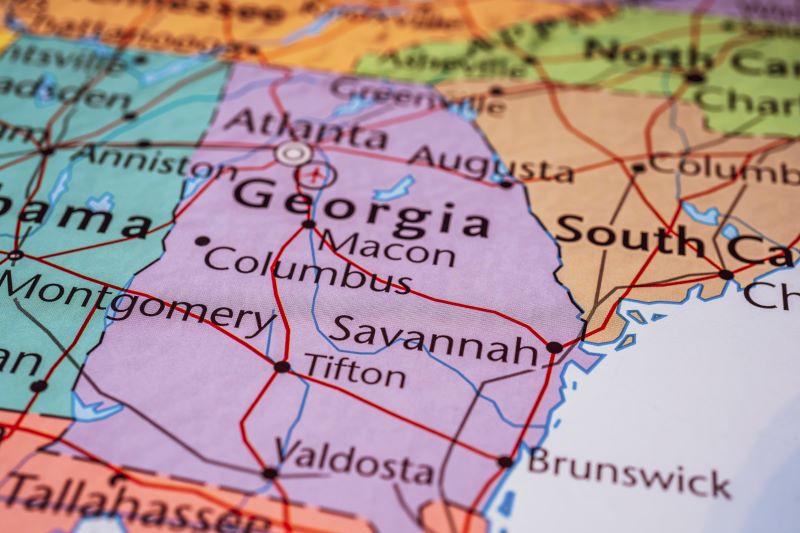
WSJ Letter to the Editor: Georgia’s Secret Ballots and Union Hypocrisy
April 11, 2024 // As Georgia prepares to protect workers’ right to a secret-ballot election, unions are trying a new tactic to scare other states away from following suit
Commentary: The Georgia Model for Putting Workers’ Rights ahead of Union Demands
March 8, 2024 // The United Auto Workers’ endorsement of Joe Biden’s reelection was in large part payback for the president’s efforts to help organize southern automakers. The Biden administration has issued a slew of policies that will enable the UAW to make inroads at factories that have repeatedly rejected union representation. Most notably and recently, in its Cemex decision last August, the National Labor Relations Board made it easier for unions to ignore workplace elections while publicly intimidating workers into supporting unionization. Georgia is going in the opposite direction, putting workers’ rights ahead of union demands. It’s on the verge of enacting a law that would guarantee secret-ballot elections at automakers and parts manufacturers. The Peach State’s pending reform should spread nationwide.

OPINION: Bidenomics Labor Agenda on the Rise in Time for 2024 Election
February 6, 2024 // This means entrepreneurs will lose the ability to open their franchise stores like a McDonald’s or Meineke auto shop. It also means many small mom-and-pop businesses like plumbing, baking, accounting and cleaning can’t perform mutually beneficial services for other businesses without being slammed by costly new regulations, legal threats and even targeted unionization efforts — not to mention the loss of their American Dream to have an independent business in the first place. In other words, more than 750,000 franchises and even more small businesses serving as contractors and vendors are now under threat, as are tens of millions of workers. The similar 2015 Browning-Ferris joint employer rule was estimated to increase costs by more than $33 billion and lead to 376,000 lost jobs for franchises, meaning the new rule in 2024 will be even more costly. Next, on January 10, the Labor Department published a final independent contractor rule that modifies the subfactors used in Labor’s “economic realities” test to create as many roadblocks toward independent contractor careers as Labor can without legislation.
NLRB Clears Path for Union Representation Without an Employee Vote
December 19, 2023 // After Cemex, as explained in the GC memo, any violation by the employer during the campaign will automatically result in a bargaining order in favor of the union so long as the union can show that a majority of the employees signed a card or petition in favor of the union. The GC memo endorses this position regardless of the nature or severity of the violation. Moreover, equating a signature on a card or petition with unequivocal support for a union would seem to be a leap of faith—anecdotally, employees sign such documents for many reasons, including peer pressure, and may very well have a change of heart after learning more about working in a union shop.
Commentary: Union ‘neutrality agreements’ are a threat to employers’ free speech
October 27, 2023 // Federal agencies have begun to make adoption of these so-called agreements a condition for federal contractors. For example, the U.S. Environmental Protection Agency and the Department of Health and Human Services have pushed neutrality agreements on contractors. The Treasury Department has even hinted it may alter the tax code to funnel job creators into these agreements. Virginia companies receive over $72 billion in government contracts annually, the largest amount among all states. These contracts are responsible for tens of thousands of Virginia jobs. It’s not difficult to see these forced federal neutrality agreement requirements as a backdoor attempt to silence Virginia employers and organize their companies. If allowed, this would be another blow to Virginia’s rich history of workplace freedom.

Commentary: Workers deserve to hear all sides of a story
October 23, 2023 // Neutrality agreements are contracts that require employers to stay silent in union organization efforts. They mean that employers can’t freely offer knowledge of workplace realities, counter misleading information given by an outside organization or give workers “cons” to a union’s “pros.” Long-sought by unions, neutrality agreements allow unions to give workers the information of their choosing while gagging employers. Requiring employers to remain silent during unionization efforts can leave workers with a one-sided argument — the union’s side. Long-standing precedent in which the judicial and legislative branches of government have defended worker rights would send the Biden Administration to detention for trying to deprive workers of their right to information.