Posts tagged DOL

Social conservatives split over abortion and transgender medicine in union contracts bill
June 16, 2026 // Beck said he believes abortion and transgender medical coverage would be “an easy thing” for arbitrators to use as a bargaining chip to reach an agreement on the three-person panel. “It’s going to be easy for the arbitrator to say, ‘OK, employer, I’m not going to make you pay the high wages that the union is demanding,’” Beck said as a hypothetical. ‘“But what I am going to make you do is I’m going to make you give generous health benefits and give very generous access to abortion on demand and give very, very generous access to so-called gender-affirming care.”
Op-ed: Trump needs a pro-worker head of Labor Department — not a union lapdog
June 11, 2026 // The right choice for labor secretary is the one right under President Donald Trump’s nose. That’s Keith Sonderling, who is now the acting labor secretary. He is pro-right to work. He will fight against the trial lawyers and the militant union bosses who have been hostile to Trump, even as rank-and-file union workers embrace Trump’s America First agenda. Sonderling is right that “Trump is the greatest president for American workers, including union workers,” in history. Not too many union leaders believe that, which is why upwards of 90% of their donations typically go to Democrats.
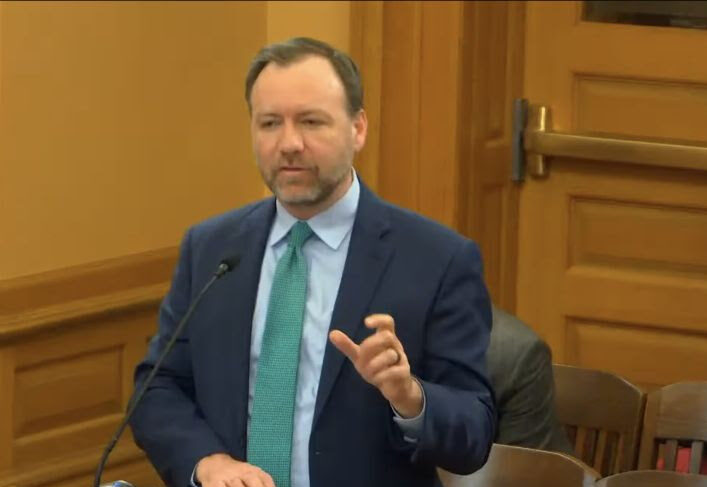
Jonathon Wolfson: Testimony before the House Committee on Education and Workforce
June 10, 2026 // In short, locum tenens is not a temporary patch on a permanent problem; it is a permanent and growing part of the healthcare access solution. In many areas, the choice is not between a permanent healthcare provider and a locum tenens healthcare provider. The choice is between a locum tenens healthcare provider and no provider at all. Any policy that undermines locum tenens would directly harm the patients who depend on it.
Trump needs a pro-worker head of Labor Department — not a union lapdog
June 10, 2026 // The right choice for labor secretary is the one right under President Donald Trump’s nose. That’s Keith Sonderling, who is now the acting labor secretary. He is pro-right to work. He will fight against the trial lawyers and the militant union bosses who have been hostile to Trump, even as rank-and-file union workers embrace Trump’s America First agenda. Sonderling is right that “Trump is the greatest president for American workers, including union workers,” in history. Not too many union leaders believe that, which is why upwards of 90% of their donations typically go to Democrats.
Labor Department toughens union transparency rules
June 9, 2026 // The purpose of the changes (and less substantial changes to the LM-2 for unions reporting receipts of $350,000 to $39,999,999) are to carry out the purposes of the LMRDA (and the consensus principle it codified): Ensure union members, prospective union recruits, and the public can appropriately track the use of member dues and compulsory fees required of workers in non-right-to-work states.
What Voters Don’t Know When They ‘Support’ Teachers’ Unions
June 8, 2026 // Yet, despite the poor outcomes shown by the “Nation’s Report Card” and parents’ desire for better options, teachers’ unions continue to oppose school choice. Each student who leaves a public school for an alternative setting reduces district enrollment, which can erode union membership, lower dues collection, and ultimately diminish the union’s influence. Opposition to school choice is often tied to preserving the unions’ base, even though more than two-thirds of Democrats—the primary beneficiaries of union political support—express preferences aligned with Black parents. The core issue is that responses to the Overton Insights question conflate support for teachers with support for union political action. If voters were asked directly about unions’ political behavior, the 55% who currently support teachers’ unions would likely respond differently. In this case, support reflects a misunderstanding, not a true endorsement.

More transparency for the largest unions
May 31, 2026 // A new rule from the Labor Department will recalibrate the disclosure reports that labor unions are required to file. It’s a welcome update to ensure that union members know how their money is being spent. What will happen in the 2026 midterms? Sign up for Margin of Victory The reason unions have government-mandated disclosure requirements is that they are government-backed monopolies. Labor relations law gives unions exclusive power as the sole bargaining agent for the entire workplace.
Colorado governor vetoes union dues bill — again
May 31, 2026 // Gov. Jared Polis on May 29 again vetoed legislation that would have made it easier for labor organizations to impose dues on non-union members, a decision long expected after the legislature approved the measure without securing the buy-in of businesses. Polis rejected a similar proposal last year, and cited the same reason: that, if enacted, the bill would allow a simple majority of employees who choose to unionize to “also determine that dues could be mandatorily taken from all workers.”
New York City Unions Keep Winning Six-Figure Salaries
May 21, 2026 // Business owners say the wage increases will raise prices for consumers, with higher hotel bills and healthcare costs. In its negotiations, the Metropolitan Transportation Authority argued that the wage increases that Long Island Rail Road unions were asking for would lead to higher fares or increased borrowing. Labor economists and union supporters said union victories in New York City could be hard to replicate elsewhere, but across the country unions have been flexing a bit more muscle in recent years. And other workers, struggling to keep up with rising costs, could take notice.
DOL gets flexible on overtime
May 20, 2026 // In 2023, The Biden administration raised the income threshold from $35,500 to $44,000, and planned to increase it again to $59,000 annually by 2025. This was intended to expand the number of people receiving overtime. The administration’s union allies and labor-sympathetic lawmakers have long argued that companies abuse the exception by designating regular employees as managerial to get out of having to pay them overtime. Raising the threshold was meant to prevent this. This one-size-fits-all approach did not necessarily benefit all workers. The Biden rule would have limited employers’ ability to offer work weeks longer than 40 hours in exchange for other considerations, such as the ability to work from home or additional time off during other weeks.