Posts tagged Faster Labor Contract Act
Op-ed: The 120-day clock that could rewrite your job
October 6, 2026 // Workers and employers must remain free and able to bargain for the terms each desire. No free country should dictate to a worker or an employer the terms of a private labor contract The Faster Labor Contracts Act would set a timetable for negotiating a first contract after a union is newly certified or recognized. The parties would meet and begin bargaining within 10 days after the employer receives a written request. If they have no agreement after 90 days of bargaining, either party could request federal mediation.
The ‘No Surprises’ warning for mandatory labor arbitration
September 23, 2026 // The Faster Labor Contracts Act passed the House of Representatives earlier this year and remains pending in the Senate. Under this proposal, a newly recognized labor union and employer have a strict 120-day timeline — comprising 90 days of negotiation and 30 days of federal mediation — to reach an initial collective bargaining agreement. If they fail to do so, the dispute goes to a binding arbitration panel that sets the terms and conditions of employment. Proponents say the prospect of arbitration would prevent delay and encourage serious bargaining. The No Surprises Act shows why that assumption deserves skepticism.

Union bosses remain hostile to MAGA
September 3, 2026 // Today, unions are banking on garnering enough Republican support to pass an anti-business Faster Labor Contracts Act. That legislation would strip workers of their right to vote on the terms and conditions of their employment if an agreement can’t be locked down over a few months. The legislation gives government bureaucrats the power to force workers and employers into union contracts while further expanding the size and power of the federal government. The legislation could also force workers and employers to adopt DEI programs, block immigration enforcement, and impose transgender policies. Given the long history of union leadership opposing Republican candidates and the Trump Agenda, it makes zero sense for Republicans to support legislation that would give even more power and money to union bosses.

The Faster Labor Contracts Act: What You Need to Know
July 31, 2026 // While the FLCA may accelerate the negotiation process for both the employer and the union to reach an initial contract, faster does not always mean better, and the binding arbitration provision sidelines the interests of both parties and leaves the decisions about worker pay, benefits, and working conditions in the hands of arbitrators acting under the auspices of the federal government. The arbitrary timelines under the FLCA, while making the negotiation process move faster, may not give sufficient time for both parties to reach an initial contract that best represents the interests of both sides, given all the facts and circumstances of the working arrangement.

Op-ed: Republicans should stop helping Democrats empower union bosses
July 29, 2026 // Policies built on employee choice, such as right-to-work protections, reflect what American workers actually want. The partisan legislation now moving through Congress reflects only what union leadership wants. Pro-worker legislation is not synonymous with pro-union legislation; in fact, they often are opposites. It is time for Congress to wake up and realize this.
Commentary: The House Sides With Unions Over Workers
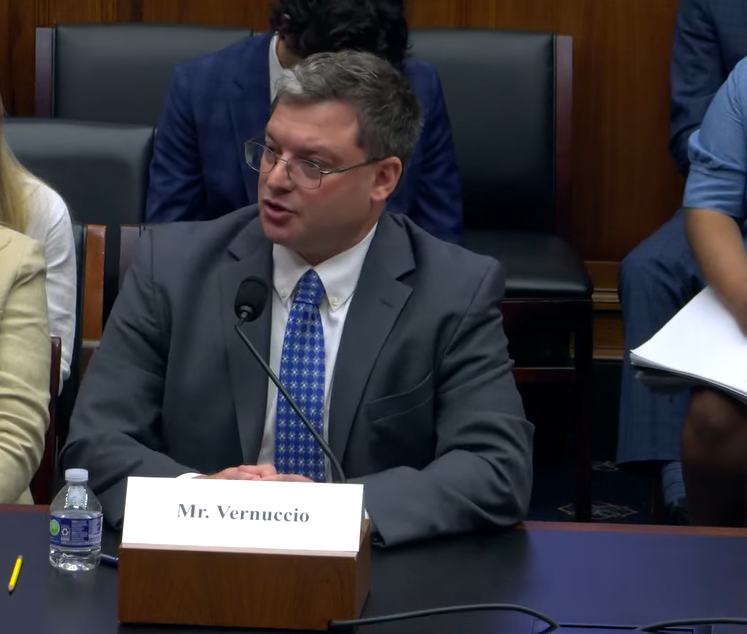
June 26, 2026 // Last year, I participated in a Senate hearing in which a union shop steward was asked about government-appointed arbitrators unilaterally imposing contracts. He said that would be “removing the democracy from the workplace.” He said such democracy “is the whole point of the union” because it gives workers a say. The shop steward’s own union was in the process of voting down several contract proposals, further emphasizing the importance of letting workers vote.

Editorial: Why are some Republicans pushing price-hiking, pro-union bills in Congress?
June 15, 2026 // Democrats have long pushed pro-union measures sure to boost prices, even as they pretend to care about “affordability.” But why are Republicans now joining them? On Tuesday, a full 20 GOPers crossed the aisle to pass the Faster Labor Contracts Act, 230-193. The bill, lifted from Dems’ PRO Act, aims to boost unionization by forcing employers to agree to labor contracts within 90 days after a newly formed labor group calls for talks.
Key Vote Alert – HOUSE & SENATE – “NO” ON THE FASTER LABOR CONTRACTS ACT
June 5, 2026 // This bill borrows from the same compulsory-union playbook as the PRO Act and other failed Big Labor priorities. It strengthens union leverage, pressures employers to accept terms they may never voluntarily agree to, and invites federal intervention into private workplaces. The result would be less flexibility, higher costs, more litigation, and fewer opportunities for workers and businesses alike. Congress should reject this federal takeover of private-sector bargaining. Workers do not need politicians using “pro-worker” branding to deliver wins for union bosses. They need freedom, flexibility, and the right to negotiate, work, and prosper without being trapped in federally imposed labor contracts.

The Faster Labor Contracts Act would force workers into unions they never voted for
June 4, 2026 // The retail, leisure, and hospitality sectors, by contrast, are traditionally harder for unions to organize because the workers who would back a union are also less likely to stick around. That’s why the unions want contract deadlines to apply to all negotiations, not just cases in which companies may be deliberately delaying things. Unions might otherwise find themselves in a “herding cats” situation because workers are constantly coming and going.
Faster Labor Contracts Act Bad for Workers and Small Businesses
June 4, 2026 // The supporters on the right also argue that pandering to a piece of legislation championed by Big Labor and the whole Democratic Party will save Republican seats in Congress. Kishi further argues that “the Republican Party today draws its strength not from boardrooms and donor retreats, but from working-class Americans.” Working-class Americans voted for President Donald J. Trump and put Republicans in charge of Congress because they reject the anti-family, woke agenda of a far left that has captured the agenda of the Democratic Party. Arguing that Republicans should adopt Democrat-lite policies to win over votes ignores the fact that voters can just vote for Democrats if they want big government and anti-business policies.