
Posts tagged Public Sector
Rutgers faculty suspend strike after reaching tentative deal
April 17, 2023 // Striking faculty at New Jersey's Rutgers University returned to classrooms Monday after reaching a tentative agreement on a new contract to boost wages and provide other benefits. On Saturday, the three striking unions representing more than 9,000 faculty members announced they had reached a "framework" agreement with Rutgers administration on new contracts, allowing more than 67,000 students to return to classes. The unions have been on strike since last Monday. The Rutgers' unions — AAUP-AFT, Rutgers Adjunct Faculty Union and the Rutgers AAUP-Biomedical and Health Sciences of New Jersey — said the tentative deal includes "major victories" but said there are still "open issues" that have to be resolved before they put the contracts before their membership for a vote. "We have only suspended the strike, not canceled it," they said in a joint statement. "If we don’t win what we need on these open issues, we can and will continue with the work stoppage."

Public-Sector Hiring Boomed Post-COVID. Union Membership Nationwide Did Not
April 17, 2023 // Federal, state & local governments added 685,000 total jobs in 2022, with a gain of 83,000 union members. But outside of California, membership fell

British Columbia Just Gave Us More Proof: Card Check Helps Union Efforts
April 11, 2023 // Making it easier to join a union through a “card check” model is therefore a central plank in many labor-law reform agendas. It’s a key proposal in the Protecting the Right to Organize (PRO) Act, as it was in the Employee Free Choice Act (EFCA) of 2009. This “single step” process allows workers to more easily form unions when a majority have signed cards. Without the additional requirement of a mandatory vote, employers have less time to intimidate workers and squash organizing drives. At one time, card check was common in many Canadian provinces, but right-wing provincial governments had largely put an end to it by the late 1990s.

Why Government Unions—Unlike Trade Unions—Corrupt Democracy
April 9, 2023 // Newly-elected governors and mayors in most states quickly discover that they have no managerial control over schools, police, and other government operations. If an elected executive has the backbone to try to buck the union, and restore managerial powers when an agreement comes up for renegotiation, the executive in many states will find that unelected arbitrators have the final say. Near-zero accountability makes its practically impossible to transform a lousy school, or an abusive police culture, because the supervisor can’t enforce good values and standards. No accountability also removes the mutual trust needed for any healthy organization. Why try hard, or go the extra mile, when others just go through the motions? The absence of accountability is like releasing a nerve gas into the agency or school. Rigid work rules guarantee massive inefficiency. Basic services such as trash collection, and road and transit maintenance, cost two to three times what it would cost in the private sector. Need someone to help out or fill in? Sorry, not permitted. Need teachers to do remote teaching during the pandemic? There’s nothing about that in the agreement, so it must be negotiated.
Special Legal Notice to Private-Sector Workers in Michigan
March 27, 2023 // Michigan’s legislative majority and current Governor are unfortunately repealing Michigan’s Right to Work law which granted most private-sector workers a right to not join or pay monies to unions they oppose. This special notice is intended to inform Michigan workers who are employed by private companies, other than in the airline and railroad industries, of their rights after the repeal of the Right to Work law takes effect ninety days after the current legislative session ends.* In short, after the repeal statute takes effect, it will be legal under Michigan law for private-sector employers and unions to enter into agreements that compel workers to pay fees to unions as a condition of employment. However, under the National Labor Relations Act (NLRA) workers subject to these forced fee arrangements cannot lawfully be compelled to be actual union members or pay full union dues to keep their jobs
Video: ALEC’s Labor of Love: A History of Championing Worker Freedom
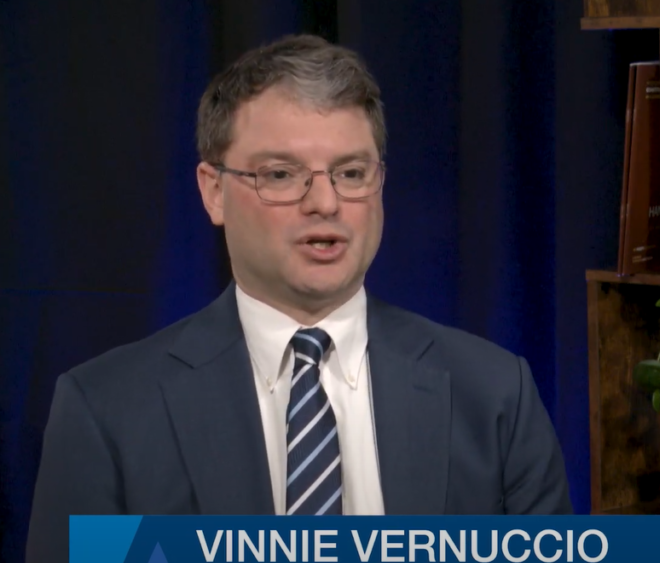
March 10, 2023 // Today, ALEC debuts its first episode, “Worker Freedom,” in our 50th anniversary video series. The episode features ALEC champions Scott Walker (45th Governor of Wisconsin), Matt Hall (Michigan House Minority Leader and ALEC Board of Directors Member), and Vinnie Vernuccio (Senior Fellow, Mackinac Center), discussing ALEC’s pivotal role in securing Worker Freedom policy wins across the states. In some states, private sector workers can be forced to join, leave, or pay fees to a union as job requirement. The Right-to-Work Act, which ALEC task forces approved as a model policy, provides a solution to this issue. It prevents private employers from requiring or banning union membership (or fees) as conditions for employment, giving workers in Right-to-Work states a guaranteed right to support a union or not to support a union without this choice affecting their hiring or job security.

Opinion: Florida Bill Would Make Government Unions More Transparent, Accountable
March 9, 2023 // The “Paycheck Protection Bill” includes language that would, among other things: prevent the state from deducting dues on behalf of unions from public employees’ paychecks, forcing unions to do their own billing and collections; require audits of unions representing public employees; require union membership cards to include wording echoing the U.S. Supreme Court’s 2018 ruling in Janus v. AFSCME, which recognized the right of public employees to decline union membership, dues, and fees with no loss of representation or benefits; and, perhaps most significantly, the bill establishes a new threshold and closes some unintended loopholes in a 2018 law that forces certification elections in situations where more than half of the bargaining unit has refused to support the union. These elections allow all employees who are represented by the union an opportunity to vote on whether the union will be allowed to continue representing them.
Michigan House votes to repeal Right-to-Work, restore prevailing wage
March 9, 2023 // The legislation, now headed to the Senate for final votes as early as next week, would end a 2012 law that prohibits compulsory union dues or fees. The House also voted to restore a construction-industry “prevailing wage” law the GOP repealed in 2018. Democrats touted the union-backed measure as a restoration of worker rights to collectively bargain for wages, benefits and workplace safety. Democratic Gov. Gretchen Whitmer supports the repeal, but in the past has blasted GOP efforts to make policy bills referendum-proof by including appropriations, decrying it as a form of legislative "abuse."

New York’s biggest labor actions of the past year
February 28, 2023 // Only one other state, Hawaii, has a unionization rate higher than New York’s 20.7%. In the public sector, just around two-thirds of New Yorkers are in a union. In 2022 alone, nearly 200 workplaces in the state filed for representation through the National Labor Relations Board. But, despite the hype and a 57-year high in Americans’ approval of labor unions, New York’s union participation (and the country’s as a whole) is still trending downward. In 2012, 23.2% of New York workers were union members, 2.5 points higher than it is today. CUNY School of Labor and Urban Studies Labor Department Chair Ruth Milkman said that despite 2022’s historic union victories, many were with small firms. “So all this publicity and media attention to these iconic companies that have had some recent experience of successful unionization, it’s kind of a drop in the bucket in terms of the whole labor market in New York,” she said.
Opinion | Repealing Right-to-Work is a bad deal for Michigan autoworkers
February 3, 2023 // Michigan’s Right-to-Work law now only covers workers in the private sector. In Janus v. AFSCME, the U.S. Supreme Court decided in favor of workers. Now all public-sector workers in the United States have their right to work guaranteed under the U.S. Constitution. Michigan cannot change that decision, so our Right-to-Work law only covers workers in the private sector. Do Michigan’s private-sector workers somehow deserve less freedom and protection than people who work for the government? Of course, the answer is no. We deserve those same rights, but Lansing politicians want to steal them away from us.