
Posts tagged union elections
Editorial Board: In defense of the secret ballot
March 15, 2026 // In the case decided by the 6th Circuit, Brown-Forman challenged the basis for the NLRB’s Cemex ruling and won. The supposedly unfair labor practice committed at its Woodford Reserve bourbon distillery was giving workers a $4-per-hour raise, expanding merit-based salary increases, offering more vacation time and providing free bottles of bourbon. The employees voted 45-14 against unionizing, but the NLRB ordered the company to bargain with that union anyway. The advantage of secret-ballot elections is that workers are free of coercion by unions or employers when deciding whether they wish to unionize. It also ensures that their decisions are anonymous, so they won’t fear retaliation or harassment by aggressive union organizers or the people who pay their salaries. A secret ballot is far more likely to reflect their true views.

Sixth Circuit Dumps NLRB’s Cemex Ruling to Police Elections
March 9, 2026 // Beyond negating Cemex in the Sixth Circuit, the court’s decision strikes a blow at the NLRB’s fundamental authority to set national labor policy through individual case rulings. While the board is expected to overturn Cemex after its Republican majority gets a crucial third member, the current members recently emphasized their preference for setting policy through case adjudication rather than rarely used rulemaking power. Under Cemex, the NLRB can impose a bargaining order when an employer that was presented with a valid demand for union recognition commits unfair labor practices in the runup to a vote.

Unionizing Set to Fall Due to Economic, Political Headwinds
February 3, 2026 // The number of union elections fell to 1,372 last year, down from 1,938 in 2024. That’s the fewest elections since 2021, a review of National Labor Relations Board data found. Union wins also sank by nearly 27% in 2025 compared to 2024, the first downturn since 2020. That drop in election wins led to the number of new workers organized via NLRB elections to fall nearly 40% year-over-over to just 65,542 workers in 2025, according to the data. Organized labor saw a post-pandemic boom after decades of union membership decline. But new economic and political headwinds, including a more management-friendly NLRB and a cooling jobs market, look likely to reverse that trend.
Opinion: The Senate can stop the NLRB’s threats to American freedom
December 8, 2025 // Trump’s nominees will restore the balance and discipline needed to repair the NLRB’s legitimacy and credibility with American workers. They understand that the NLRB’s role is not to pick winners and losers, but to protect workers’ rights and uphold secret ballots, as well as ensure union accountability and that information is not hidden from workers. Confirming them would restore the constitutional guardrails that keep government honest and workplaces free.
Congress Can Empower Workers Through Choice—Not Coercion
November 24, 2025 // A case in point is the legislative package that Sen. Bill Cassidy (R-La.) introduced on Nov. 10, joined by others including Sens. Tommy Tuberville (R-Ala.) and Tim Scott (R-S.C). They’d protect workers’ paychecks by requiring unions to get approval before spending dues money on politics. They’d also protect workers’ privacy by letting them choose what contact information unions get during the organizing process. And they’d protect workplace democracy by requiring that at least two-thirds of workers participate in union elections — preventing a minority of people from determining the fate of every employee. Another praiseworthy reform is the Employee Rights Act, which Scott introduced in the shutdown’s early days after Rep. Rick Allen (R-Ga.) previously introduced it in the House. Among its many good ideas, the Employee Rights Act guarantees the secret ballot and protects workers from intimidation and harassment. It also gives unionized workers in the 26 right-to-work states the freedom to negotiate their own contract with their employer, so they can better address their individual needs. And the Employee Rights Act guarantees that self-employed workers have maximum flexibility to design their jobs to fit their lives.
Commentary: Trumpworld thinks overturning this Biden labor rule gives GOP a double-digit midterm elections boost
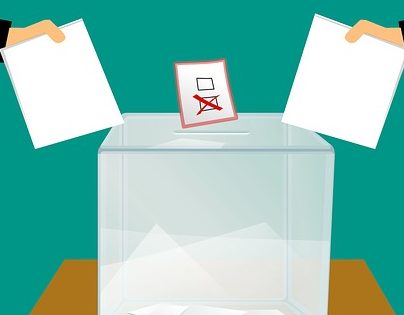
October 29, 2025 // Only 22% of respondents in Fabrizio’s poll supported the NLRB’s 2023 rule “that allowed unions not to use secret ballots,” with 64% opposed. Fabrizio wrote that Republican Congressional candidates “would benefit significantly from supporting overturning this unpopular rule.” “The initial generic ballot is a statistical dead heat, 44% Democrat – 43% Republican (D+1), but if the Republican candidate supported overturning the NLRB rule so workers could once again rely on secret ballots when voting to unionize, the Republican pulls into a 47% – 36% (R+11) lead, a 12-point shift,” the memo reads. “Among Swing voters, the Republican goes from 1-point ahead to 17-points.”
California Dramatically Expands State Labor Board’s Powers to Cover Employees Under NLRB’s Exclusive Jurisdiction, Following New York’s Lead
October 13, 2025 // California’s legislation comes on the heels of and follows the same logic behind New York’s recently enacted “NLRB Trigger Bill” that similarly empowers the Empire State’s PERB to step into the shoes of the Board, which we covered here. The NLRB has lacked a quorum for months and as a result remains unable to process appeals from decisions by Board administrative law judges or regional directors in unfair labor practice or representation cases. However, AB 288 will likely face similar legal challenges to New York’s “NLRB Trigger Bill,” which the Board has sued over, as we covered here. Specifically, AB 288 may be preempted by the National Labor Relations Act (“NLRA” or “Act”), which covers most private-sector employees, under longstanding Supreme Court precedent.
Frozen feud: How Trump and the Supreme Court helped put historic Whole Foods union bid on ice
October 7, 2025 // When the NLRB will regain members depends on how quickly the Republican-led U.S. Senate moves to confirm two nominees picked by Trump in July, Boeing's chief labor counsel and an NLRB career staffer. A Senate committee is set to hold hearings on Trump's nominees on Wednesday. An NLRB spokesman did not respond to a request for comment about the delays. William Cowen, the board's acting general counsel, in an August press release addressing efforts in several states to pass new labor protections said the agency's work has "largely been unaffected" by the lack of quorum.
Two years after the UAW strike
September 26, 2025 // Two years ago, tomorrow (September 26, 2023), then-President Joe Biden became the first president to participate in a striking worker picket line. The occasion was the United Auto Workers (UAW) strike against General Motors. Biden addressed the UAW members outside the Willow Run parts center near Detroit, Michigan.
Amazon sues New York over union protections
September 24, 2025 // In a lawsuit filed Tuesday in U.S. District Court in New York City, Amazon argues that a newly minted state law giving the New York State Public Employment Relations Board authority to oversee union elections and resolve unfair labor practice charges is an "unconstitutional power grab" that's preempted by federal labor laws. Amazon was seeking a temporary restraining order blocking the law, but U.S. District Court judge Eric R. Komitee rejected that request in an order issued late Tuesday, citing a lack of notice to defendants named in the lawsuit. Lawyers for Amazon said the New York law "flips U.S. labor law on its head" by giving the state's PERB jurisdiction over every private-sector employer "until the NLRB gets a court to hold otherwise."