Posts tagged Florida
Florida Wells Fargo Workers Successfully Remove CWA Union
March 30, 2026 // Employees at the Lakewood Plaza location of Wells Fargo in Spring Hill, FL, have successfully forced Communications Workers of America (CWA) union officials out of power at their workplace. The effort to remove the union kicked off earlier this month, when bank employee Virginia Fenton filed a petition asking the National Labor Relations Board (NLRB) to hold a union decertification vote at the Spring Hill Wells Fargo branch. Fenton filed the petition with free legal aid from the National Right to Work Legal Defense Foundation.
Florida Leads Again on Public Unions
March 25, 2026 // That’s hardly a vote of confidence from Ms. Weingarten of the value her union provides to its members. Under the proposed regime, a union could be recertified by winning a simple majority of half of the voting union members, or a bit over 25% of the bargaining unit. Do labor leaders really think they can’t rustle up a quarter of their members to ensure the union preserves its role in representing workers? The latest bill follows 2023 legislation that triggered a decertification vote when less than 60% of the employees eligible for representation in a bargaining unit are paying membership dues. That legislation also ended the state’s power to deduct dues from public-employee paychecks.
Spring Hill Wells Fargo Staff Set To Vote On Ousting Union Following ‘Broken Promises’
March 24, 2026 // The federal agency has scheduled a “decertification” election for Monday, March 30, which will determine whether the union loses its authority to represent the branch’s employees. The push for the vote was led by employee Virginia Fenton, who received legal assistance from the National Right to Work Foundation to navigate the filing process. The move comes after Fenton successfully gathered enough signatures from her colleagues to meet the federal threshold required to trigger a secret-ballot election.

Florida Legislature approves restrictions on public sector unions
March 11, 2026 // The measure (SB 1296) would require that public sector labor unions could only be re-certified if at least 50% of all of the employees in the bargaining unit vote and that the vote itself wins 50% plus-one support. Currently, those unions only need a majority of those who voted.
Florida Gov. Ron DeSantis backs a new bill targeting unions; those who support him won’t be affected
March 3, 2026 // In 2023, the Florida Legislature passed Senate Bill 256, a measure designed to attack public sector unions by making it harder for them to collect dues, while simultaneously forcing them to show that at least 60% of their members were paying their dues. Any union that failed to meet that 60% threshold faced a decertification vote.
Commentary: Florida Teachers Unions Have Lost Their Way
February 26, 2026 // If a union gets exclusive authority of a bargaining unit, it should be chosen by at least 50% of the employees. That's the principle behind House Bill 995 and Senate Bill 1296, now moving through the Florida Legislature.
Op-ed: When taxpayers incentivize jobs, the state should protect workers’ privacy in union votes
February 26, 2026 // Now, Rankin County Republican State Sen. Josh Harkins, who chairs the Senate Finance Committee, has introduced legislation to protect the investments of state and local taxpayers in economic development projects that rely on taxpayer incentives. The bill ensures that Mississippi workers are entitled to a private ballot for any unionization vote. In a recent op-ed, Harkins explained: “Senate Bill 2202 is straightforward: for companies that choose to accept future state economic development incentives, any decision about union representation should be made through a private, secret-ballot election. The bill does not prohibit employees from organizing. It does not outlaw unions. It does not interfere with an employee’s right to choose union representation if a majority wants it. It simply sets an expectation that the decision is made in a way that protects (worker) privacy.”
Opinion: Teachers Unions Get Desperate
February 17, 2026 // Antichoice plaintiffs “usually file lawsuits right before families sign up for the program just to be particularly cruel. They know they’ll lose nearly every case, but delaying or enjoining the programs in any way is the last-ditch effort to slow maximum uptake for families,” says Tommy Schultz, CEO of the American Federation for Children. Many suits are striking out. Idaho’s high court just ruled 5-0 in favor of the state choice program. Top courts in Arizona, Florida, North Carolina and West Virginia have upheld choice programs. The U.S. Supreme Court has continued to issue beneficial rulings. Yet the legal threat is real, and unions, often accompanied by local school districts, continue to throw millions at litigation and disruption, forcing states to spend huge amounts to defend against them. Then the unions and the districts claim schools are underfunded.
Op-ed: Trump restores America’s control over Washington
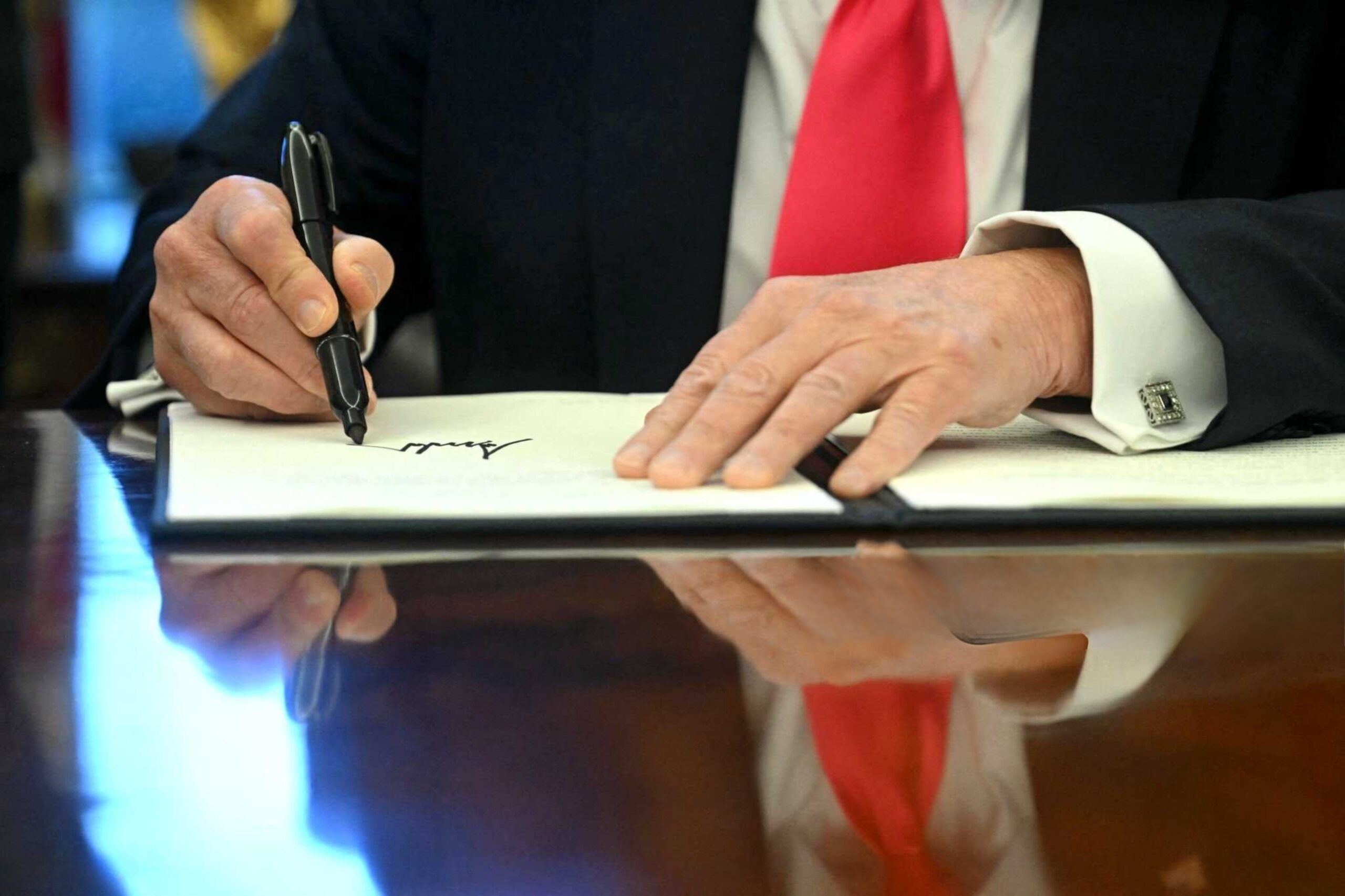
February 12, 2026 // President Trump is all too familiar with this injustice. In his first term, senior bureaucrats repeatedly used their power to prevent his priorities from becoming policy. They slow-walked reforms at the Department of Education, refused to prosecute civil rights cases, and circumvented a federal hiring freeze—to name just a few examples. At the start of the second Trump administration, a poll found that 75 percent of federal managers who voted for Kamala Harris planned to disobey instructions they don’t like. But public servants are supposed to serve the public, even if they disagree with the party the public elected. In the private sector, workers could be fired for not doing their job. But until now, presidential administrations couldn’t hold senior bureaucrats accountable because federal rules made them effectively untouchable. While Democrats outnumber Republicans two to one at federal agencies, conservative career officials could also refuse to implement a liberal president’s agenda.

Former Jacksonville teachers union leaders sentenced to prison for $2.6M fraud
February 11, 2026 // A summary from an interview prosecutors and FBI agents had with George in June 2025 said George claimed “it was an open joke in the [DTU] office that Brady did not really have any leave days to sell.” Because George’s job included keeping track of union employees' (not members') leave balances, “when Brady needed money she would say something along the lines of I need to sell some days,” said the summary, which Coolican attached to his sentencing memo. “Brady would tell George how much money she needed after taxes and then George would initiate a payment for the equivalent value of leave days. Brady directed George to do the same for herself.” For example, the summary said that Brady sold $20,000 worth of leave time when she needed roof repairs, and George assumed the two facts were connected.