Posts tagged collective bargaining
Commentary: Josh Hawley’s Pro-Union Bill Would Let Washington Write Your Contract
May 16, 2026 // A Hawley-backed bill, known as the Faster Labor Contracts Act (FLCA), seems to be picking up steam and may soon pass the House of Representatives. Unfortunately, the FLCA is a trifecta of bad public policy: It suffers from constitutional infirmities, revives a corrupt government agency, and takes away the voice of both businesses and workers. Earlier this Congress, Hawley introduced the FLCA in the Senate, alongside one other Republican senator and three Democratic senators; he has since picked up another Republican and 10 more Democrats. Companion legislation in the House has 99 cosponsors, 17 of which are Republican.

Congress Should Reject the “Faster Labor Contracts Act”
May 15, 2026 // “What would happen if workers lost that ability to ratify a contract?” Cassidy asked. “That would be removing democracy from the workplace,” replied the Democrats’ witness, himself a union organizer. Despite this, the Faster Labor Contracts Act has since gained more cosponsors, which are almost entirely Democrats. In the House, Democrats are pushing for the passage of a discharge petition to force the bill through Congress. Union bosses such as Teamsters President Sean O’Brien are running an aggressive campaign to push for the bill’s passage, including attempts to fool Republicans into signing on.
Op-ed: The right’s growing crackup over organized labor
May 14, 2026 // In the face of its growing crackup over organized labor, the Right is badly in need of developing a labor policy that is pro-worker without being pro-union. The best bet would be to coalesce around a flexible work agenda that empowers workers to achieve autonomy and agency in their employment arrangements. This policy agenda could take many different forms, but it might include championing the independent contracting status of gig workers while simultaneously expanding so-called portable benefit models that provide these workers with funds to access workplace benefits. This provides a more nimble, nuanced alternative to reclassifying them as employees or unionizing them. Or right-leaning politicians could seek to address issues like just-in-time scheduling, a common sore spot for workers in many industries, by striking a grand bargain with the business community regarding overtime averaging. By focusing on flexibility rather than cribbing the union political playbook, the Right can take a pro-worker stance without needing to fully repudiate its pro-business instincts.
MLB, players’ union meet to begin labor talks, sources say
May 14, 2026 // MLB intends to pursue a salary cap system, a financial structure that players staunchly oppose. The current deal, which came after a 99-day lockout by the league that threatened the beginning of the 2022 season, expires Dec. 1. If there is no agreement by the time the deal lapses, MLB is expected to again lock out the players, causing a work stoppage that could jeopardize games in the 2027 season. During the opening presentations, sources said, the sides outlined their views on the game, noting challenges they see and opportunities to use labor negotiations as a tool to move it forward.
Unions Leverage Retirement Funds for Political Agendas
May 5, 2026 // The new report “Unions and ESG: From Worker Representation to Shareholder Activism,” explains how organized labor backs Environmental, Social and Governance (ESG) investing principles. Under ESG principles, fund managers no longer make investment decisions based solely on financial returns for their clients, instead considering unrelated environmental and social issues such as climate policies and corporate diversity efforts.
Republicans must not help Democrats gut workplace democracy
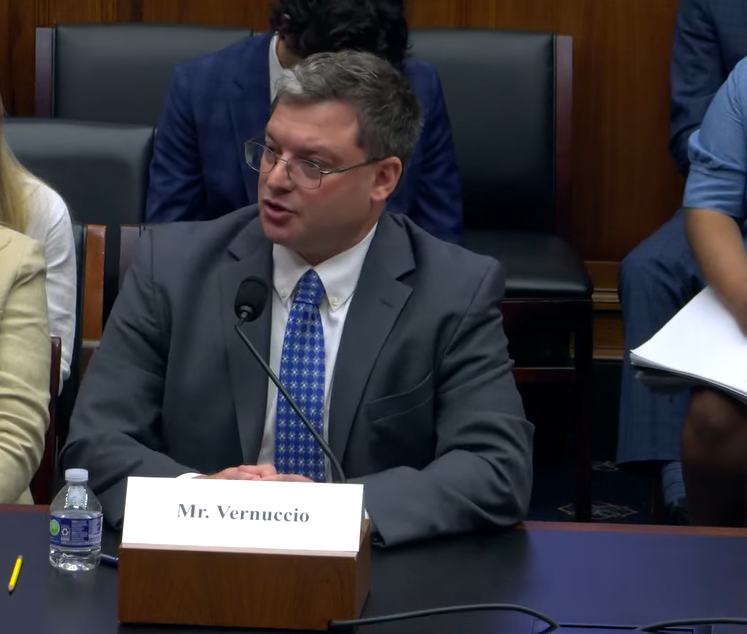
April 29, 2026 // If they can’t reach an agreement in time, the federal bureaucrats would force the creation of an arbitration panel, which would then unilaterally impose a collective bargaining agreement. But workers wouldn’t be allowed to vote for the contract, even though it dictates the terms of their employment. Voting on a contract is standard practice precisely because it lets workers make their voice heard and control their future. Before Cassidy named the bill, he described what it would do. The shop steward replied that taking away the contract vote would mean “removing democracy from the workplace.” He then said that democracy “is the whole point of the union.” The shop steward may not have known then that the senator was describing a proposal that his own union supports. But he was absolutely right: Forcing a contract on workers without a vote is the opposite of workplace democracy.

Op Ed: Workers deserve a vote
April 28, 2026 // Collective bargaining in this industry works because both sides have to live with what they negotiate. An arbitrator on a federal deadline doesn’t have to live with anything. They write the contract and move on. But the district and the workers are stuck with it for two years. That’s the bill’s core flaw: it assumes labor negotiations only ever go slowly because of bad faith, but really, they often just take time to get right. Rushing that process and handing the outcome to an outside panel doesn’t produce better contracts.
General Assembly rejects amended bill on collective bargaining for public workers
April 27, 2026 // The General Assembly is holding a reconvened session to consider the governor’s amended and vetoed bills, including SB 378 and HB 1263 from Senate Majority Leader Scott Surovell (D-34) and Del. Kathy Tran (D-18). The General Assembly did not take up Spanberger’s substitute to the legislation yesterday or today (Thursday). The General Assembly-passed legislation expands upon a 2020 Virginia law that gave localities the choice to adopt ordinances to collectively bargain with public employees for the first time since 1977. Fairfax County is among the jurisdictions to subsequently authorize collective bargaining, approving contractors for general county government employees as well as police and firefighters.
DUNKIRK NY: Mayor responds to contract clamor
April 26, 2026 // Dunkirk Mayor Kate Wdowiasz defended herself against city unions, stating that they are unwilling to negotiate and that city taxpayers can no longer afford their contracts. Wdowiasz said she wanted to “set the record straight” during the phone interview Thursday with the OBSERVER. Union leaders and workers turned out in force on Tuesday during the Common Council meeting. Jake Stern, representing Local 616 and its 24 uniformed firefighters, said during the meeting the union had unanimously voted no confidence in Wdowiasz and city attorney Elliot Raimondo.
Federal union projects to lose ‘tens of thousands’ of members, court filing shows
April 26, 2026 // The National Treasury Employees Union said in a filing Thursday that President Donald Trump’s April 2025 executive order on exclusions from federal labor-management relations programs and subsequent Office of Personnel Management rulemaking has resulted in “irreparable harm” to the labor group. The U.S. Court of Appeals for the D.C. Circuit previously ruled that harm of that kind was merely “speculative because [the harms] would materialize only after an agency terminates a collective-bargaining agreement.” Since the appeals court issued that opinion in May 2025, OPM told agencies to terminate their collective bargaining agreements with the NTEU, and nine agencies have issued letters doing just that, according to the new court filing. Roughly half of the workers that NTEU represented before Trump’s order came from these agencies, the labor group said.