Posts tagged collective bargaining
GM lawsuit could fuel debate over calls for worker seats on corporate boards
June 23, 2026 // General Motors filed its lawsuit against Chrysler in 2019, after the U.S. Department of Justice successfully prosecuted executives, employees, and union officials at Chrysler for financial and collective bargaining corruption. At the center of the suit is Iacobelli’s role as a labor relations executive responsible for union negotiations and labor-management programs. The lawsuit claims that the union used Iacobelli’s position at GM to obtain confidential information and create bargaining contracts at Chrysler that gave it a competitive advantage over GM.
Republican Sen. Josh Hawley rips AI “cheerleaders,” backs Teamsters union agenda
June 18, 2026 // Hawley told the Teamsters that "mega corporations" have "lost their moral compass" and that he supports the labor movement because unionized workers deserve fair wages and "decent working conditions," according to a copy of his speech obtained by Axios. Hawley: Argued that the Faster Labor Contracts Act is needed to "speed up first contracts for new unions" and said his Christian faith backs up his belief in unions. Endorsed the Teamsters' position that Congress should pass legislation barring self-driving trucks from replacing commercial drivers. Ripped Amazon as "the biggest monopolist in the country," saying it's treating workers as "indentured servants." Slammed "AI cheerleaders" as corporate goons who "want to replace every job they can with an algorithm" and said "we need to give workers rights over AI in the workplace."
QVC’s on-air hosts aim to unionize as bankruptcy case continues
June 17, 2026 // On Tuesday, SAG-AFTRA — which represents 160,000 media professionals nationwide — filed an election petition with the National Labor Relations Board (NLRB) on the QVC hosts’ behalf, according to the federal agency’s website. If the employer does not voluntarily recognize the union, the petition can trigger an NLRB election and lead to a union’s formal certification. The hosts are taking steps to unionize as company higher-ups try to expedite the bankruptcy process, with the hope of emerging this summer.

Social conservatives split over abortion and transgender medicine in union contracts bill
June 16, 2026 // Beck said he believes abortion and transgender medical coverage would be “an easy thing” for arbitrators to use as a bargaining chip to reach an agreement on the three-person panel. “It’s going to be easy for the arbitrator to say, ‘OK, employer, I’m not going to make you pay the high wages that the union is demanding,’” Beck said as a hypothetical. ‘“But what I am going to make you do is I’m going to make you give generous health benefits and give very generous access to abortion on demand and give very, very generous access to so-called gender-affirming care.”

Op-ed: A GOP Gift to the Cultural Left
June 15, 2026 // We wonder if Republicans know what they’ve voted for—and not merely on wages or pensions. Unions, allied with Democrats, have long supported a progressive agenda that includes collective bargaining for abortion coverage and transgender healthcare. The model language the AFL-CIO recommends to local chapters says “all health plans offered to bargaining unit members shall cover comprehensive . . . reproductive healthcare services, including contraceptives, abortion services . . . and gender affirming care.” In 2012 the Service Employees International Union unanimously approved a resolution “calling on local unions to bargain for trans-inclusive healthcare.” The NewsGuild of New York/Communications Workers of America said in 2022 it “unequivocally supports access to abortion as a healthcare right.”

The Texas Case That Could Bring Down the NLRB
June 13, 2026 // That’s the reality of a May decision by a U.S. district court in Fort Worth in the case Aunt Bertha v. National Labor Relations Board. The court ruled that the NLRB – the main government agency overseeing union organizing and collective bargaining in the private sector – is unconstitutional on multiple counts. This case seems destined to head to the Supreme Court, and if it does, Congress may have to rewrite federal labor law to meet workers’ needs in the 21st century.
The House Just Passed a ‘Pro-Worker’ Bill That Takes Power Away From Workers
June 11, 2026 // "Supporters of this bill assure businesses and workers that it is about worker empowerment and efficiency," Walberg said. "I may be misremembering the definition of empowerment, but I can guarantee it does not mean taking away a worker's right to vote on his or her own contract and giving that power to a Washington bureaucrat with no stake in the outcome."
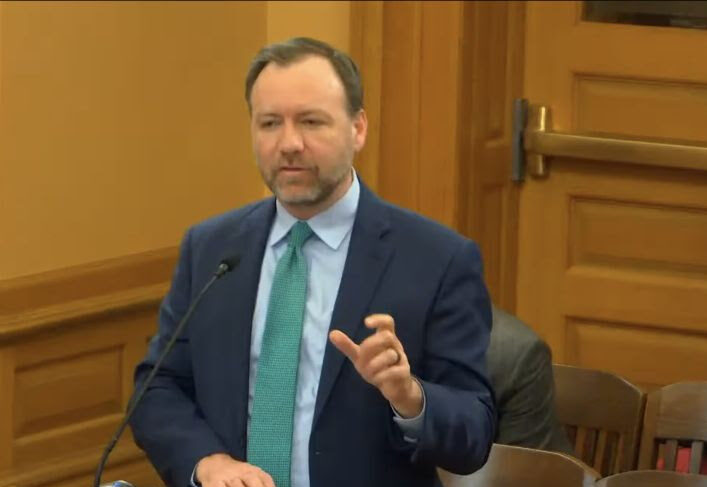
Jonathon Wolfson: Testimony before the House Committee on Education and Workforce
June 10, 2026 // In short, locum tenens is not a temporary patch on a permanent problem; it is a permanent and growing part of the healthcare access solution. In many areas, the choice is not between a permanent healthcare provider and a locum tenens healthcare provider. The choice is between a locum tenens healthcare provider and no provider at all. Any policy that undermines locum tenens would directly harm the patients who depend on it.

More transparency for the largest unions
May 31, 2026 // A new rule from the Labor Department will recalibrate the disclosure reports that labor unions are required to file. It’s a welcome update to ensure that union members know how their money is being spent. What will happen in the 2026 midterms? Sign up for Margin of Victory The reason unions have government-mandated disclosure requirements is that they are government-backed monopolies. Labor relations law gives unions exclusive power as the sole bargaining agent for the entire workplace.
AFP Mobilizes Grassroots in Key Districts to Oppose the Faster Labor Contracts Act
May 18, 2026 // “This bill puts a 100-day stopwatch on one of the most consequential decisions a workplace ever makes — and then hands the final call to a stranger who has never set foot inside the building. That isn’t fairness, and it isn’t faster bargaining. It’s rushed bargaining, with an outside arbitrator deciding pay, schedules, and working conditions for people whose jobs and businesses they don’t know,” said Austen Bannan, labor policy fellow at Americans for Prosperity. “Workers deserve a contract they can actually live with — not one written under an artificial clock that benefits union leadership the moment the ink dries, because that’s when dues start flowing. AFP activists are showing up in Nebraska and Pennsylvania this week to tell Reps. Bacon, Bresnahan, and Fitzpatrick what real workers in their districts are saying: oppose this bill, and don’t sign the discharge petition,” Bannan continued.