Posts tagged unemployment insurance
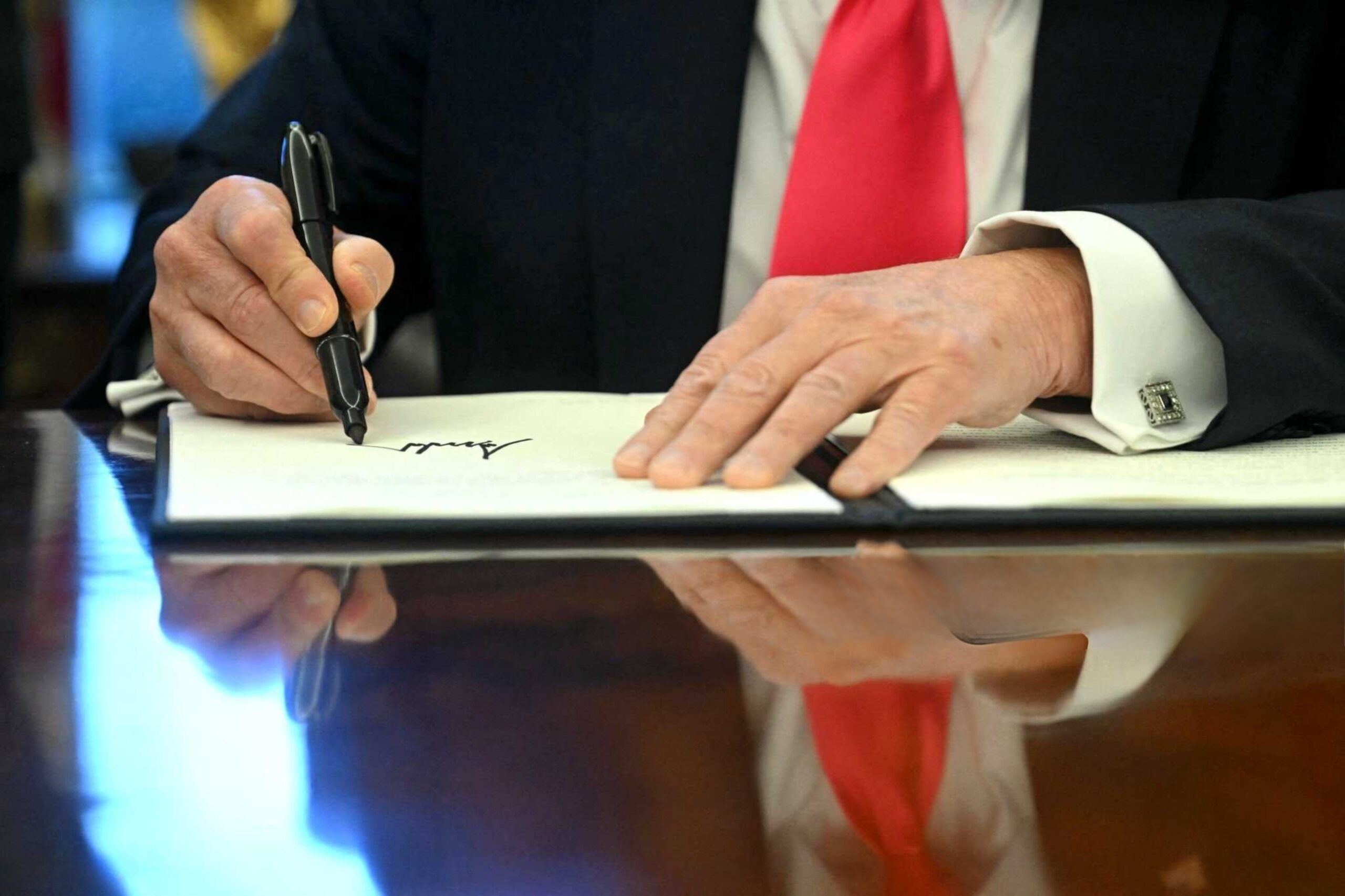
Backgrounder: Executive Order: Exclusions from Federal Labor-Management Relations Programs
March 31, 2025 // The practice of “official time” is when unionized federal employees perform union-related activities, rather than their actual public service duties, while being paid by taxpayers. The Federal Unions EO requires that agencies, upon termination of an applicable collective bargaining agreement, reassign any workers who performed “official time” to positions where they perform solely agency business. It also contains language regarding existing grievance proceedings and allows for the head of each agency to submit a report to the President within 30 days highlighting any agency subdivisions that were not covered but should have been covered under the Federal Unions EO.
Worker rights? Racial bias? A law change for manicurists prompts debate, confusion
February 17, 2025 // Since the beginning of the year, licensed manicurists and nail salon owners in Orange County and across the state have been confused about whether a change in state law allows the business practice of renting a booth to continue or not. After an exemption expired under state law, nail salon workers are now subject to a rigorous test to determine if they are independent contractors while licensed aestheticians, electrologists, barbers and cosmetologists remain exempted from it.
Connecticut’s Nonsensical Plan to Subsidize Strikes
January 17, 2025 // A proposed workers' rights bill will worsen Connecticut's affordability crisis and ignite labor unrest. Proposals to provide striking workers with unemployment benefits and set arbitrary regulations for warehouse workers threaten Connecticut’s economic future. On January 14, two bills advanced in the Labor Committee that might well be the spark that ignites widespread labor unrest, even as the push imposes heavier burdens on our state’s consumers and taxpayers.

CA requires public school unionization lessons, bans mandatory anti-union work meetings
January 2, 2025 // Two new laws — AB 800, signed into law by Gov. Gavin Newsom in 2023, and now SB 399, signed into law by Newsom this year, are set to help maintain or even increase union membership in the state. AB 800, signed into law by Gov. Gavin Newsom in 2023, requires California high school juniors and seniors to be taught about their workplace rights, the achievements of organized labor, and students’ right to join a union. Education site Chalkboard News used public records requests to discover what exactly this new law is having teachers cover.
CONNECTICUT: State Employee Union Cries Recession is Coming to Save Temporary Jobs
November 26, 2024 // One of Connecticut’s largest unions, AFSCME Council 4, is pressuring Gov. Ned Lamont, along with Sen. Paul Cicarella (R-North Haven) and Rep. Mary Mushinsky (D-Wallingford), to intervene in stopping the planned layoffs of 49 federally funded, temporary employees at the Connecticut Department of Labor (CTDOL). In a call to action posted on AFSCME’s website on Oct. 15, the union argued that “these layoffs are NOT due to a shortage of work,” claiming that these workers are still essential as job growth has “severely declined nationally.” AFSCME also painted a grim picture, warning that “a recession is anticipated soon” and suggesting that Connecticut’s government is ill-equipped to handle an economic downturn when it materializes.
Robert Boland: The future of college athlete pay hinges on the presidential election
September 25, 2024 // Most athletes would stand to gain much more from the actions of the NLRB, which could permanently classify collegiate athletes as employees of their universities. This would afford them not only the right to wages but also additional employee benefits such as workers’ compensation, unemployment insurance, and the right to both unionize and collectively bargain with their schools. The Biden-Harris administration — as well as its NLRB appointees — has been very labor-friendly, and we could expect a Harris-Walz administration to maintain the same approach. However, Republican appointees would be more likely to reject unionization and maintain the NCAA’s status quo — however uncertain — without granting student-athletes employee status or benefits.

Fair pay for Uber drivers belongs on ballot, Massachusetts court suggests
May 7, 2024 // A group supported by Uber, Lyft, DoorDash and Instacart is promoting ballot initiatives that would establish that the companies’ drivers are contractors who are exempt from the state’s employment laws — which means that they aren’t entitled to minimum wages, overtime, paid sick leave, unemployment insurance or health benefits. Meanwhile, an initiative promoted by drivers would allow them to form a union and engage in collective bargaining. Both sides claim the other is trying to confuse voters and “logrolling” by combining unrelated provisions into one petition. The state attorney general’s office approved all the initiatives and found itself in the odd position of defending both sides in court.
Union workers push for health care and insurance bills following coordinated strikes
March 15, 2024 // After thousands of Twin Cities union workers went on strike last week, workers are pushing for changes at the Capitol — including public health insurance open to all Minnesotans and insurance for striking workers. About 200 unionized health care, education and property service workers with the SEIU Minnesota State Council met with legislators Wednesday for an organized lobby day. “I would make the case that over the last few years here in Minnesota because of the leadership of SEIU and our allied partners, we have maybe made more progress than we have in a generation around workers and union rights,” said Gov. Tim Walz,
Opinion: The Biden Administration Should Look to Virginia Democrats For a Better Way to Help Gig Workers
February 25, 2024 // The concept of coupling the protection of contracting status with a flexible benefits system is an idea that also should appeal to right-leaning policymakers. That’s because such an approach not only helps businesses, but stands to benefit workers by preserving the entrepreneurial flexibility they desire as independent contractors. In addition to this flexibility, it likewise provides workplace protections and benefits that can help these workers weather the exigencies of life—all without the harmful negative impacts of widespread worker reclassification. According to our sources, local Virginia labor unions initially expressed interest in this Democrat-introduced portable benefits model, only to catch flak from their national parent organizations who pressured them to reverse course. Unfortunately, the influence of the national labor brass appears to have doomed the bill for now, although its mere existence suggests that Democratic lawmakers are starting to buck the party’s consensus on worker reclassification.
Op-ed: Watch out — California’s damaging gig workers law is going nationwide
February 20, 2024 // The rule is slated to take effect on March 10. U.S. Sen. Bill Cassidy (R-La.) and Rep. Kevin Kiley (R-Calif.) have both declared they will use the Congressional Review Act to have this rule rescinded. Previous legislation has been tendered in support of small businesses and the self-employed. The “Fight for Freelancers” group of female writers and editors has filed a lawsuit challenging this rule, which serves to appease Big Labor in the same manner as AB5.