Posts tagged Congress

Labor Union to Congress: Our Embezzlement Problems Got Bigger
June 30, 2026 // The Seafarers International Union told a House committee that the daughter of the union president allegedly embezzled from four union-linked political committees, double the number initially reported by NOTUS, according to a committee spokesperson. The acknowledgement comes after NOTUS reported that the union suspected Chelsea Diab — daughter of the union’s president — of embezzling hundreds of thousands of dollars from two federal political committees the union controlled.
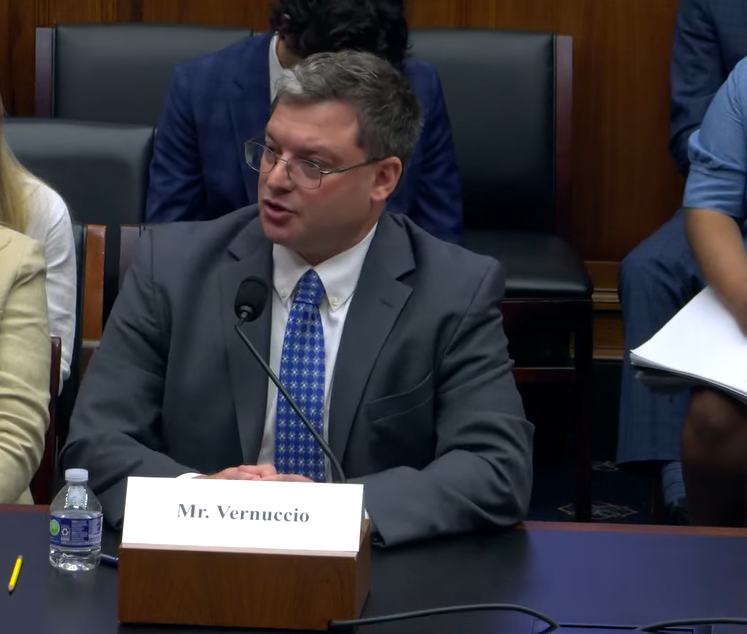
Commentary: The House Sides With Unions Over Workers
June 26, 2026 // Last year, I participated in a Senate hearing in which a union shop steward was asked about government-appointed arbitrators unilaterally imposing contracts. He said that would be “removing the democracy from the workplace.” He said such democracy “is the whole point of the union” because it gives workers a say. The shop steward’s own union was in the process of voting down several contract proposals, further emphasizing the importance of letting workers vote.

Op-ed: Congress is fast-tracking a bill to bring Europe’s failing labor union model to US shores
June 23, 2026 // While FLCA does not establish sectoral bargaining, it moves labor relations to a necessary first step: the creation of a centralized apparatus to determine the terms of private labor contracts. And, to be sure, Big Labor and its allies have their eyes on sectoral bargaining as a means of boosting union rosters. But either way, FLCA signals a significant departure from the traditionally decentralized American model with voluntary bargaining — and toward a more centralized, Euro-bureau approach to labor relations.

Op-ed: New federal rule exposes rift between unions and their members
June 23, 2026 // If the rule takes effect as scheduled, union members can look forward to more detailed information about their unions’ sources of revenue and the management of union investments and assets. They will be able to differentiate between union expenditures for political purposes and lobbying. Similarly, they will be able to see how their union allocates resources to representing them in contract negotiation and administration versus unionizing new workplaces or industries.
Republican Sen. Josh Hawley rips AI “cheerleaders,” backs Teamsters union agenda
June 18, 2026 // Hawley told the Teamsters that "mega corporations" have "lost their moral compass" and that he supports the labor movement because unionized workers deserve fair wages and "decent working conditions," according to a copy of his speech obtained by Axios. Hawley: Argued that the Faster Labor Contracts Act is needed to "speed up first contracts for new unions" and said his Christian faith backs up his belief in unions. Endorsed the Teamsters' position that Congress should pass legislation barring self-driving trucks from replacing commercial drivers. Ripped Amazon as "the biggest monopolist in the country," saying it's treating workers as "indentured servants." Slammed "AI cheerleaders" as corporate goons who "want to replace every job they can with an algorithm" and said "we need to give workers rights over AI in the workplace."

Social conservatives split over abortion and transgender medicine in union contracts bill
June 16, 2026 // Beck said he believes abortion and transgender medical coverage would be “an easy thing” for arbitrators to use as a bargaining chip to reach an agreement on the three-person panel. “It’s going to be easy for the arbitrator to say, ‘OK, employer, I’m not going to make you pay the high wages that the union is demanding,’” Beck said as a hypothetical. ‘“But what I am going to make you do is I’m going to make you give generous health benefits and give very generous access to abortion on demand and give very, very generous access to so-called gender-affirming care.”

Editorial: Why are some Republicans pushing price-hiking, pro-union bills in Congress?
June 15, 2026 // Democrats have long pushed pro-union measures sure to boost prices, even as they pretend to care about “affordability.” But why are Republicans now joining them? On Tuesday, a full 20 GOPers crossed the aisle to pass the Faster Labor Contracts Act, 230-193. The bill, lifted from Dems’ PRO Act, aims to boost unionization by forcing employers to agree to labor contracts within 90 days after a newly formed labor group calls for talks.
Labor-supported bill would protect unions, force workers into unions they never voted for
June 12, 2026 // “House lawmakers who think they helped working Americans by voting for the Faster Labor Contracts Act are mistaken. The legislation is not about curbing the worst delays in workers getting union contracts. It is instead about ensuring unions were set up before anyone had any second thoughts or moved on to other jobs.
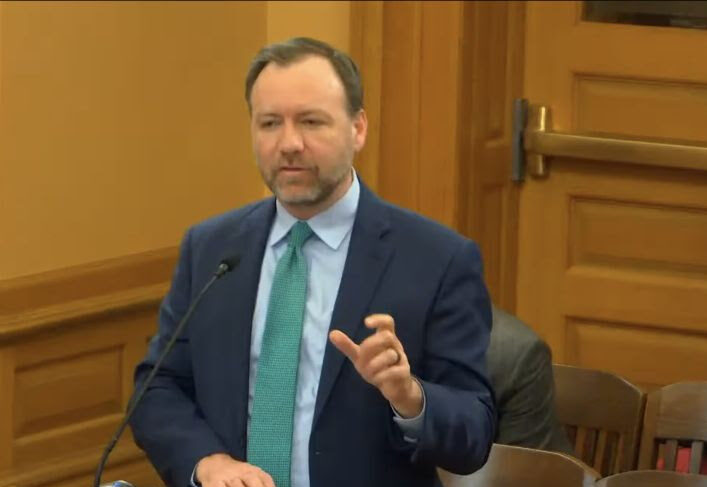
Jonathon Wolfson: Testimony before the House Committee on Education and Workforce
June 10, 2026 // In short, locum tenens is not a temporary patch on a permanent problem; it is a permanent and growing part of the healthcare access solution. In many areas, the choice is not between a permanent healthcare provider and a locum tenens healthcare provider. The choice is between a locum tenens healthcare provider and no provider at all. Any policy that undermines locum tenens would directly harm the patients who depend on it.
Why Would Any Republican Support Forced Unionism?
June 9, 2026 // What makes this even more shocking is that President Trump has proposed completely eliminating the Federal Mediation and Conciliation Service, which the bill would supercharge. The president understands that contracts imposed by government bureaucrats are more likely to be based on political than economic logic, and that negotiations are better left to the private parties. Ironically, government-imposed contracts are likely to harm the workers whose union bosses are pushing this idea. Because when economics don’t add up, it’s the workers who pay in layoffs, reduced hours and the diversion of capital investments that would have raised productivity. This risks broader economic disruption by creating a threat perception that, at any time, a single union request could trigger a government-enforced contract clock. That perception would tend to chill hiring and investing, especially by smaller businesses that can’t afford to fight out an arbitration battle.