
Posts tagged Congress

Social conservatives split over abortion and transgender medicine in union contracts bill
June 16, 2026 // Beck said he believes abortion and transgender medical coverage would be “an easy thing” for arbitrators to use as a bargaining chip to reach an agreement on the three-person panel. “It’s going to be easy for the arbitrator to say, ‘OK, employer, I’m not going to make you pay the high wages that the union is demanding,’” Beck said as a hypothetical. ‘“But what I am going to make you do is I’m going to make you give generous health benefits and give very generous access to abortion on demand and give very, very generous access to so-called gender-affirming care.”

Editorial: Why are some Republicans pushing price-hiking, pro-union bills in Congress?
June 15, 2026 // Democrats have long pushed pro-union measures sure to boost prices, even as they pretend to care about “affordability.” But why are Republicans now joining them? On Tuesday, a full 20 GOPers crossed the aisle to pass the Faster Labor Contracts Act, 230-193. The bill, lifted from Dems’ PRO Act, aims to boost unionization by forcing employers to agree to labor contracts within 90 days after a newly formed labor group calls for talks.
Labor-supported bill would protect unions, force workers into unions they never voted for
June 12, 2026 // “House lawmakers who think they helped working Americans by voting for the Faster Labor Contracts Act are mistaken. The legislation is not about curbing the worst delays in workers getting union contracts. It is instead about ensuring unions were set up before anyone had any second thoughts or moved on to other jobs.
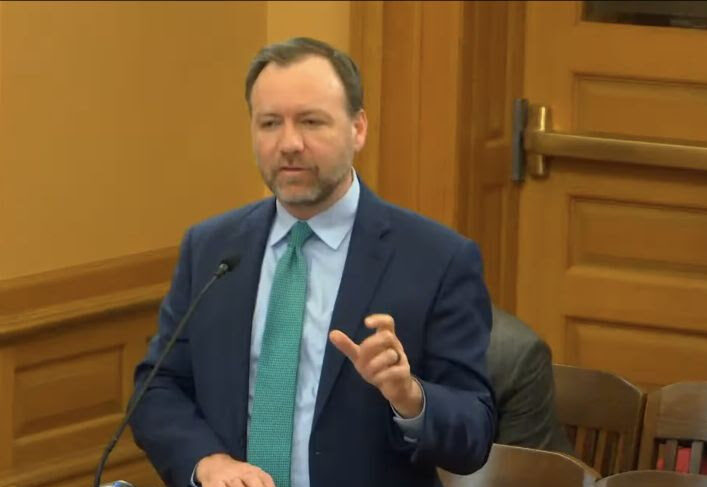
Jonathon Wolfson: Testimony before the House Committee on Education and Workforce
June 10, 2026 // In short, locum tenens is not a temporary patch on a permanent problem; it is a permanent and growing part of the healthcare access solution. In many areas, the choice is not between a permanent healthcare provider and a locum tenens healthcare provider. The choice is between a locum tenens healthcare provider and no provider at all. Any policy that undermines locum tenens would directly harm the patients who depend on it.
Why Would Any Republican Support Forced Unionism?
June 9, 2026 // What makes this even more shocking is that President Trump has proposed completely eliminating the Federal Mediation and Conciliation Service, which the bill would supercharge. The president understands that contracts imposed by government bureaucrats are more likely to be based on political than economic logic, and that negotiations are better left to the private parties. Ironically, government-imposed contracts are likely to harm the workers whose union bosses are pushing this idea. Because when economics don’t add up, it’s the workers who pay in layoffs, reduced hours and the diversion of capital investments that would have raised productivity. This risks broader economic disruption by creating a threat perception that, at any time, a single union request could trigger a government-enforced contract clock. That perception would tend to chill hiring and investing, especially by smaller businesses that can’t afford to fight out an arbitration battle.
Labor Department toughens union transparency rules
June 9, 2026 // The purpose of the changes (and less substantial changes to the LM-2 for unions reporting receipts of $350,000 to $39,999,999) are to carry out the purposes of the LMRDA (and the consensus principle it codified): Ensure union members, prospective union recruits, and the public can appropriately track the use of member dues and compulsory fees required of workers in non-right-to-work states.
Why Independent Workers — and the Companies That Hire Them — Need Portable Benefits
June 5, 2026 // Instead, one theme comes through clearly: Workers want benefits without giving up their current, flexible careers. Surveys say the same thing. Bureau of Labor Statistics data shows that only 8.3 percent of independent workers prefer a traditional employment arrangement, while more than 80 percent prefer their current work arrangement. At the same time, 4 out of 5 want access to benefits. That’s why it’s so encouraging to see portable benefits gain momentum and bipartisan buy-in: Kansas and Utah are among the eight states that have enacted reforms, Hawaii and Connecticut are among those considering it, and legislation has appeared in Congress as well. Reforms are advancing in states that prioritize the business environment and in others that focus on worker protection, because they expand access to benefits while remaining voluntary and market-oriented.
Key Vote Alert – HOUSE & SENATE – “NO” ON THE FASTER LABOR CONTRACTS ACT
June 5, 2026 // This bill borrows from the same compulsory-union playbook as the PRO Act and other failed Big Labor priorities. It strengthens union leverage, pressures employers to accept terms they may never voluntarily agree to, and invites federal intervention into private workplaces. The result would be less flexibility, higher costs, more litigation, and fewer opportunities for workers and businesses alike. Congress should reject this federal takeover of private-sector bargaining. Workers do not need politicians using “pro-worker” branding to deliver wins for union bosses. They need freedom, flexibility, and the right to negotiate, work, and prosper without being trapped in federally imposed labor contracts.

The Faster Labor Contracts Act would force workers into unions they never voted for
June 4, 2026 // The retail, leisure, and hospitality sectors, by contrast, are traditionally harder for unions to organize because the workers who would back a union are also less likely to stick around. That’s why the unions want contract deadlines to apply to all negotiations, not just cases in which companies may be deliberately delaying things. Unions might otherwise find themselves in a “herding cats” situation because workers are constantly coming and going.

Opinion: How a century-old railway law sows modern transit havoc
June 4, 2026 // As private commuter rail operations went bust over time and became absorbed by state agencies such as New York’s Metropolitan Transportation Authority, they still mostly remained under RLA jurisdiction. This peculiarity has proven disastrous. Ordinary economic constraints no longer apply to union negotiations. The need to remain profitable is gone, and with it the danger that management would order a lockout in the middle of a contract dispute. But the right to strike has remained. It gives the unions license to make unreasonable demands, knowing that the people on the other side of the table could squeeze taxpayers and riders for more money.