Posts tagged FLCA
Republican Sen. Josh Hawley rips AI “cheerleaders,” backs Teamsters union agenda
June 18, 2026 // Hawley told the Teamsters that "mega corporations" have "lost their moral compass" and that he supports the labor movement because unionized workers deserve fair wages and "decent working conditions," according to a copy of his speech obtained by Axios. Hawley: Argued that the Faster Labor Contracts Act is needed to "speed up first contracts for new unions" and said his Christian faith backs up his belief in unions. Endorsed the Teamsters' position that Congress should pass legislation barring self-driving trucks from replacing commercial drivers. Ripped Amazon as "the biggest monopolist in the country," saying it's treating workers as "indentured servants." Slammed "AI cheerleaders" as corporate goons who "want to replace every job they can with an algorithm" and said "we need to give workers rights over AI in the workplace."
House-Passed Faster Labor Contracts Act Is a Disgrace to Free Enterprise
June 18, 2026 // Setting a dangerous precedent, House Democrats and a few unprincipled Republicans today voted to pass the Faster Labor Contracts Act,” said ABC President and CEO Michael Bellaman. “The FLCA imposes arbitrary and unrealistic deadlines on employers to finalize negotiations with newly elected unions or face ‘binding interest arbitration of first contracts.’ In practice, this means, for the first time in American history, a federal government bureaucrat will appoint an individual to dictate exactly what is included in a contract between two private negotiating parties.
Faster is Not Always Better: House Passes Bill Seeking Radical Change in First Contract Bargaining
June 17, 2026 // The bill also raises questions about the lawfulness of strikes and lockouts during these first contract negotiations. Typically, where parties agree to interest arbitration (or where it exists in the public sector) it is premised on a mutual commitment of labor peace, i.e., the union will not go on strike, and the employer will not lock employees out while negotiations are ongoing and the arbitration is pending. However, in the private sector and in the absence of such a mutual commitment, both such economic weapons may be used offensively in furtherance of a party’s bargaining demand. The FLCA does not explain if or how a party may exercise such an economic weapon in furtherance of their bargaining position if the dispute will be submitted to an FMCS panel for binding interest arbitration. Equally troubling is the FLCA’s potential impact on unilateral implementation. Unilateral implementation upon reaching a good-faith bargaining impasse has long been a vital bargaining tool for employers. The possibility of implementing terms when negotiations stall has been an effective tool to encourage the parties to continue making movement towards the other. Eliminating this option will alter bargaining leverage and strategies particularly in successor contracts where the FLCA’s temporal framework does not apply.

Social conservatives split over abortion and transgender medicine in union contracts bill
June 16, 2026 // Beck said he believes abortion and transgender medical coverage would be “an easy thing” for arbitrators to use as a bargaining chip to reach an agreement on the three-person panel. “It’s going to be easy for the arbitrator to say, ‘OK, employer, I’m not going to make you pay the high wages that the union is demanding,’” Beck said as a hypothetical. ‘“But what I am going to make you do is I’m going to make you give generous health benefits and give very generous access to abortion on demand and give very, very generous access to so-called gender-affirming care.”

Op-ed: A GOP Gift to the Cultural Left
June 15, 2026 // We wonder if Republicans know what they’ve voted for—and not merely on wages or pensions. Unions, allied with Democrats, have long supported a progressive agenda that includes collective bargaining for abortion coverage and transgender healthcare. The model language the AFL-CIO recommends to local chapters says “all health plans offered to bargaining unit members shall cover comprehensive . . . reproductive healthcare services, including contraceptives, abortion services . . . and gender affirming care.” In 2012 the Service Employees International Union unanimously approved a resolution “calling on local unions to bargain for trans-inclusive healthcare.” The NewsGuild of New York/Communications Workers of America said in 2022 it “unequivocally supports access to abortion as a healthcare right.”

Editorial: Why are some Republicans pushing price-hiking, pro-union bills in Congress?
June 15, 2026 // Democrats have long pushed pro-union measures sure to boost prices, even as they pretend to care about “affordability.” But why are Republicans now joining them? On Tuesday, a full 20 GOPers crossed the aisle to pass the Faster Labor Contracts Act, 230-193. The bill, lifted from Dems’ PRO Act, aims to boost unionization by forcing employers to agree to labor contracts within 90 days after a newly formed labor group calls for talks.
Your Uber Driver May Soon Be Unionized. At What Cost?
June 15, 2026 // In fact, this result has already been seen in locales that have pushed aggressive minimum wage laws for gig workers—another one-size-fits-all progressive labor policy that left-leaning cities have begun importing to gig work in recent years. For instance, the waitlist to become an UberEats driver in New York City grew to 27,000 after the Big Apple passed a minimum wage ordinance for app-based food delivery in 2023; the minimum wage rules forced Uber to limit drivers in an effort to control spiking labor costs. Unfortunately, draconian sector-wide labor rules will also raise labor costs for these platforms, with the costs inevitably being passed along to riders in the form of more expensive Uber rides. (Such a passed-along price increase has also already been seen with the minimum wage mandates for food delivery.) The gig worker unionization drive that is spreading acr
Exclusive: Group warns labor bill allows govt takeover of union contract negotiations
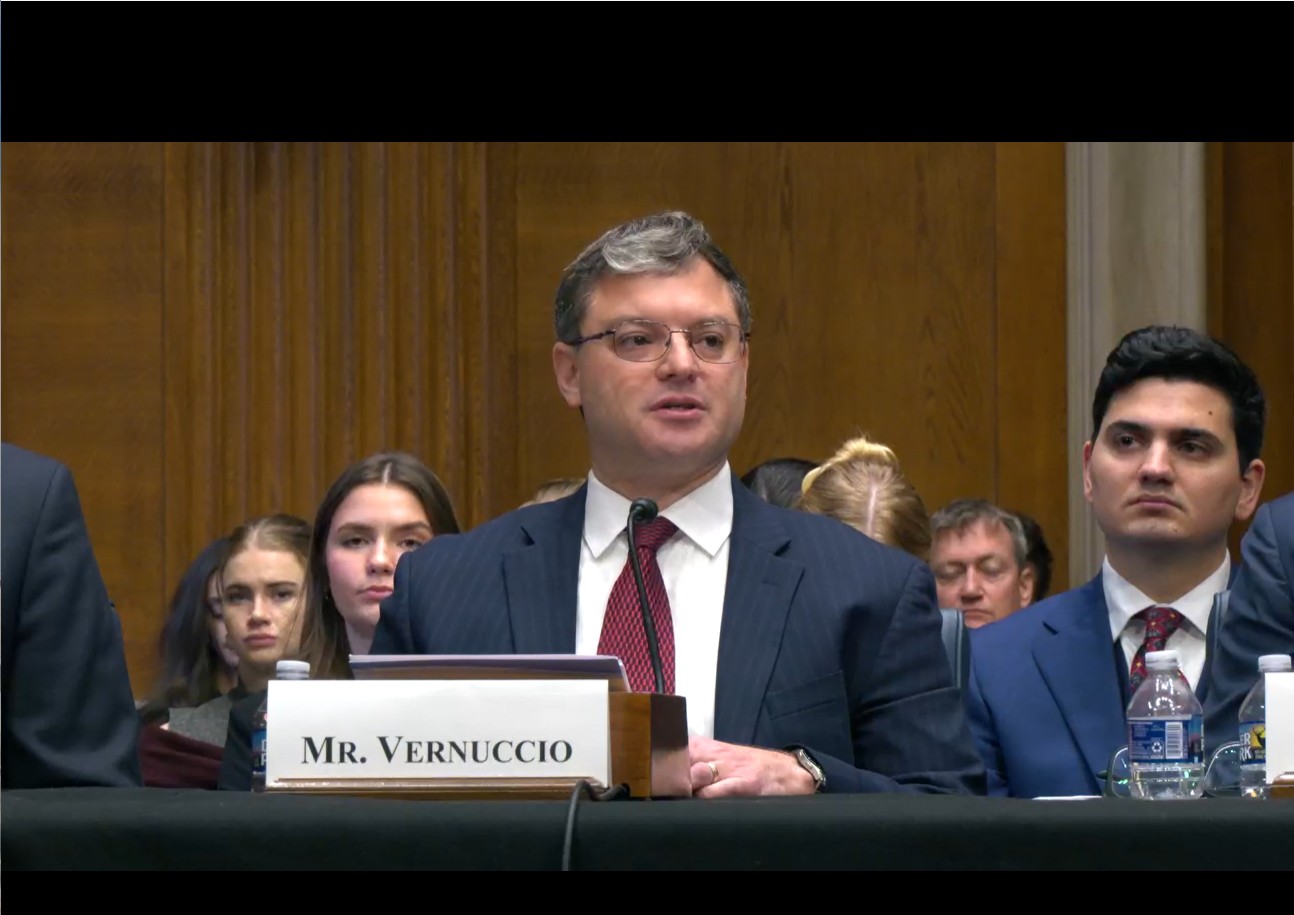
June 14, 2026 // Institute for the American Worker President Vinnie Vernuccio called the House-passed bill an example of “gross government overreach.” “There are better ways out there, things that increase collaboration, increase penalties even, to get people to negotiate,” Vernuccio told The Center Square. “Those are far preferable than government forced arbitration.”
Labor-supported bill would protect unions, force workers into unions they never voted for
June 12, 2026 // “House lawmakers who think they helped working Americans by voting for the Faster Labor Contracts Act are mistaken. The legislation is not about curbing the worst delays in workers getting union contracts. It is instead about ensuring unions were set up before anyone had any second thoughts or moved on to other jobs.

These Republicans keep undermining Trump. This week proves it
June 11, 2026 // Specifically, the Faster Labor Contracts Act would empower a federal agency that Trump has called to eliminate. It could then impose a collective bargaining agreement on workers if the union and employer don’t reach an agreement within three months. But the workers wouldn’t even get a vote, fundamentally gutting workplace democracy. As Trump’s administration said in 2020, “Involuntary contracts that do not work for employees or their employers could force layoffs or even bankruptcies — ultimately, harming workers.” This bill is one of the Democrats’ top priorities. It should never be a priority for any Republican. Several of these Republicans pulled a similar stunt in January, when they killed House leadership’s plan to vote on the Save Local Business Act. The bill would have prevented a heavy-handed mandate from the Obama and Biden years that put many franchises, subcontractors, and small businesses at risk of layoffs or even closure. Yet LaLota said that he and his colleagues would only support a watered-down version. Trump has proposed a regulation that’s similar in intent to the legislation that was killed, yet by refusing to support the bill, these Republicans are all but ensuring that a future Democrat president will overturn this necessary reform.