
Posts tagged Manufacturing
Op-ed: When taxpayers incentivize jobs, the state should protect workers’ privacy in union votes
February 26, 2026 // Now, Rankin County Republican State Sen. Josh Harkins, who chairs the Senate Finance Committee, has introduced legislation to protect the investments of state and local taxpayers in economic development projects that rely on taxpayer incentives. The bill ensures that Mississippi workers are entitled to a private ballot for any unionization vote. In a recent op-ed, Harkins explained: “Senate Bill 2202 is straightforward: for companies that choose to accept future state economic development incentives, any decision about union representation should be made through a private, secret-ballot election. The bill does not prohibit employees from organizing. It does not outlaw unions. It does not interfere with an employee’s right to choose union representation if a majority wants it. It simply sets an expectation that the decision is made in a way that protects (worker) privacy.”

Opinion: Did Biden save unions? Now we have numbers.
February 23, 2026 // Local government employs more union workers than any other industry, by a lot. State government is the next largest employer. The category education and health services comes next, and even though it’s counted as a private industry, most of those jobs are closely connected to government programs. The federal government has more union members than the entire manufacturing sector.
UPS Is the Symptom, Not the Disease: How Labor Policy Shapes Long-Run Worker Outcomes
February 18, 2026 // The question, then, is not whether the gains are real, but how the trade-offs unfold. Why do headline-grabbing contracts so often coincide with downsizing, automation, and job losses in sectors governed by exclusive, monopoly bargaining arrangements? When short-run wage gains are secured through monopoly bargaining power, where do the adjustments occur—and who ultimately bears the costs?
Majority of Lynchburg, Virginia Manufacturing Plant Workers File Petition to Oust Chemical Union Bosses
February 17, 2026 // Natera Carter, an employee of Parker O-Ring & Engineered Seals, has filed a petition with the National Labor Relations Board (NLRB) seeking a “decertification” election to remove the International Chemical Workers Union Council (ICWUC) Local 845C labor union from her workplace. The petition was filed with free legal aid from National Right to Work Foundation staff attorneys.
Ford workers told their CEO ‘none of the young people want to work here.’ So Jim Farley took a page out of the founder’s playbook
November 30, 2025 // “He said, ‘I’m doing this because I want my factory worker to buy my cars. If they make enough money, they’ll buy my own product,’” Farley said. “It’s a self-fulfilling prophecy, in a way.”
Where the Jobs Are (and Aren’t): Sectoral Shifts and the Federal Workforce Pullback
November 5, 2025 // Healthcare’s steady expansion and manufacturing’s contraction capture the reallocation story at the heart of today’s labor market. Where jobs grow—and where they disappear—helps explain why some young workers thrive while others stall. Meanwhile, the federal workforce reductions mark one of the most significant government pullbacks in decades, echoing the reform-minded cuts of the 1990s.
DOL Awards $86M for Skilled Trades Training
October 29, 2025 // Administered by the department’s Employment and Training Administration, these grants will provide outcome-based reimbursements to employers for providing training in high-demand and emerging industries that align with President Trump’s Executive Order 14278, Preparing Americans for High-Paying Skilled Trade Jobs of the Future, and Executive Order 14629, Restoring America’s Maritime Dominance. These priorities are also in line with the goals published in America’s Talent Strategy and America’s AI Action Plan. “President Trump has directed the Labor Department to Make America Skilled Again by providing states with the resources they need to expand on-the-job training opportunities,” said Secretary of Labor Lori Chavez-DeRemer.
Union workers react to federal mediator joining talks with Boeing
September 30, 2025 // “The last offer we had from the union, they had a federal mediator and we seemed to get a worse offer,” Martin said. “If they can point Boeing in the right direction, aside from last time, it still didn’t seem to do a good thing for the union.” Union members say contracts at other Boeing plants — especially in places like Seattle — come with better pay and stronger benefits. “No one cares about this ratification bonus that they’re pushing so hard on everyone. We want better pay for all of our members. The ratification bonus is a right now solution and I think most of us are thinking about our futures,” said another Boeing worker on strike.
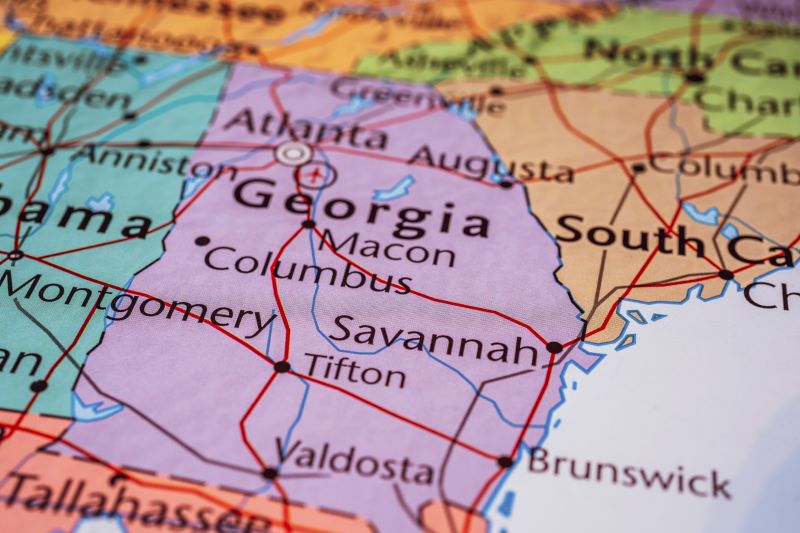
Georgia sets the national standard for pro-worker leadership
September 2, 2025 // Rep. Rick Allen, from Georgia’s 12th congressional district, recently re-introduced the Employee Rights Act—the single most important pro-worker in America today. The Employee Rights Act is full of reforms that would protect and strengthen workers’ rights. Building on Georgia’s state policy, it would require the secret ballot for all unionization elections in America—no more card check. It would also protect workers’ privacy by letting them determine what personal information unions can access. And in the 26 states like Georgia with right-to-work laws, the Employee Rights Act would let workers who opt out of union membership negotiate their own contracts—something they’re currently banned from doing.
Employers Gain Additional Defenses In Union Salting And Deferral Cases Thanks to New Guidance from NLRB Official
August 27, 2025 // Under the AGC’s July 24 guidance, employees (or unions) filing charges must present evidence that the salt is “genuinely interested” in working for the employer. While the Board will independently evaluate this element, it will analyze evidence from the employer of the circumstances surrounding: the contents and completeness of the salt’s application; the applicant’s behavior and conduct during interviews; and the applicant’s previous refusal of similar employment.