Posts tagged Tennessee
The Rise of Portable Benefits
March 19, 2026 // States like Alabama, Tennessee, Utah, West Virginia, and Wyoming have already enacted voluntary portable benefits frameworks. Others—including Pennsylvania, Maryland, and Georgia—have launched pilot programs. And a growing number of states—from Connecticut to Kansas to Hawaii—are actively considering legislation.
Op-ed: When taxpayers incentivize jobs, the state should protect workers’ privacy in union votes
February 26, 2026 // Now, Rankin County Republican State Sen. Josh Harkins, who chairs the Senate Finance Committee, has introduced legislation to protect the investments of state and local taxpayers in economic development projects that rely on taxpayer incentives. The bill ensures that Mississippi workers are entitled to a private ballot for any unionization vote. In a recent op-ed, Harkins explained: “Senate Bill 2202 is straightforward: for companies that choose to accept future state economic development incentives, any decision about union representation should be made through a private, secret-ballot election. The bill does not prohibit employees from organizing. It does not outlaw unions. It does not interfere with an employee’s right to choose union representation if a majority wants it. It simply sets an expectation that the decision is made in a way that protects (worker) privacy.”
UAW Gains Southern Foothold as VW Workers Ratify First-Ever Contract
February 23, 2026 // The new deal also offers healthcare cost reductions, job security guarantees and other benefits. Volkswagen officials, as has been the case throughout the process, acknowledged the result in a short statement.
Opinion: Teachers Unions Get Desperate
February 17, 2026 // Antichoice plaintiffs “usually file lawsuits right before families sign up for the program just to be particularly cruel. They know they’ll lose nearly every case, but delaying or enjoining the programs in any way is the last-ditch effort to slow maximum uptake for families,” says Tommy Schultz, CEO of the American Federation for Children. Many suits are striking out. Idaho’s high court just ruled 5-0 in favor of the state choice program. Top courts in Arizona, Florida, North Carolina and West Virginia have upheld choice programs. The U.S. Supreme Court has continued to issue beneficial rulings. Yet the legal threat is real, and unions, often accompanied by local school districts, continue to throw millions at litigation and disruption, forcing states to spend huge amounts to defend against them. Then the unions and the districts claim schools are underfunded.
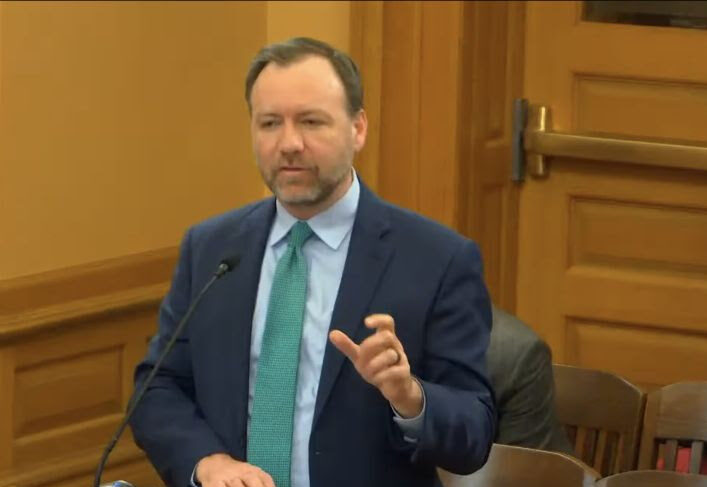
WATCH: I4AW’s Jonathan Wolfson Testifies Again: Portable Benefits Bill Considered in Kansas House of Representatives
February 11, 2026 // Visiting Fellow Jonathan Wolfson testified before the Kansas House of Representatives to offer expert analysis on HB 2602, a state bill that would allow businesses that hire independent workers to pay for benefits like retirement accounts or insurance without risking being punished by the government for "misclassifying" the freelancer as an independent worker instead of an employee.
‘Right to work’ unlikely to change much in Va. this year, union and business leaders agree
January 20, 2026 // Speaking at a Jan. 14 forum sponsored by Advance Arlington, Slaiman said a contentious fight over Virginia’s unionization framework would get in the way of more pressing priorities in a year when Democrats have control of the governorship and both houses of the General Assembly. “We’re not going to disrupt this [legislative] session. We’ve got too much of an agenda,” said Slaiman, whose union local represents 15,000 workers. Addressing right-to-work’s future “will come later,” he said.

Commentary: Right-to-Work States Dominate U-Haul Growth Index
January 12, 2026 // Among the top ten growth states in the U-Haul index, nine have a Right-to-Work law that protects workers from being forced to pay dues to union bosses as a condition of employment. -Among the bottom ten states in the U-Haul index, NONE has a Right-to-Work law. All are forced unionism states. -Of the 25 top ranked cities in the U-Haul Growth Index, 24 are located in Right-to-Work states. The 10 best ranked states in the U-Haul Growth Index are Texas, Florida, North Carolina, Tennessee, South Carolina, Washington, Arizona, Idaho, Alabama and Georgia. All are Right-to-Work except Washington.
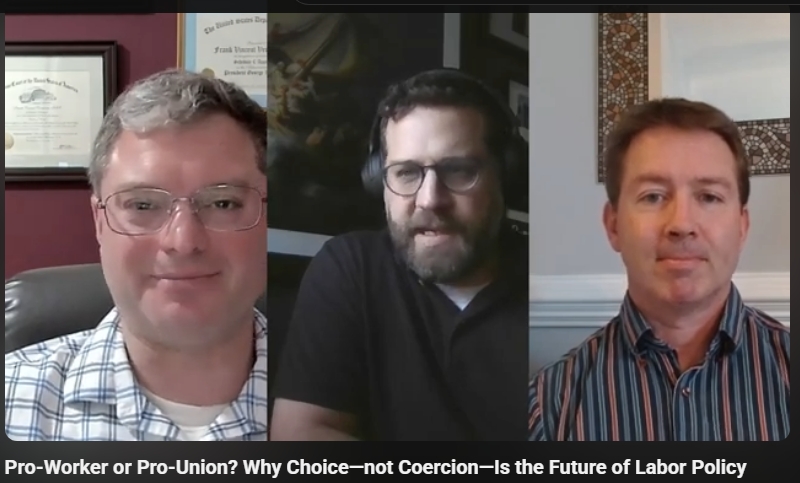
Pro-Worker or Pro-Union? Why Choice—not Coercion—Is the Future of Labor Policy, Disunion: The Government Union Report; Commonwealth Foundation
December 18, 2025 // This week on Disunion, host David Osborne is joined by Austen Bannan of Americans for Prosperity and Vincent Vernuccio, president of the Institute for the American Worker, to break down a sweeping new report: How to Empower Workers: Embracing a Pro-Worker Agenda Built on Choice. With Congress rolling out a flurry of labor bills—from right-to-work reforms and secret ballot protections to proposals backed by unions and even some Republicans—this episode cuts through the noise. The panel explains why many so-called “pro-worker” policies actually empower union bosses and government regulators, not workers themselves.
Starbucks Union Says 30 More US Stores Are Joining Week-Old Strike
November 22, 2025 // Starbucks said the strike has caused minimal disruption to its operations, and noted that this year's Red Cup Day was the strongest in the company's history in terms of sales and store traffic. Placer.ai, a location data company, said Starbucks' foot traffic jumped 44.5% last Thursday compared to this year's daily average. Starbucks said only 49 of the 65 stores that the union vowed to strike last week experienced any disruption, and 29 of those have reopened.

MAXFORD NELSEN: The Other Education Choice: Freeing Teachers from Monopolistic Unions
November 17, 2025 // Public-sector collective bargaining tends to crowd out the interests of students, families, and taxpayers in education policymaking, but teachers unions’ power comes from subjecting teachers to a monopoly system of workplace restrictions. While individual educators now have the legal right to forgo union membership, state policymakers have many opportunities to improve educators’ ability to exercise that right. To level the playing field and increase teachers unions’ accountability to the public and their own members, policymakers should consider reforming or replacing collective bargaining in public education.