
Posts tagged Rick Allen
Editorial Board: In defense of the secret ballot
March 15, 2026 // In the case decided by the 6th Circuit, Brown-Forman challenged the basis for the NLRB’s Cemex ruling and won. The supposedly unfair labor practice committed at its Woodford Reserve bourbon distillery was giving workers a $4-per-hour raise, expanding merit-based salary increases, offering more vacation time and providing free bottles of bourbon. The employees voted 45-14 against unionizing, but the NLRB ordered the company to bargain with that union anyway. The advantage of secret-ballot elections is that workers are free of coercion by unions or employers when deciding whether they wish to unionize. It also ensures that their decisions are anonymous, so they won’t fear retaliation or harassment by aggressive union organizers or the people who pay their salaries. A secret ballot is far more likely to reflect their true views.

Union members like me need these reforms from Congress
December 2, 2025 // Three years ago, I was forced into a union against my will. While my coworkers and I tried to free ourselves, we were stifled every step of the way. We needed better federal labor laws — such as the bills introduced in both the House and Senate in recent days. Leaders such as Sen. Bill Cassidy (R-LA) and Reps. Virginia Foxx (R-NC) and Randy Fine (R-FL) have recently written some of the most pro-worker legislation in decades. My own experience with unionization shows how necessary these reforms are.

Congress Can Empower Workers Through Choice—Not Coercion
November 24, 2025 // A case in point is the legislative package that Sen. Bill Cassidy (R-La.) introduced on Nov. 10, joined by others including Sens. Tommy Tuberville (R-Ala.) and Tim Scott (R-S.C). They’d protect workers’ paychecks by requiring unions to get approval before spending dues money on politics. They’d also protect workers’ privacy by letting them choose what contact information unions get during the organizing process. And they’d protect workplace democracy by requiring that at least two-thirds of workers participate in union elections — preventing a minority of people from determining the fate of every employee. Another praiseworthy reform is the Employee Rights Act, which Scott introduced in the shutdown’s early days after Rep. Rick Allen (R-Ga.) previously introduced it in the House. Among its many good ideas, the Employee Rights Act guarantees the secret ballot and protects workers from intimidation and harassment. It also gives unionized workers in the 26 right-to-work states the freedom to negotiate their own contract with their employer, so they can better address their individual needs. And the Employee Rights Act guarantees that self-employed workers have maximum flexibility to design their jobs to fit their lives.
RADIO: Vincent Vernuccio- Pro-Worker Labor Legislation That Promotes Worker Freedom
November 17, 2025 // Senator Bill Cassidy announced a swath of pro-worker labor legislation that promotes worker freedom and curbs undue influence and abuse by unions

Newt’s World Episode 899: Employee Rights Act
October 13, 2025 // Newt talks with Vincent Vernuccio, President of the Institute for the American Worker about the Employee Rights Act of 2025, a legislative proposal aimed at enhancing and safeguarding the rights of American workers while promoting fairness and accountability in the workplace. Introduced by Senator Tim Scott and Congressman Rick Allen, the bill represents a Republican vision for the workforce, focusing on empowering workers, improving unions, and fostering innovation and growth. Vernuccio highlights the outdated nature of current labor laws,
Senator Tim Scott Reintroduces the Employee Rights Act to Empower American Workers
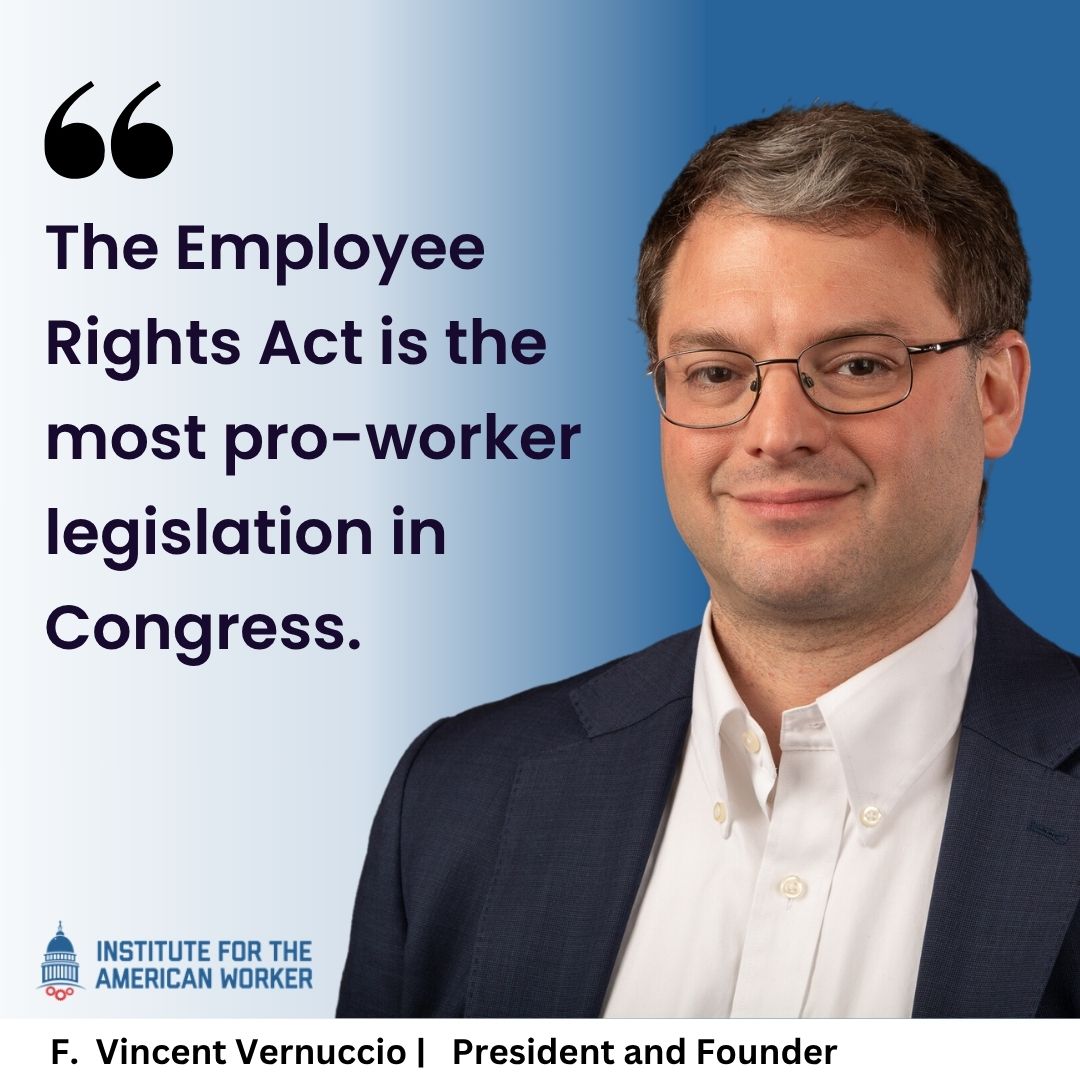
October 8, 2025 // “The Employee Rights Act is the most comprehensive labor legislation of this Congress, from protecting the secret ballot and unionization elections, to safeguarding workers from harassment and protecting their privacy, to putting workers in control of their own destiny. It truly puts the American worker first. We applaud Senator Scott for his steadfast leadership and support of worker freedom,” said F. Vincent Vernuccio, President of the Institute for the American Worker. This legislation was cosponsored by Senators John Barrasso (R-WY), Kevin Cramer (R-ND), Mike Crapo (R-ID), John Hoeven (R-ND), Cindy Hyde-Smith (R-MS), Jim Risch (R-ID), and Tommy Tuberville (R-AL).
House GOP panel accuses nation’s largest teachers union of exploiting members’ retirement benefits
September 29, 2025 // Committee Chairman Tim Walberg of Michigan and committee members Rick Allen of Georgia, Kevin Kiley of California and Virginia Foxx of North Carolina shared a Securities and Exchange Commission filing that showed retirement services provider Security Benefit paid the nation’s largest teachers’ union a $4 million annual “base fee” for the exclusive right to sell annuities and mutual funds to teachers in 2023-24. They noted that Department of Labor reports show the NEA receiving more than $61 million in “service level agreement” or “advertising revenue” since 2005, even as the union maintains in its 2024 SEC filing that it received “no dividends, royalties, profit, or licensing fees” from Security Benefit.
Americans for Prosperity Leads Employee Rights Act Coalition
September 8, 2025 // Protect workers’ right to a secret ballot in union elections. Preserve flexible self-employment career-paths across American industries. Protect small businesses that operate as franchises and vendors for other businesses. Give workers control over their personal information during union campaigns. Allow workers in Right-to-Work states to opt out of union representation. Require opt-in consent for union political spending. Prohibit mandatory DEI mandates in union contracts. Ensure only citizens or authorized workers vote in union elections.
Georgia sets the national standard for pro-worker leadership
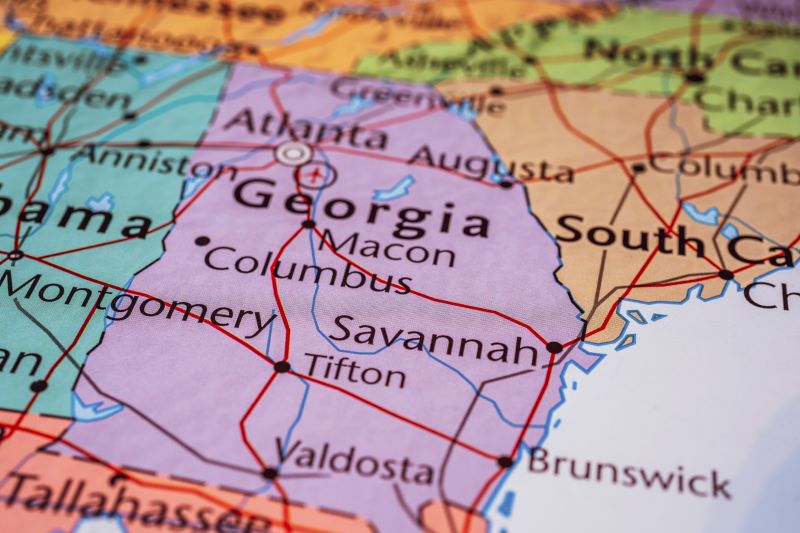
September 2, 2025 // Rep. Rick Allen, from Georgia’s 12th congressional district, recently re-introduced the Employee Rights Act—the single most important pro-worker in America today. The Employee Rights Act is full of reforms that would protect and strengthen workers’ rights. Building on Georgia’s state policy, it would require the secret ballot for all unionization elections in America—no more card check. It would also protect workers’ privacy by letting them determine what personal information unions can access. And in the 26 states like Georgia with right-to-work laws, the Employee Rights Act would let workers who opt out of union membership negotiate their own contracts—something they’re currently banned from doing.

Congress Probes Powerful Teachers’ Union Brass Spending Funds On Limo Rides
August 7, 2025 // The House Education and Workforce Committee inquired about public records showing that the American Federation of Teachers (AFT) spent more than $100,000 on private limousine services since September 2023 in a Thursday letter to the AFT. Lawmakers have also received reports from unnamed sources that Weingarten, the union’s president, has paid for other conveniences such as a private driver, the letter says.