
Posts tagged Georgia
A giant barrier to being self-employed is falling, state by state
April 13, 2026 // As more states pass permanent reforms, millions of independent contractors could gain access to benefits they’ve never enjoyed. But states aren’t the only ones that can act. Congress could also amend federal law so that companies may offer benefits without facing liability. Sen. Bill Cassidy (R-Louisiana) and Rep. Kevin Kiley (I-California) have introduced bills to that effect in their respective chambers. They deserve the support of the full Congress and the White House in giving millions more workers long-term financial security along with the flexibility that self-employment provides. The portable benefits revolution can’t sweep the nation fast enough.
Commentary: Maryland Portable Benefits Success Shows a Model For States to Follow
April 10, 2026 // Maryland has become the third state in the nation to complete a portable benefits pilot – highlighting how independent workers can maintain the freedom they value while accessing the benefits they want. Following successful pilots in Pennsylvania and Georgia, DoorDash launched and funded a four-month portable benefits pilot in Maryland, bringing more than 4,000 Dashers into the program. DoorDash and Dashers contributed more than $800,000 to their portable benefits accounts, setting aside money to be used for healthcare, paid time off, retirement, and more, an independent analysis from BW Research showed. Crucially, an overwhelming majority (96%) of participants support legislation requiring companies to contribute to flexible benefit accounts while preserving independent contractor status.

States Lead the Way on Portable Benefits and Flexible Work
March 24, 2026 // The momentum behind portable benefits reflects the strength of a growing network of organizations and leaders committed to modernizing workforce policy. Americans for Prosperity has worked in conjunction with a diverse range of state and national organizations including the Mercatus Center, Libertas Institute, Institute for the American Worker, Independent Women, R Street Institute, and more from state to state. With research, data, examples of those who would benefit, and a dose of optimism, the educational outreach to highlight how beneficial these reforms are to American families has created a surge of interest among state lawmakers who increasingly understand this golden opportunity to help their residents thrive in today’s economy including shifts due to the rise of AI and other technology.
The Rise of Portable Benefits
March 19, 2026 // States like Alabama, Tennessee, Utah, West Virginia, and Wyoming have already enacted voluntary portable benefits frameworks. Others—including Pennsylvania, Maryland, and Georgia—have launched pilot programs. And a growing number of states—from Connecticut to Kansas to Hawaii—are actively considering legislation.
‘Empty refrigerators and eviction notices’: TSA union leaders demand end to DHS shutdown
March 17, 2026 // DHS has been partially shut down for more than 30 days as Republicans hold out for a budget proposal that fully funds all parts of the agency. Democrats have said they're willing to fund individual branches within the department, including TSA, but not Immigration and Customs Enforcement (ICE) or Customs and Border Protection (CBP) until the Trump administration agrees to immigration reform.
Debate grows as states consider teacher strike bans
March 9, 2026 // Many states are considering new policies affecting teachers’ ability to strike or participate in protests, and education officials and labor advocates continue to debate the legality of teacher strikes. The strikes are banned or heavily restricted in roughly 38 states and Washington, D.C.
1199SEIU begins organizing after consumer directed home care overhaul
March 4, 2026 // This month, 1199SEIU sent letters about the effort to aides in the state’s Consumer Directed Personal Assistance Program, an $11 billion Medicaid program that allows disabled and elderly residents to hire and manage their own home care. The letter informs workers of a September agreement between 1199SEIU and the administrator, Georgia-based Public Partnerships, creating a process through which they can vote to join a union. The effort could add more than 250,000 members to the powerful union’s rolls, growing its already large base by as much as 55% and amplifying its influence in the city and state. The notice comes after Hochul’s controversial overhaul of the program, which centralized its administration and opened the door for organizing a new sector of labor.
Op-ed: When taxpayers incentivize jobs, the state should protect workers’ privacy in union votes
February 26, 2026 // Now, Rankin County Republican State Sen. Josh Harkins, who chairs the Senate Finance Committee, has introduced legislation to protect the investments of state and local taxpayers in economic development projects that rely on taxpayer incentives. The bill ensures that Mississippi workers are entitled to a private ballot for any unionization vote. In a recent op-ed, Harkins explained: “Senate Bill 2202 is straightforward: for companies that choose to accept future state economic development incentives, any decision about union representation should be made through a private, secret-ballot election. The bill does not prohibit employees from organizing. It does not outlaw unions. It does not interfere with an employee’s right to choose union representation if a majority wants it. It simply sets an expectation that the decision is made in a way that protects (worker) privacy.”

Op-ed: Trump restores America’s control over Washington
February 12, 2026 // President Trump is all too familiar with this injustice. In his first term, senior bureaucrats repeatedly used their power to prevent his priorities from becoming policy. They slow-walked reforms at the Department of Education, refused to prosecute civil rights cases, and circumvented a federal hiring freeze—to name just a few examples. At the start of the second Trump administration, a poll found that 75 percent of federal managers who voted for Kamala Harris planned to disobey instructions they don’t like. But public servants are supposed to serve the public, even if they disagree with the party the public elected. In the private sector, workers could be fired for not doing their job. But until now, presidential administrations couldn’t hold senior bureaucrats accountable because federal rules made them effectively untouchable. While Democrats outnumber Republicans two to one at federal agencies, conservative career officials could also refuse to implement a liberal president’s agenda.
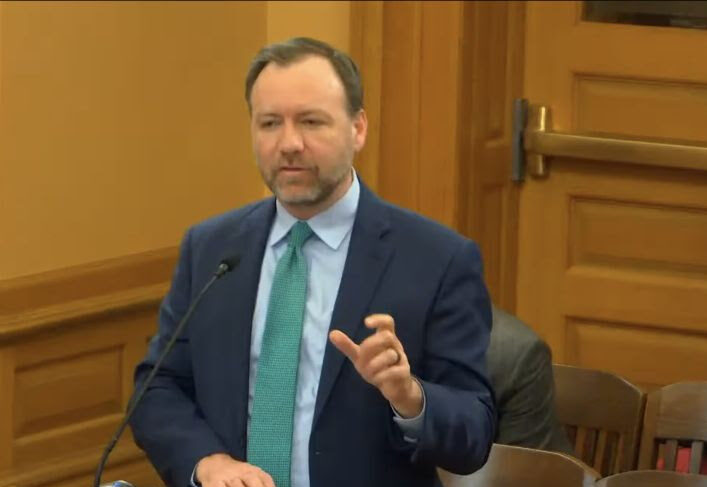
WATCH: I4AW’s Jonathan Wolfson Testifies Again: Portable Benefits Bill Considered in Kansas House of Representatives
February 11, 2026 // Visiting Fellow Jonathan Wolfson testified before the Kansas House of Representatives to offer expert analysis on HB 2602, a state bill that would allow businesses that hire independent workers to pay for benefits like retirement accounts or insurance without risking being punished by the government for "misclassifying" the freelancer as an independent worker instead of an employee.